
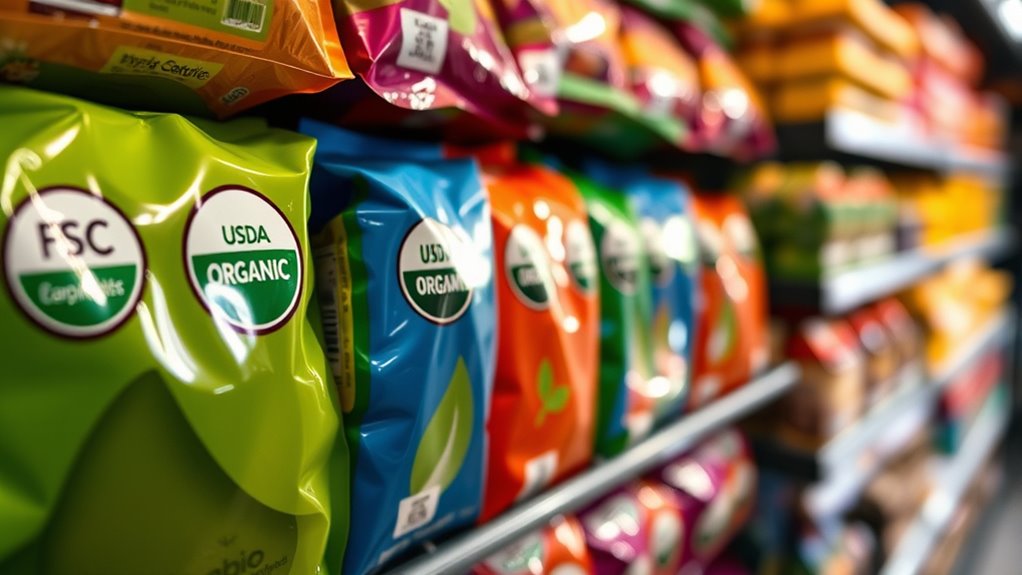

Eco-labels show you that a product claims to be environmentally and socially responsible, but their standards and verification processes vary widely. Some labels, backed by trusted organizations like FSC or Rainforest Alliance, ensure rigorous checks, while others may be more marketing tools with little oversight. To truly understand what certifications mean, it helps to explore what makes a label credible. Keep going to uncover how to better evaluate eco-labels and make informed sustainable choices.
Key Takeaways
- Eco-labels indicate responsible sourcing and environmental efforts but vary in standards and trustworthiness among certifying organizations.
- Certifications like FSC or Rainforest Alliance involve third-party audits and ongoing monitoring to verify compliance.
- Not all eco-labels are equally rigorous; some may be marketing tools with limited oversight.
- Understanding the certification standards helps consumers assess the true sustainability of labeled products.
- Eco-labels should be one of several factors in making environmentally responsible purchasing decisions.

Ever wonder what those eco-labels really mean? It’s easy to see them on products and assume they guarantee some level of environmental responsibility, but the reality is a bit more complex. Eco-labels are designed to help consumers make greener choices, but understanding what’s behind them requires digging into the specifics of sustainable sourcing and certification standards. These labels are meant to signal that a product has met certain criteria, yet the rigor behind those criteria can vary widely depending on the organization issuing the certification.
Eco-labels aim to signal responsible sourcing, but their standards and rigor vary widely.
When a product bears a credible eco-label, it generally indicates that the item was produced using sustainable sourcing practices. This means that the raw materials were harvested or produced in a way that minimizes environmental impact, promotes resource renewal, and supports local communities. For example, sustainable sourcing ensures that forests aren’t clear-cut, water use is managed responsibly, and biodiversity is preserved. But, not all eco-labels enforce these principles equally. Some certification standards are more stringent, requiring regular audits, transparent supply chains, and comprehensive environmental and social criteria. Others might have looser standards or limited oversight, so it’s vital to understand which certification standards are truly meaningful.
Many reputable eco-labels are backed by internationally recognized certification standards. These standards establish clear benchmarks for what qualifies a product to carry the label. They often involve detailed assessments, third-party inspections, and ongoing monitoring to verify compliance. For instance, labels like FSC (Forest Stewardship Council) or Rainforest Alliance set high standards for responsible forestry and agriculture, respectively. When you see these labels, you can generally trust that the product was sourced with environmental integrity and social responsibility in mind. Conversely, some labels might be more marketing-oriented, lacking rigorous standards or independent verification, so it’s wise to research the certifying organization.
You should also keep in mind that eco-labels aren’t a one-size-fits-all solution. They serve as helpful guides but aren’t definitive indicators of a product’s overall sustainability. Sometimes, a product might carry a certification but still have room for improvement in other areas, like fair labor practices or carbon footprint. That’s why it’s important to look into the specific certification standards behind each label and consider the broader context of sustainable sourcing practices. Additionally, understanding the rigor of certification standards can help you better evaluate the true environmental and social impact of products. By doing so, you empower yourself to make truly informed choices, supporting companies that genuinely prioritize environmental and social responsibility.
Frequently Asked Questions
How Do Eco-Labels Influence Consumer Purchasing Decisions?
Eco-labels influence your purchasing decisions by boosting consumer trust, making you feel confident about your choices. When you see a credible eco-label, it increases your purchasing motivation because you know the product meets certain environmental standards. This trust motivates you to pick eco-friendly options over less sustainable ones, aligning your values with your buying habits. Fundamentally, eco-labels guide you toward more responsible, environmentally conscious purchases.
Are All Eco-Labels Equally Trustworthy and Rigorous?
Imagine walking into a store, faced with a sea of eco-labels shimmering on products. Not all of them are equally trustworthy; some boast third-party verification, ensuring rigorous standards, while others vary regionally. You should look for labels backed by independent certifiers, as this indicates higher credibility. Be cautious of regional differences—what’s rigorous in one place may not be in another—so always check the certifying organization’s reputation.
What Are the Costs for Companies to Obtain Eco-Certifications?
You’ll find that certification costs vary depending on the eco-label and your company’s size, product type, and certification scope. Compliance expenses include application fees, testing, inspections, and ongoing monitoring. Smaller companies might face higher per-unit costs, while larger firms often benefit from economies of scale. Overall, investing in eco-certifications can be significant but demonstrates your commitment to sustainability and can boost your brand’s credibility.
How Often Are Eco-Label Standards Updated or Revised?
Standards for eco-labels are like shifting sands, constantly changing to stay current. You can expect renewal frequencies to vary from annually to every few years, depending on the certification. Standard revisions happen periodically, often every 2-5 years, to reflect new environmental insights and technological advances. Staying informed about these updates guarantees your products remain compliant and credible, keeping your sustainability efforts rooted in the latest eco-conscious practices.
Do Eco-Labels Cover the Entire Lifecycle of a Product?
Eco-labels don’t usually cover the entire product lifecycle; instead, their certification scope often focuses on specific stages like raw material extraction or manufacturing. You should check each eco-label’s criteria to see which parts of the product lifecycle it addresses. While some certifications target the whole lifecycle, many concentrate on particular aspects, so it’s important to understand their scope when evaluating a product’s eco-friendliness.
Conclusion
Now that you understand what these eco-labels truly stand for, you’re better equipped to make smarter choices. But remember, not all certifications are created equal—some might surprise you. Will the next label you encounter genuinely align with your values? Stay curious, stay vigilant, because the world of eco-certifications is constantly shifting. Your next purchase could be more powerful than you think—if you know what to look for. The real question is, are you ready to look deeper?