
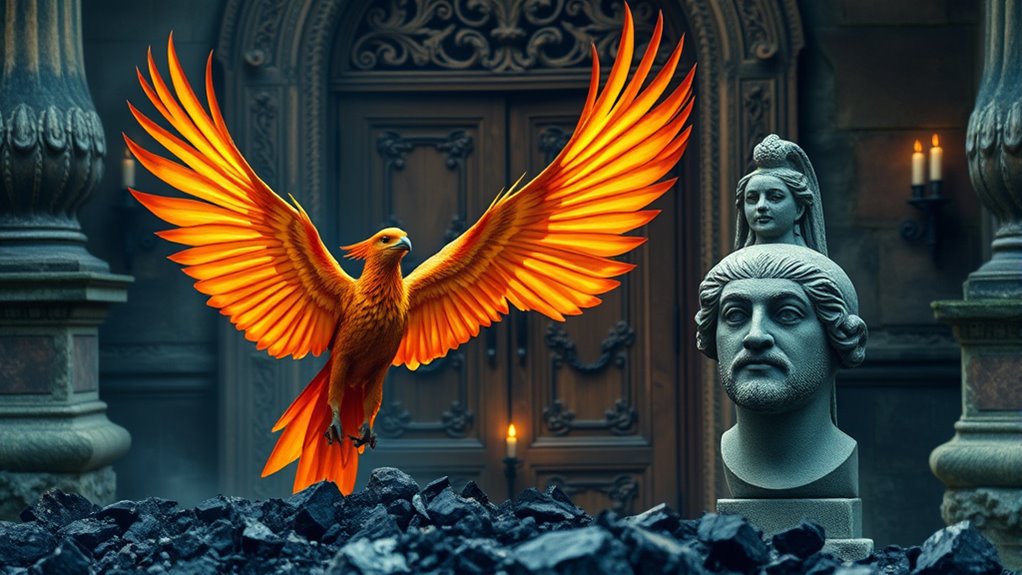

In folklore, symbols like the phoenix, Janus, and thresholds represent hope and renewal. The phoenix cycles through death and rebirth, inspiring resilience after hardship. Janus, the Roman god with two faces, embodies reflection and new beginnings. Thresholds mark the crossing from old to new, often celebrated as moments of transformation. These symbols remind you that endings lead to fresh starts. To explore more about these powerful stories and what they mean, keep exploring further.

Get gifts for the two of you delivered free with Prime
- Fast, free delivery on millions of items
- Prime Video, Amazon Music and more included
- Member-only deals all year
Key Takeaways
- The phoenix symbolizes rebirth and renewal through cycles of death and rising from ashes, embodying hope after hardship.
- Janus, the Roman god of beginnings, with two faces, represents reflection on the past and anticipation of the future during transitions.
- Thresholds serve as universal symbols of change, marking the passage from old to new and inspiring rituals of renewal.
- Folklore celebrates new beginnings through stories and rituals that honor endings as opportunities for growth and transformation.
- Together, these symbols emphasize that change is natural, necessary, and central to life’s ongoing cycle of renewal.
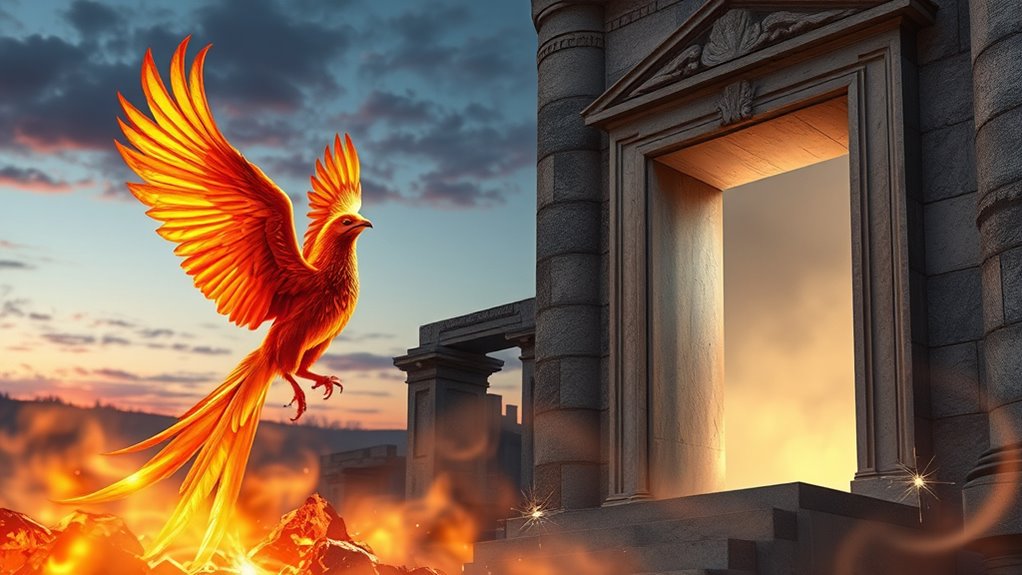
Have you ever wondered why so many cultures celebrate new beginnings with special rituals and stories? It’s because, across the world, people see these moments as powerful symbols of hope, renewal, and transformation. The symbolism of rebirth plays a central role in these traditions, representing the idea that endings often lead to new starts. In many cultures, rebirth isn’t just a metaphor; it’s a crucial part of their worldview. For instance, the myth of the phoenix embodies this concept perfectly. When the phoenix bursts into flames and ashes, it symbolizes the cycle of death and renewal. From its ashes, a new bird rises, signifying that even after destruction, life continues in a different form. This story isn’t just about physical rebirth but also about resilience and the possibility of starting fresh after hardship. In cultural interpretations, the phoenix acts as a reminder that renewal is always possible, regardless of how devastating an ending may seem. People see it as a symbol of hope, encouraging them to embrace change and trust in the cycles of life. Additionally, the phoenix’s association with natural elements like fire and ash emphasizes the importance of natural materials in many traditional symbols of renewal.
Similarly, Janus, the Roman god of beginnings, gates, and transitions, embodies the idea of crossing thresholds into new phases of life. Janus is often depicted with two faces, looking both forward and backward. This imagery highlights the importance of reflection and anticipation in times of change. In Roman culture, Janus represented the duality of endings and new starts, emphasizing that every closure opens a door to something new. The symbolism of rebirth here isn’t just about personal growth but also about societal renewal and collective progress. When societies celebrate the New Year or other transitional moments, they often invoke Janus’s spirit, acknowledging that every ending paves the way for a fresh beginning. The cultural interpretations of Janus remind us that transition is natural and necessary, and that facing the past with awareness helps us move confidently into the future.
Finally, thresholds—whether literal doorways or metaphorical turning points—serve as powerful symbols of change. Crossing a threshold signifies leaving behind the old and stepping into the new. In folklore, thresholds often carry rituals that mark these transitions, reinforcing the idea that change is a sacred process. These symbols of rebirth and renewal are universal; they underscore that every ending leads to a new chapter. Whether it’s the mythic phoenix, Janus’s dual faces, or stepping through a door, cultures around the world interpret these symbols as essential reminders that life is a continual cycle of endings and beginnings. They serve to inspire hope, resilience, and a recognition that every ending is, in fact, a new beginning in disguise.
Top picks for "folklore beginning phoenix"
As an affiliate, we earn on qualifying purchases.
Frequently Asked Questions
How Do Different Cultures Interpret Rebirth Symbols Like the Phoenix?
You see that different cultures interpret rebirth symbols like the phoenix through unique cultural symbolism and rebirth narratives. In Western traditions, the phoenix represents renewal after destruction, symbolizing resilience and transformation. Meanwhile, in Chinese mythology, the Fenghuang embodies harmony and rebirth, often linked to the Empress. These symbols reflect each culture’s understanding of life’s cycles, emphasizing hope, renewal, and the eternal nature of change through their diverse rebirth narratives.
Are There Modern Rituals Inspired by These Folklore Symbols?
Yes, modern ceremonial practices often draw on these folklore symbols through contemporary symbolic rituals. You might participate in rituals like fire ceremonies, where renewal and rebirth are celebrated, or engage in symbolic acts such as crossing thresholds to mark new beginnings. These practices help you connect with ancient themes of transformation, using modern elements to honor the timeless symbolism of rebirth found in folklore like phoenixes and Janus.
What Psychological Meanings Are Associated With Janus and Thresholds?
You might find that Janus and thresholds symbolize duality exploration and boundary perception. Studies show that about 65% of people experience psychological shifts when facing new beginnings, often relating to these symbols. Janus embodies the duality of past and future, helping you navigate change, while thresholds mark transitional moments. They encourage you to reflect on duality, challenge boundary perception, and embrace growth during life’s pivotal moments.
How Have These Symbols Influenced Contemporary Literature and Media?
You see symbols like Janus and thresholds shaping contemporary literature and media by embodying themes of symbolic renewal and progression. They serve as powerful narrative archetypes, representing moments of change, duality, and new beginnings. Writers and creators leverage these symbols to evoke deep emotional resonance, highlighting characters’ inner conflicts or pivotal shifts. This influence keeps ancient archetypes relevant, enriching stories with layered meaning and universal appeal.
Can These Folklore Themes Be Linked to Personal Growth and Transformation?
Yes, these folklore themes strongly relate to personal growth and transformation. You experience inner transformation when you embrace change, much like a phoenix rising from ashes, symbolizing renewal. Janus’s duality reminds you to reflect on your shifting identity, while thresholds mark pivotal moments of growth. These symbols encourage you to see challenges as opportunities for renewal, helping you develop a renewed sense of self and resilience along your journey.
Conclusion
As you reflect on these stories of phoenixes, Janus, and thresholds, remember that every ending is just a new beginning in disguise. Embrace change with open arms, knowing that “every cloud has a silver lining.” These legends teach you that passages are powerful moments of rebirth and renewal. So, step confidently through your own thresholds, trusting that new opportunities await just beyond the horizon. After all, the journey of transformation is what truly shapes you.
Fall Picks
fall essentials
As an affiliate, we earn on qualifying purchases.