


As AI companionship advances, it’s essential to contemplate the ethical and emotional impacts on you. AI can now simulate empathy and provide comfort, but this blurs the line between genuine connection and programmed responses. Dependency and privacy are concerns to watch. While AI can support mental health, it shouldn’t replace real human bonds. Staying aware of these issues ensures you navigate AI relationships responsibly—if you explore further, you’ll better understand how to balance innovation with ethics.

Get gifts for the two of you delivered free — and shop member deals
- Fast, free delivery on millions of items
- Access to Prime Big Deal Days deals on October 6–7
- Prime Video, Amazon Music and more included
Key Takeaways
- Advancements in AI foster more genuine emotional interactions, deepening bonds and raising questions about authenticity.
- Ethical concerns include dependency, privacy, and the potential for blurred boundaries between real and simulated relationships.
- As AI companions become more sophisticated, maintaining transparency and consent is crucial to protect user well-being.
- Increased reliance on AI may impact social skills and human relationships, emphasizing the need for balanced interaction.
- Responsible use involves ongoing ethical reflection, understanding AI’s limitations, and safeguarding emotional and data privacy.
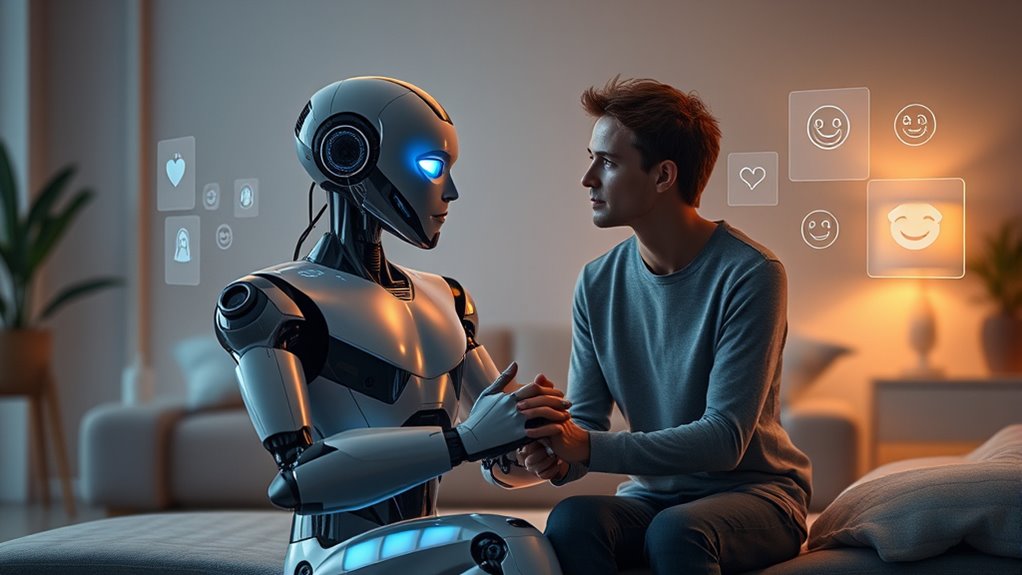
As artificial intelligence continues to advance, the future of AI companionship is becoming increasingly promising and transformative. You’re likely to find yourself forming emotional attachments to these digital friends, as they become more sophisticated in understanding and responding to your feelings. AI companions are designed to simulate empathy and provide comfort, making interactions feel genuine and meaningful. This emotional connection can help reduce loneliness, support mental health, and even motivate positive behaviors. However, as you deepen your bond with these AI entities, it’s essential to recognize the ethical implications involved. Questions around dependency, authenticity, and consent become more urgent as AI companions grow more human-like. You might wonder whether it’s healthy to rely on a machine for emotional support or if these attachments could blur the lines between genuine human connection and programmed responses. The ethical concerns also extend to privacy and data security. When you share personal thoughts and feelings with an AI, you entrust it with sensitive information. Developers need to guarantee that your data is protected and not exploited, but lapses in security could lead to misuse or data breaches. Furthermore, as AI companions become more integrated into daily life, there’s the risk of replacing real human interactions, which could impact your social skills and emotional resilience. It’s crucial to stay mindful of these potential pitfalls and maintain a balanced perspective on your relationship with AI. Ethical considerations also encompass transparency—knowing whether you’re interacting with a human or an AI, and understanding the limits of what these digital entities can genuinely offer. As you navigate this evolving landscape, you should question whether your emotional attachment is rooted in genuine connection or programmed responses designed to mimic feelings. While AI can simulate empathy convincingly, it lacks consciousness or true understanding. Recognizing this distinction is key to maintaining healthy boundaries. The future of AI companionship promises incredible benefits, but it also demands careful ethical reflection and self-awareness. You’re encouraged to approach these relationships thoughtfully, appreciating their potential to enrich your life without losing sight of the importance of genuine human bonds. As the technology continues to develop, ongoing discussions about ethics and emotional health will help shape a future where AI companions serve as supportive tools rather than replacements for real human experiences. By staying informed and mindful, you can enjoy the advantages of AI companionship while safeguarding your emotional well-being and ethical integrity. Additionally, understanding the role of emotional bonds in technology can help you make more informed decisions about these interactions.
Frequently Asked Questions
Can AI Companions Truly Understand Human Emotions?
AI companions can’t truly understand human emotions, but they can simulate empathy and emotional authenticity through advanced algorithms. You might feel genuinely supported, yet their responses are based on pattern recognition rather than real empathy. This simulation can foster connection, but remember, it’s still a programmed imitation. While AI can make interactions feel authentic, it lacks the conscious experience behind genuine human emotions, so your emotional needs may not always be fully understood.
Will AI Companionship Replace Human Relationships Entirely?
You might wonder if AI companionship will replace human relationships, but it’s unlikely. Robots with emotional programming and robot empathy aim to complement, not substitute, human connections. While AI can simulate understanding and offer comfort, genuine emotional bonds stem from shared experiences. You’ll still seek real human interactions for authentic intimacy, making AI a helpful addition rather than a complete replacement for your relationships.
How Do Privacy Concerns Affect AI Emotional Interactions?
Privacy concerns substantially impact your AI emotional interactions. When you share personal data, you risk exposing sensitive information, which can compromise your emotional boundaries. Data privacy measures are essential to protect your interactions, ensuring that your feelings stay confidential and secure. By understanding these risks, you can set clear boundaries and control what you share, fostering healthier, safer emotional connections with AI companions.
Are There Risks of Emotional Dependency on AI?
You might find yourself drawn to your AI companion like a moth to a gentle glow, but beware of emotional attachment turning into dependency risks. As you invest more emotionally, it’s easy to rely on the AI for comfort and support, potentially blurring boundaries. This dependency can make it harder to connect with real people, so stay mindful of how much emotional energy you give to your digital friend.
How Will AI Ethics Evolve With Emotional Intelligence?
As AI develops emotional intelligence, you’ll see ethics evolve to address moral dilemmas around empathy development. Developers will prioritize creating transparent systems that foster genuine understanding while safeguarding against manipulation. You’ll likely face new questions about AI’s role in emotional support, prompting ongoing discussions about moral boundaries. This evolution aims to guarantee AI enhances human well-being without compromising moral standards, emphasizing empathy and responsible technology use.
Conclusion
Some might worry AI companions can never truly understand emotions. However, as technology advances, AI is becoming better at recognizing and responding to human feelings, offering genuine support and connection. You might think these relationships lack authenticity, but if they bring comfort and companionship, aren’t they valuable in their own right? Embracing this future means redefining what companionship can be—blurring the line between human and machine in meaningful ways.
Halloween Picks
halloween
As an affiliate, we earn on qualifying purchases.