
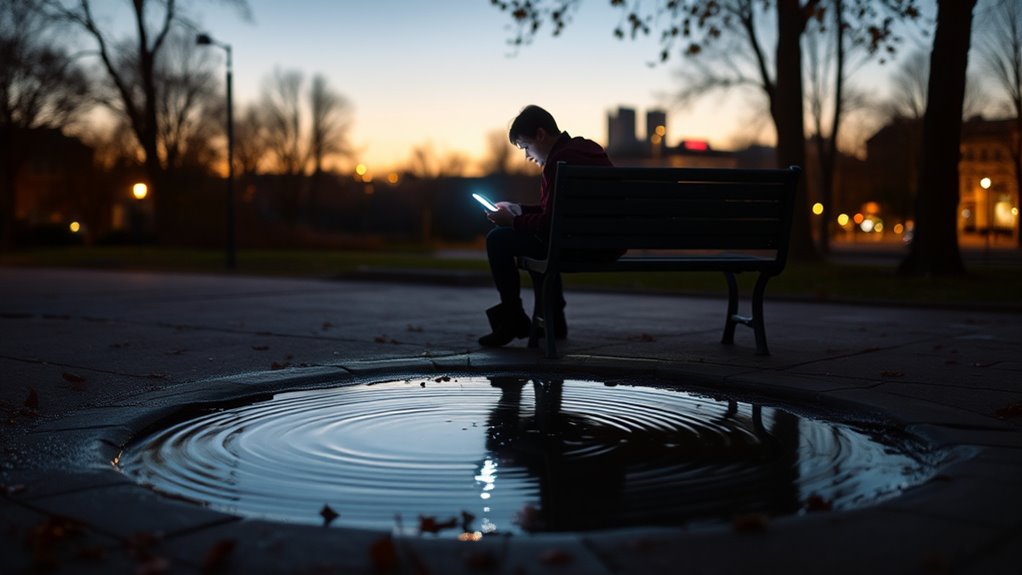

Social media can complicate your post-split recovery by keeping you connected to your ex and exposing you to their updates, which can trigger feelings of jealousy and sadness. Checking profiles or comparing yourself to their online life often prolongs emotional pain and hinders healing. Setting boundaries by unfollowing or muting your ex helps protect your mental health. Staying mindful of triggers and managing your digital habits can make the healing process smoother—there’s more to discover about steering this challenging time.
Key Takeaways
- Social media can prolong emotional pain by encouraging ongoing digital contact with an ex.
- Unfollowing or muting exes helps create necessary emotional boundaries and reduces triggers.
- Viewing ex’s updates may cause jealousy, regret, or misinterpretations, hindering healing.
- Taking breaks from social platforms supports emotional processing and rebuilds confidence.
- Establishing healthy online boundaries protects mental health and facilitates closure after a breakup.

In today’s digital age, ending a relationship often happens as much online as it does in person. When you go through a breakup, social media can become a double-edged sword. On one hand, it’s a way to find support and distraction; on the other, it can complicate your healing process. One of the biggest issues you’ll face is privacy concerns. You might feel tempted to check your ex’s profile or scroll through old photos, but this only prolongs emotional pain and makes moving on harder. If you stay connected online, it signals to your brain that the relationship still has a hold on you, making recovery more challenging. Plus, constantly seeing your ex’s updates can lead to feelings of jealousy, regret, or sadness, which are emotional triggers that hinder your healing process.
Managing your digital boundaries is essential. You should consider unfollowing or muting your ex to create space for emotional recovery. It’s not about erasing the history; it’s about protecting your mental health by reducing exposure to things that ignite painful memories or negative feelings. These emotional triggers can cause you to ruminate and replay past interactions, making it harder to let go. Removing these triggers from your digital environment helps you regain control over your emotional state. Additionally, understanding the role of emotional manipulation in some online interactions can help you recognize unhealthy patterns and avoid them.
Another aspect to consider is the potential for misinterpretation. When you see posts, comments, or photos, your mind might fill in gaps with assumptions, often leading to unnecessary jealousy or regret. This can intensify feelings of loss or betrayal, making it harder to achieve closure. It’s essential to remind yourself that what you see online isn’t always the full story, and it’s okay to step back from social media during this time. Instead, focus on real-world support—friends, family, or therapy—that can provide genuine comfort without the added emotional triggers that come with online interactions.
Ultimately, your recovery depends on creating healthy boundaries and recognizing that social media doesn’t always reflect reality. Protecting your privacy and emotional well-being should be your priorities. Taking a break from digital platforms can give you the space needed to process your feelings, rebuild your confidence, and start healing. Remember, your digital habits can either help or hinder your post-breakup recovery. Choosing to limit online exposure is a powerful step toward moving forward and finding peace beyond the digital clutter.
Frequently Asked Questions
Can Social Media Help or Hinder Emotional Healing After a Breakup?
Social media can both help and hinder your emotional healing after a breakup. Virtual support from friends or online validation can boost your confidence and remind you you’re not alone. However, it can also hinder your progress if you obsess over your ex’s updates or seek validation from others. Use social media mindfully—focus on positive interactions and take breaks when needed to support your recovery.
How Do Social Media Algorithms Influence Post-Split Emotional Responses?
You might think social media algorithms don’t affect your emotional response, but they do. Algorithm influence shapes what you see, often highlighting your ex’s posts or related content, which can intensify feelings of sadness or longing. This constant exposure can make it harder to heal, as your emotional response becomes more reactive to what the algorithm feeds you. Being aware helps you control your social media experience and protect your recovery.
What Privacy Concerns Arise When Managing Breakup-Related Posts Online?
You face privacy invasion risks when managing breakup-related posts online, as sensitive information could be exposed unintentionally. Sharing or deleting posts might lead to data security issues, especially if your accounts aren’t well-protected. Be cautious with your privacy settings, avoid oversharing details, and consider how public or private your content is. Protecting your digital privacy helps prevent unwanted exposure and keeps your personal life secure during this vulnerable time.
Are There Long-Term Psychological Effects From Digital Breakups?
You might experience long-term trauma and attachment disruption after a digital breakup, with studies showing up to 60% of people feeling lingering emotional effects months later. Social media can intensify these feelings by keeping you connected to your ex, hindering emotional healing. Over time, this can lead to anxiety, depression, or difficulty forming new attachments. Staying mindful of your online habits helps protect your mental health and supports your recovery.
How Can Someone Avoid Digital Harassment After a Breakup?
To avoid digital harassment after a breakup, you should set clear digital boundaries by unfollowing or blocking your ex on social media. Practice cyberstalking prevention by adjusting your privacy settings and avoiding contact. Don’t respond to unwanted messages or comments. Consider reporting harassment to platform authorities if it persists. Prioritize your mental health by limiting social media use and focusing on supportive relationships offline.
Conclusion
Think of social media as a garden—you tend to it daily, but sometimes, weeds like old messages and photos threaten to take over. After a breakup, it’s essential to prune those digital remnants to give yourself space to heal. By clearing your online landscape, you make room for new growth and happiness. Remember, just like tending a garden, your recovery takes patience and care. Cut away the clutter, and watch your emotional garden flourish again.