
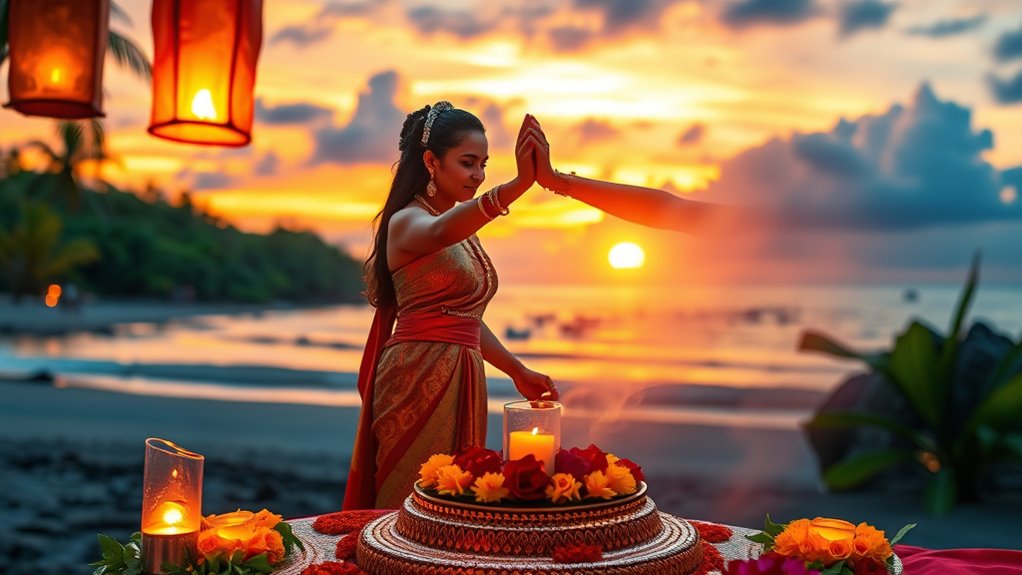

Around the world, love rituals celebrate connection, honor cultural values, and blend spirituality into bonding. From Indian “jaimala” ceremonies symbolizing mutual respect, to Japanese tea rituals showcasing harmony, each tradition reflects deep cultural meanings. Africa’s Lobola signifies commitment, while Polynesian ceremonies emphasize community bonds through dance and storytelling. Exploring these unique practices reveals how love ceremonies serve as powerful expressions of bond, tradition, and spiritual significance—discover more about these beautiful customs that unite people across cultures.
Key Takeaways
- Love rituals vary globally, reflecting unique cultural, spiritual, and social values associated with commitment and affection.
- Traditional ceremonies like Indian jaimala and Japanese tea rituals symbolize mutual respect and harmony.
- Many cultures incorporate spiritual elements, emphasizing love’s divine or spiritual significance within their ceremonies.
- Communal participation through singing, dancing, and storytelling enhances the social bonds of love celebrations.
- Understanding diverse love rituals fosters appreciation for cultural diversity and universal human expressions of love.
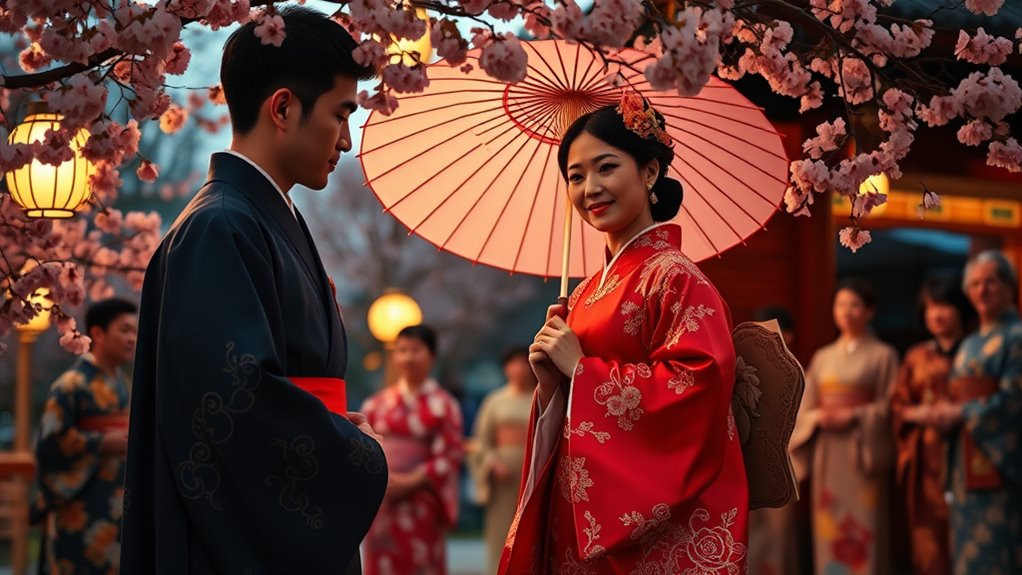
Love is often celebrated through rituals that deepen connections and express devotion. These ceremonies aren’t just traditions; they hold profound cultural significance that reflects the values, history, and beliefs of a community. When you observe or participate in these rituals, you’re not only celebrating love but also connecting with a shared identity that has been passed down through generations. Every culture brings its own unique ritual variations, each crafted to symbolize different aspects of love, commitment, and unity. Whether it’s a simple gesture or an elaborate ceremony, these rituals serve as powerful expressions of affection that resonate deeply within their cultural context.
Love rituals deepen bonds, reflect cultural values, and connect us through shared traditions across generations.
In some cultures, love rituals are rooted in history and carry spiritual or religious significance. For example, in Indian weddings, the exchanging of garlands, known as “jaimala,” symbolizes mutual respect and acceptance. The ritual variations here are rich, often involving intricate customs that highlight the importance of family and community. Similarly, in Japan, the traditional tea ceremony can serve as a symbol of harmony and respect between lovers, emphasizing the importance of mindfulness and shared experience in love. These rituals reinforce the idea that love isn’t just an emotion but a commitment woven into the fabric of cultural practices.
Across different regions, you’ll find rituals that celebrate love in symbolic ways. In some African cultures, the “Lobola” or bride price, is a crucial custom that signifies the groom’s commitment and respect for the bride’s family. It’s a tangible expression of the seriousness of the union, with variations in how it’s performed, reflecting local customs and values. Meanwhile, in Polynesian societies, love is often celebrated through communal ceremonies that involve singing, dancing, and storytelling, emphasizing the collective nature of relationships and social bonds. Each of these ritual variations underscores the importance of community and shared history in the expression of love.
No matter where you look, these rituals serve as meaningful markers of love’s journey—from courtship to lifelong commitment. They’re crafted to honor the emotional, spiritual, and social dimensions of love, making each ceremony a powerful reminder that love is a universal language, expressed uniquely within each culture. By understanding the cultural significance behind these rituals and their variations, you gain a deeper appreciation for how love is celebrated around the world. It’s a proof of the power of human connection, beautifully expressed through rituals that remain vibrant and relevant across generations. Recognizing the cultural significance behind these ceremonies helps us appreciate how love is universally expressed yet uniquely celebrated in diverse ways.
Frequently Asked Questions
How Do Cultural Differences Influence Love Rituals Worldwide?
You see that cultural differences shape love rituals through cultural symbolism and ritual significance. In some cultures, symbols like rings or specific colors convey commitment, while others emphasize community approval or spiritual blessings. These rituals reflect deeply rooted traditions, values, and beliefs, influencing how love is celebrated worldwide. By understanding these differences, you gain insight into diverse expressions of love, highlighting unique cultural identities and shared human emotions.
Are There Modern Adaptations of Traditional Love Ceremonies?
Love, like a river, constantly flows and adapts. You’ll find contemporary adaptations and modern reinterpretations of traditional love ceremonies that blend old customs with new trends. Today’s couples may incorporate digital elements or personalized vows, creating unique rituals that honor heritage while embracing innovation. These modern twists keep love rituals fresh, meaningful, and relevant, proving that even ancient traditions can evolve to reflect today’s diverse and dynamic relationships.
What Is the Historical Origin of Popular Love Rituals?
You’ll find that popular love rituals often originate from ancient practices rooted in historical symbolism, reflecting societal values and beliefs about love and commitment. Over time, these rituals evolve, adapting to cultural shifts and modern influences, creating a continuous ritual evolution. This blending of old and new keeps love ceremonies meaningful while allowing you to connect deeply with their symbolic significance, making each ritual uniquely personal and culturally rich.
How Do Love Rituals Vary Between Urban and Rural Communities?
You’ll find love rituals in urban traditions are like grand spectacles, with flashy ceremonies and modern twists that dazzle everyone. Meanwhile, rural customs are like timeless stories, deeply rooted and passed down through generations, often simpler but just as meaningful. The differences are huge—urban rituals sparkle with contemporary flair, while rural ones stay true to age-old traditions. Both celebrate love passionately, but they do it in wildly different, beautiful ways.
Are Love Rituals Still Relevant in Contemporary Society?
Love rituals are still relevant today, especially with digital dating and virtual ceremonies gaining popularity. You can celebrate love across distances, making rituals more accessible and personalized. These ceremonies help you express commitment and deepen bonds, even if you’re miles apart. In a fast-paced world, they remind you to honor love’s importance, blending tradition with modern technology to create meaningful moments that resonate with your unique relationship.
Conclusion
As you explore these diverse love rituals, you realize that they’re like threads woven into the rich tapestry of human connection. Each ceremony, no matter where it’s performed, echoes a universal heartbeat—an enduring proclamation to love’s power to unite souls across cultures. By embracing these traditions, you see love not just as a feeling, but as a sacred dance that turns life’s simple moments into timeless stories. Love truly is the world’s most beautiful language.