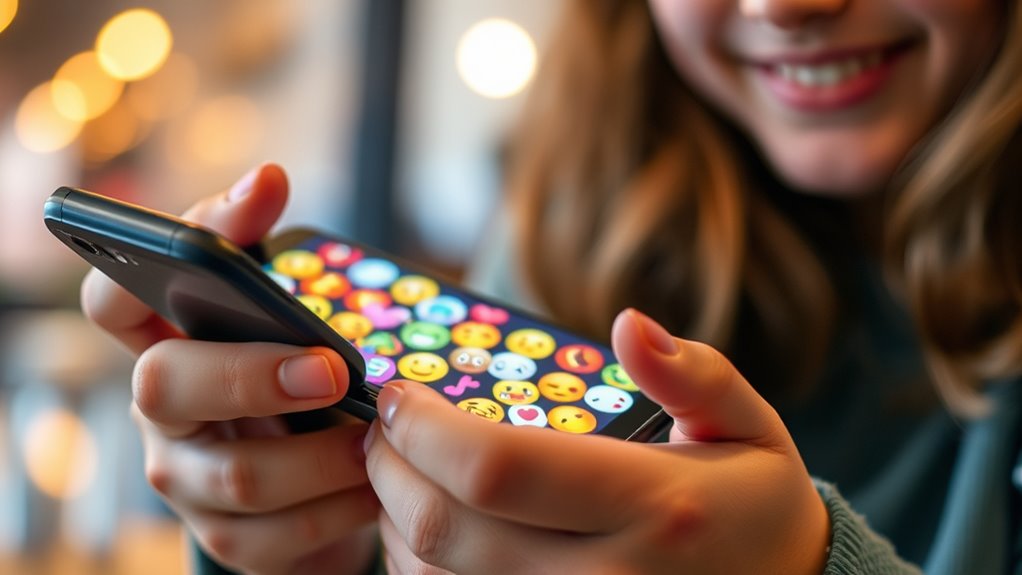

Emojis have become a crucial part of modern digital communication, helping you express emotions, tone, and ideas quickly and vividly. While they enhance understanding across languages and cultures, overusing emojis might sometimes limit your ability to articulate complex thoughts clearly. They can boost your digital literacy but also pose challenges if relied on too heavily. If you keep exploring, you’ll discover how emojis shape our language and what it means for effective conversations today.
Key Takeaways
- Emojis enhance emotional expression but may oversimplify complex ideas, risking reduced clarity in communication.
- Overreliance on emojis could hinder traditional language skills and nuanced verbal articulation.
- Emojis serve as a universal language, improving cross-cultural understanding but may cause misinterpretations.
- Balancing emoji use with words is crucial to maintain language richness and effective messaging.
- Emojis reflect language evolution, supporting modern, visual-oriented communication without necessarily ruining traditional language.
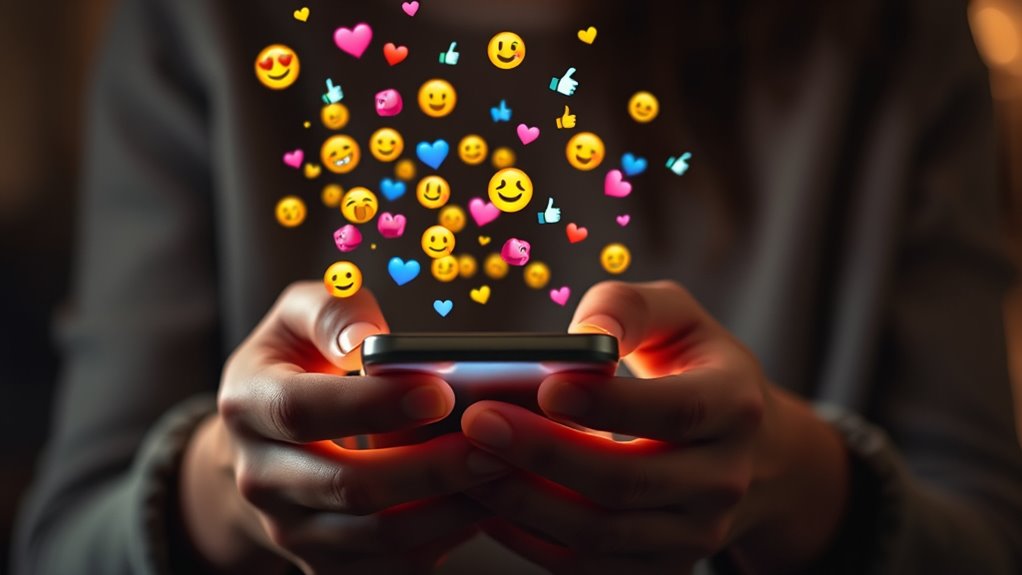
Have you ever wondered how texting has transformed the way we communicate? It’s a shift that’s reshaped language itself, with emojis playing a crucial role in this evolution. The emoji evolution reflects more than just adding colorful symbols to messages; it highlights how our digital literacy adapts to new forms of expression. Today, emojis aren’t just playful extras—they serve as emotional cues, tone indicators, and even shortcuts for complex ideas. As you scroll through your conversations, you might notice how a simple smiley face can change the entire mood of a message, making it friendlier or more casual. This rapid integration of emojis into daily chats shows how language constantly evolves to meet new communication needs. Moreover, mastering emoji use can actually enhance your digital literacy by helping you understand and convey emotions more effectively in online interactions.
However, this change raises questions about whether emojis are diluting or enhancing our language skills. Some argue that relying heavily on emojis might hinder your ability to express yourself clearly through words. If you’re used to quick, visual symbols, you might find it harder to articulate nuanced thoughts without them. On the other hand, emojis can boost your digital literacy by helping you understand and use visual language effectively. They teach you how to convey emotions and context quickly, which is especially useful in a digital environment where tone can be easily misunderstood. Becoming proficient in emoji use and understanding their meanings enhances your ability to navigate the digital world more confidently, especially across diverse cultures where symbols might carry different connotations.
Moreover, emojis have become a universal language of sorts, crossing linguistic barriers that once limited communication. Whether you’re texting someone who speaks a different language or communicating with international friends, emojis often serve as a common ground. This universality can make your digital interactions more inclusive and expressive. Yet, it’s important to remember that emojis should complement your words, not replace them entirely. To maintain effective communication, you need to develop a balance—knowing when to use emojis to add flavor and when to rely solely on clear, precise language.
In essence, emojis have profoundly contributed to how you communicate in the digital age. They’ve evolved from simple icons to essential elements of modern language, demanding a certain digital literacy to use them effectively. Whether you see them as a threat or an asset, one thing’s clear: understanding the emoji evolution and honing your digital literacy skills will help you stay fluent in the language of texting. Embracing this change allows you to express yourself more vividly and connect more easily in a world that’s increasingly visual and digital.
Frequently Asked Questions
Do Emojis Enhance or Hinder Emotional Understanding in Digital Communication?
Emojis enhance emotional understanding in digital communication by adding facial expressions that words alone can’t convey. They help you express tone and intent clearly, reducing misunderstandings. However, cultural nuances can sometimes cause confusion if you’re unaware of their different meanings across cultures. Overall, emojis serve as visual cues that make your messages more relatable and emotionally rich, provided you’re mindful of their diverse interpretations.
How Are Different Cultures Interpreting Emojis Uniquely?
You’ll find that different cultures interpret emojis uniquely due to variations in cross-cultural symbolism. For example, a thumbs-up emoji might be positive in one country but offensive elsewhere. This emoji translation variability can lead to misunderstandings if you’re unaware of cultural nuances. To communicate effectively across cultures, you need to take these differences into account and avoid assuming that emojis carry the same meaning universally.
Can Excessive Emoji Use Replace Traditional Verbal Expressions?
Think of emoji overuse as pouring too much spice into a dish—eventually, the flavor gets lost. Excessive emoji use can’t fully replace traditional verbal expressions because language is a woven tapestry of nuance and context. While emojis add color to our conversations, relying solely on them risks stunting linguistic evolution, turning rich dialogue into a static emoji mural. You need words to truly capture the depth of meaning.
What Are the Psychological Effects of Texting on Language Development?
Texting can impact your language development by influencing verbal memory and language complexity. You might find it easier to recall short, simplified phrases, but your ability to process complex language could decline over time. Emojis and abbreviations often replace detailed verbal expressions, which may limit your vocabulary growth. To balance texting with richer communication, try consciously practicing more elaborate speech and reading to keep your verbal memory sharp and language skills diverse.
Are There Notable Differences in Emoji Usage Among Age Groups?
Like different generations speak distinct dialects, emoji usage varies across age groups. Younger people often use emojis more frequently, blending them into their daily communication, while older generations tend to use them sparingly. This reflects differences in emoji literacy and comfort with digital symbols. These generational communication patterns reveal how emoji adoption shapes understanding, making it essential to recognize these differences to connect effectively across age groups.
Conclusion
As you navigate the world of texting, remember that emojis are like spices—adding flavor, but never replacing the main dish. They can brighten your message or convey emotion instantly, yet overuse might dilute the richness of language. Think of emojis as the seasoning in your communication stew; when used wisely, they enhance, but when overdone, they risk overshadowing the true essence of your words. Choose your symbols carefully—your language’s future depends on it.