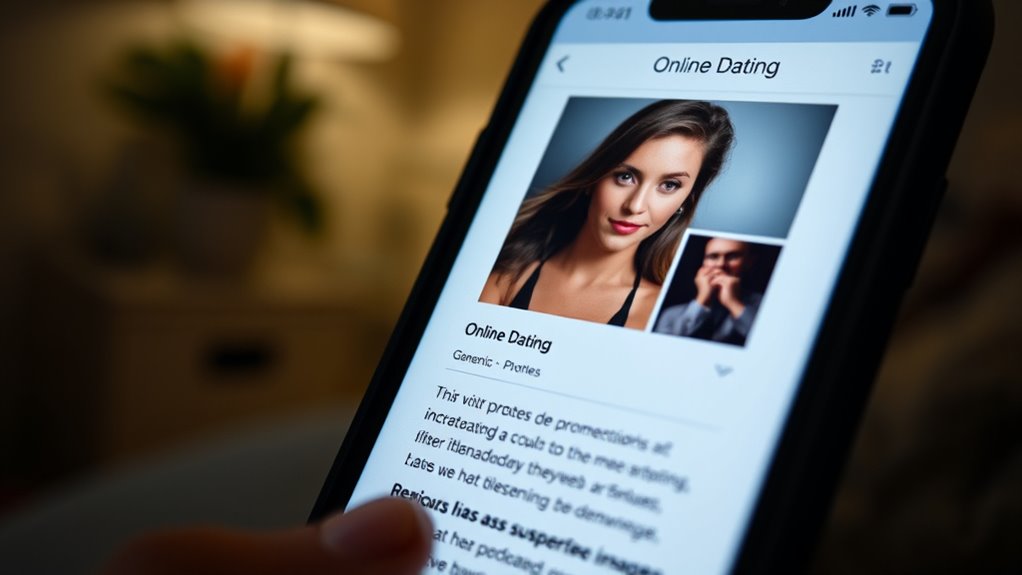

To spot red flags in online dating profiles, pay attention to signs like reluctance to share basic info, inconsistent stories, or profiles that seem too perfect. Be wary if the person avoids meeting in person or video calls, or pushes for personal details early on. Fake profiles often have limited or stock photos, while overly guarded profiles can signal dishonesty. Staying alert helps you protect yourself, and if you keep looking, you’ll discover more warning signs to watch for.
Key Takeaways
- Watch for inconsistent details about their background, job, or location that may indicate dishonesty.
- Be cautious of overly polished profiles with limited genuine photos or generic descriptions.
- Avoid profiles that demand personal information or move conversations off the platform prematurely.
- Notice reluctance to engage in video calls or face-to-face meetings, signaling potential deception.
- Recognize profiles that emphasize secrecy, privacy, or seem too good to be true as red flags.

Online dating can be an exciting way to meet new people, but it’s important to stay alert for red flags that might signal trouble ahead. One of the first signs to watch out for involves privacy concerns. If someone you’re talking to refuses to share basic details or avoids answering questions about their background, it could be a red flag. Be cautious if they ask for personal information early on or try to move your conversations off the dating platform to private messaging apps. Scammers often create fake profiles and use privacy breaches to steal identities or scam money. Always verify that the person isn’t pushing for too much personal data and remain wary if they avoid giving you details that seem relevant to getting to know each other genuinely.
Watch out for privacy red flags like refusing to share basic info or pushing for personal details early.
Another key indicator is inconsistent information. When you notice discrepancies in what someone claims about themselves—such as conflicting details about their job, location, or background—it’s a strong warning sign. These inconsistencies may suggest they’re not being truthful or are hiding something. Pay close attention to their stories; if they say they’re a successful entrepreneur but struggle to explain what they do or provide vague answers, it’s worth questioning their honesty. Conversely, a genuine person typically maintains consistency in their stories and background details. If you catch repeated contradictions, it’s better to proceed with caution or step back altogether.
It’s also important to trust your instincts when something feels off. Inconsistent information and privacy concerns often go hand in hand with other suspicious behaviors, such as avoiding face-to-face meetings or video calls, or insisting on secrecy. If someone seems too good to be true, or if their profile seems overly polished without much substance, take it as a warning. Be wary of profiles with limited photos, stock images, or overly generic descriptions. These can be clues that the profile isn’t authentic.
Furthermore, understanding the importance of verifying profiles can help prevent falling victim to scams or dishonest individuals. Ultimately, your safety hinges on paying attention to these red flags. Don’t dismiss your gut feelings—if you sense something’s wrong, it’s better to pause or stop communication. Protect your privacy by sharing only necessary details until you’re confident about the person’s authenticity. Remember, genuine connections are built on honesty and transparency, so be vigilant for signs that might indicate otherwise. Spotting these red flags early can save you from potential heartbreak or worse.
Frequently Asked Questions
What Are Common Signs of Fake Online Dating Profiles?
You can spot fake online dating profiles by watching for catfishing tactics like overly generic or stolen profile photos. Notice if the profile photo inconsistencies appear—such as images that look too perfect or don’t match the person’s claimed background. Be cautious of profiles that avoid video calls or quick to ask for money. These signs often indicate a scammer trying to deceive you. Trust your instincts and verify their details whenever possible.
How Can I Verify Someone’s Identity Online Safely?
You can verify someone’s identity online by carefully examining their profile photos for consistency and realism. Use reverse image searches to see if their pictures are stolen or reused elsewhere. Additionally, consider doing background checks if possible, especially for more serious connections. Always ask for video chats early on to confirm they’re who they claim to be, ensuring your safety and building trust before sharing personal details.
What Red Flags Indicate Potential Dishonesty in Profiles?
You should watch for profile inconsistencies, like mismatched photos or details that don’t add up. Exaggerated claims about job, lifestyle, or achievements often signal dishonesty. If someone’s story keeps changing or seems too good to be true, trust your instincts and question their honesty. These red flags can help you avoid scams and connect with genuine people, so stay alert and don’t ignore suspicious signs.
How Quickly Should I Move From Messaging to Video Calls?
Did you know that 60% of online daters prefer to shift to video calls within the first week? You should aim to move from messaging to video calls after a few days, especially if the profile photo quality is good and messaging frequency feels comfortable. This helps establish trust and authenticity early on. Don’t rush—wait until you feel confident, but don’t hesitate to take that next step promptly.
Are There Specific Phrases That Suggest Someone Is Not Genuine?
You should watch for phrases that seem overly vague or generic, like “I’m just looking for someone special” or “I love to have fun.” Praise comments that feel excessive or insincere may also be red flags, suggesting manipulation. If their descriptions lack specifics or feel rehearsed, it’s a sign they might not be genuine. Trust your instincts and ask for more details to verify their intentions.
Conclusion
If you ignore these red flags, you might end up with a profile so shady it could be mistaken for a secret agent’s disguise! Spotting warning signs like inconsistent stories or overly perfect photos can save you from the worst online dating nightmare—getting duped by someone who’s not who they say they are. Stay sharp, trust your instincts, and don’t settle for anything less than genuine. Your perfect match isn’t hiding behind a fake profile!