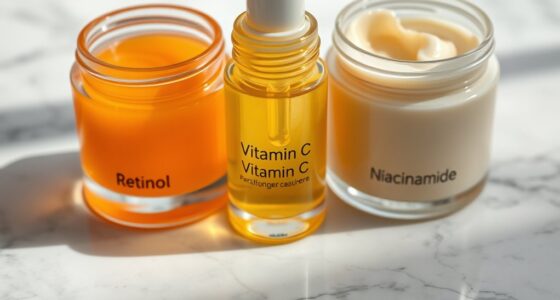

To build a skincare routine from scratch, start by simplifying and focusing on gentle, nourishing ingredients like hyaluronic acid, ceramides, and niacinamide to support your skin’s barrier. Prioritize consistent daily sun protection with at least SPF 30, and use a gentle cleanser that maintains your skin’s natural pH. Keep your routine straightforward and regular, emphasizing protection and repair. If you keep going, you’ll discover how to tailor this reset for lasting skin health.
Key Takeaways
- Start with a gentle cleanser to remove impurities without disrupting your skin’s natural pH.
- Incorporate nourishing ingredients like hyaluronic acid, ceramides, and niacinamide to rebuild skin health.
- Prioritize daily broad-spectrum SPF 30 or higher to protect your skin from UV damage.
- Build a simple routine focusing on cleansing, moisturizing, treating, and sun protection with minimal products.
- Maintain consistency to support long-term skin recovery and prevent future irritation or damage.

If your skin has been feeling dull, irritated, or overwhelmed by environmental stressors, a dermatology reset might be just what you need. Sometimes, your skincare routine becomes cluttered with products that don’t quite suit your skin’s current needs, or you may unknowingly use ingredients that cause more harm than good. Starting fresh means taking a step back, reassessing what your skin truly needs, and building a simple, effective routine. The foundation of this reset is understanding skincare ingredients. Look for products with gentle, nourishing ingredients like hyaluronic acid, ceramides, or niacinamide, which help restore your skin’s barrier and keep it hydrated. Avoid harsh chemicals, fragrances, or alcohol-based products that can cause irritation or strip your skin of its natural oils. When selecting skincare ingredients, focus on those proven to support your skin’s health and adapt to your environment.
Sun protection is another *indispensable* aspect of your reset. Protecting your skin from harmful UV rays isn’t just about preventing sunburn; it’s about safeguarding your skin’s long-term health. Incorporate a broad-spectrum sunscreen with at least SPF 30 into your daily routine—no excuses. Apply it generously, and remember that reapplication is necessary if you’re spending extended time outdoors. Sun protection helps prevent premature aging, dark spots, and damage that can make your skin look dull and tired. It also supports your efforts to rebuild your skin barrier and maintain a clear, healthy complexion. When choosing a sun protection product, look for lightweight formulas that suit your skin type, whether it’s oil-free for oily skin or hydrating for dry skin.
Building a routine from scratch also means establishing consistency. Keep your routine simple: cleanse, treat, moisturize, and protect. Use a gentle cleanser that respects your skin’s pH and avoids stripping away essential oils. Follow up with targeted treatments if needed, but don’t overdo it—less is often more. Moisturize daily with a product that reinforces your skin barrier, especially if you’re using active ingredients or spending time outdoors. And always finish with sun protection, even on cloudy days.
Frequently Asked Questions
How Long Does It Take to See Results From a New Skincare Routine?
You’ll typically see visible improvements within 4 to 6 weeks of starting a new skincare routine, but it varies based on your skin type and concerns. Stick to your routine consistently, and you’ll notice changes gradually. Patience is key in the skincare timeline. While some improvements may appear sooner, it generally takes this time to see significant results, giving your skin a chance to respond and reveal healthier, clearer skin.
Are Natural Ingredients Always Better for My Skin?
Natural ingredients are like a double-edged sword—while they can be gentler and more nourishing, they aren’t always better. You should look for natural preservatives and check for organic certification to guarantee quality. Sometimes, synthetic ingredients are more effective and stable. Ultimately, it’s about understanding your skin’s unique needs, rather than assuming natural is automatically superior. Always read labels and consult a dermatologist for personalized advice.
How Do I Determine My Skin Type Accurately?
You can determine your skin type by observing your skin’s oiliness level and skin pH. Wash your face with a gentle cleanser, wait an hour, then check for shine or dryness. If your skin feels oily and has a low pH, you’re likely oily or acne-prone. If it feels dry or tight, you might have dry skin. Balanced skin with no excess oil or dryness suggests normal skin.
Can I Skip Moisturizer if My Skin Is Oily?
Think of your skin as a garden; even oily soil needs watering to stay healthy. Skipping moisturizer may seem like a shortcut, but it can disrupt oiliness management and cause your skin to overproduce oil. A lightweight, oil-free moisturizer actually helps balance your skin’s natural oils, keeping it nourished without feeling greasy. So, yes, moisturizer is still necessary—just choose one suited for oily skin to maintain that healthy glow.
What Should I Do if I Experience a Skin Reaction?
If you experience a skin reaction, stop using the product immediately and rinse your skin with cool water. Perform a patch test on a small area before trying new products. If symptoms persist or worsen, seek a dermatologist’s advice promptly. They can identify the cause and recommend appropriate treatment, ensuring you avoid further irritation and protect your skin’s health. Don’t ignore persistent reactions; professional guidance is essential.
Conclusion
Starting your skincare routine from scratch is like planting a garden—you nurture it daily, and over time, it blooms beautifully. Remember, consistency is key, and patience pays off. As you build this new routine, trust in the process and listen to your skin’s needs. With each small step, you’re creating a foundation for healthier, clearer skin. Keep at it, and watch your glow grow brighter, just like a garden in full bloom.