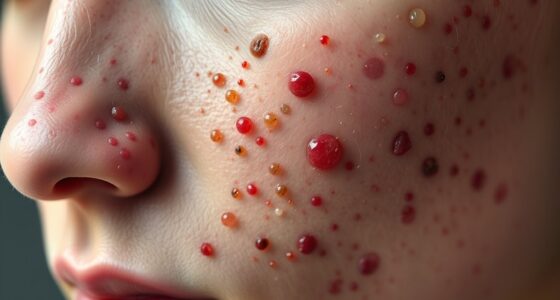
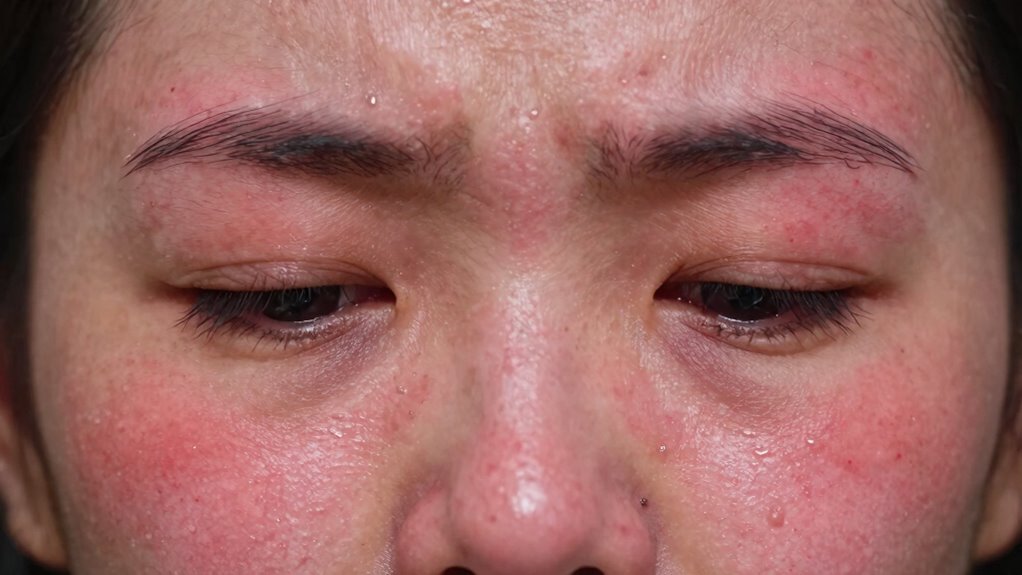

During emotional stress, your skin may appear dull, tired, and dehydrated, with dryness, flakiness, and reduced elasticity becoming noticeable. You might see increased redness, irritation, or breakouts caused by hormone fluctuations and inflammation. Fine lines can deepen, and dark circles may worsen due to disrupted sleep. Rubbing or scratching can worsen redness, creating a cycle of damage. If you pay close attention, you’ll discover how to identify these signs early and support your skin’s recovery.

Get gifts for the two of you delivered free — and shop member deals
- Fast, free delivery on millions of items
- Access to Prime Big Deal Days deals on October 6–7
- Prime Video, Amazon Music and more included
Key Takeaways
- Emotional stress can cause dull, tired skin with increased fine lines and rough texture.
- Stress elevates cortisol, leading to oiliness, breakouts, and skin redness or irritation.
- Lack of sleep from emotional distress worsens dehydration, dark circles, and skin dullness.
- Rubbing or scratching skin during stress exacerbates redness and impairs healing.
- Prolonged stress impairs skin’s natural repair, causing persistent blemishes and slower recovery.
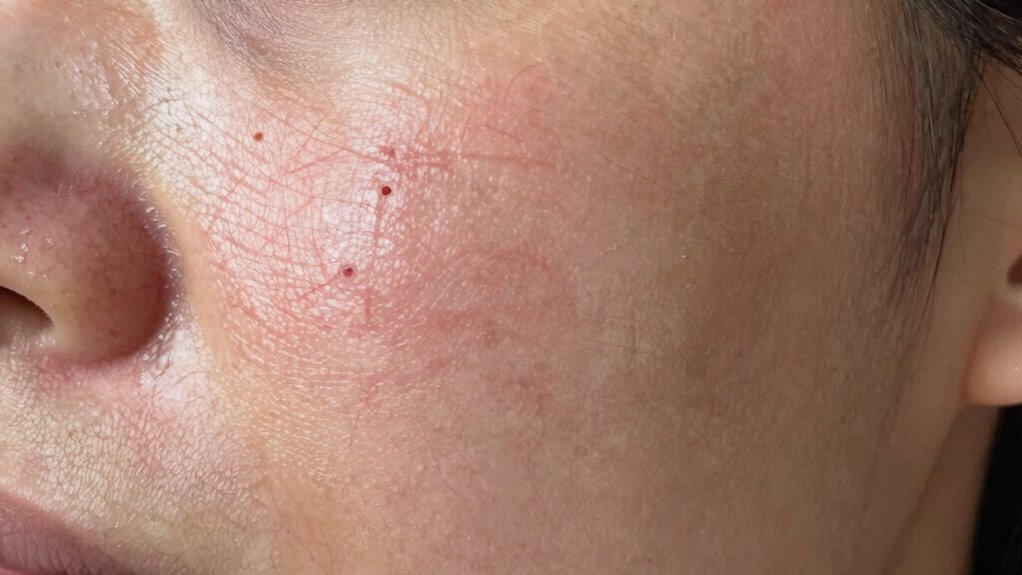
When you’re under emotional stress, your skin often shows the signs before you even realize you’re feeling overwhelmed. Stress triggers a cascade of changes in your body, and your skin is one of the first to react. You might notice your complexion looking dull or tired, with a lack of that natural glow you usually have. One of the key ways stress impacts your skin is through dehydration effects. When you’re anxious or overwhelmed, your body produces more cortisol, which can lead to increased water loss through your skin. This dehydration causes your skin to become dry, flaky, and less elastic, making fine lines more noticeable and giving your face a dull appearance. You may also feel your skin tightening or notice a rough texture, which further signals dehydration.
Stress causes dehydration, making skin dull, dry, and less elastic.
Hormone fluctuations play a significant role in how your skin responds to emotional stress. Elevated cortisol levels don’t just affect your mood—they also influence oil production. When stress levels rise, your skin can produce excess sebum, leading to breakouts or an increase in skin oiliness. Conversely, some people experience dryness because heightened stress can impair the skin’s barrier function, making it harder for your skin to retain moisture. These hormonal shifts can also cause redness and irritation, especially if your skin becomes inflamed or more sensitive due to stress. Additionally, biodiversity and natural environments can help mitigate stress levels, supporting healthier skin responses. Engaging with nature and environmental factors has been shown to promote relaxation and improve overall skin health.
The cycle of stress and skin deterioration can feel relentless. As your skin becomes drier and more irritated, you might find yourself rubbing or scratching your face more often, which can exacerbate redness and cause even more damage. Stress also hampers your skin’s ability to repair itself. During stressful periods, cell regeneration slows down, so any existing skin issues—like dark circles, puffiness, or blemishes—take longer to heal. This creates a vicious cycle: your skin looks worse, which can make you feel more stressed, further aggravating the problem. Additionally, impaired skin repair may be accelerated by ongoing stress, making it even more difficult for your skin to bounce back from daily damage. Recognizing these stress-related skin signs early can help you implement effective strategies to break this cycle.
Additionally, emotional stress can cause changes in your sleep patterns, which directly impact your skin’s health. Poor sleep worsens dehydration effects, dulls your complexion, and deepens dark circles. It also disrupts hormone balance further, compounding the effects on oil production and skin sensitivity. Overall, your skin acts as a mirror to your emotional state, revealing dehydration effects and hormone fluctuations long before you consciously feel overwhelmed. Recognizing these signs allows you to take proactive steps, like staying hydrated, managing stress, and maintaining a consistent skincare routine, to help your skin recover and regain its natural resilience.
hydrating face moisturizer for dry skin
As an affiliate, we earn on qualifying purchases.
As an affiliate, we earn on qualifying purchases.
Frequently Asked Questions
Can Skin Stress Be Reversed Quickly After Emotional Stress Subsides?
Yes, skin stress can often be reversed quickly once emotional stress subsides. When your stress hormone levels drop, your skin’s resilience improves, helping it recover from redness, breakouts, or dullness. To speed up recovery, stay hydrated, get enough sleep, and use calming skincare products. Your skin responds well to reduced stress, so giving it time and care can restore its healthy appearance swiftly after emotional tension eases.
Are Certain Skin Types More Prone to Stress-Related Skin Issues?
Yes, your skin type influences your stress susceptibility and how prone you are to stress-related issues. Sensitive skin types tend to react more intensely to emotional stress, showing redness, irritation, or breakouts. Oily or acne-prone skin may experience increased breakouts, while dry skin might become flaky or irritated. Understanding your skin type helps you tailor stress management and skincare routines, reducing the impact of emotional stress on your skin.
How Does Chronic Emotional Stress Affect Skin Aging?
Chronic emotional stress speeds up skin aging by triggering hormonal fluctuations and collagen breakdown. When you’re stressed for the long haul, your skin loses firmness and elasticity, making wrinkles more prominent. It’s like pulling at a thread — eventually, your skin shows the wear. You might notice dullness or sagging, revealing the toll of ongoing stress. Managing stress helps slow this process and keeps your skin looking youthful longer.
What Are Early Signs of Skin Stress Before Visible Symptoms Appear?
Early signs of skin stress include subtle changes like increased redness, dryness, or dullness, often linked to hormonal fluctuations. You might notice your skin feels more sensitive or reacts quickly to products. These signs happen before visible symptoms appear, as hormonal shifts disrupt your skin barrier, leading to moisture loss and irritation. Paying attention now helps you address stress early, maintaining healthier, calmer skin even during emotional ups and downs.
Can Skincare Products Reduce Skin Stress Caused by Emotional Factors?
Yes, skincare products can help reduce skin stress caused by emotional factors. By choosing products infused with calming skincare ingredients like chamomile, lavender, or CBD, you can promote stress relief and soothe your skin. These ingredients work to calm inflammation and support your skin’s barrier during tense moments. While they won’t erase emotional stress, they provide a calming effect that can make your skin feel more resilient and relaxed.
As an affiliate, we earn on qualifying purchases.
Conclusion
When emotional stress takes hold, your skin can turn into a battlefield of breakouts, redness, and relentless dryness—like a storm raging on your face. It’s as if every worry you carry magnifies in your skin’s appearance, transforming your complexion into a dramatic canvas of chaos. But remember, with mindful care and calm moments, you can tame this wild storm, restoring your skin to its radiant, resilient self—because even the fiercest storms eventually find their calm.
As an affiliate, we earn on qualifying purchases.
dark circles under eye treatment
As an affiliate, we earn on qualifying purchases.
As an affiliate, we earn on qualifying purchases.
Halloween Picks
halloween
As an affiliate, we earn on qualifying purchases.