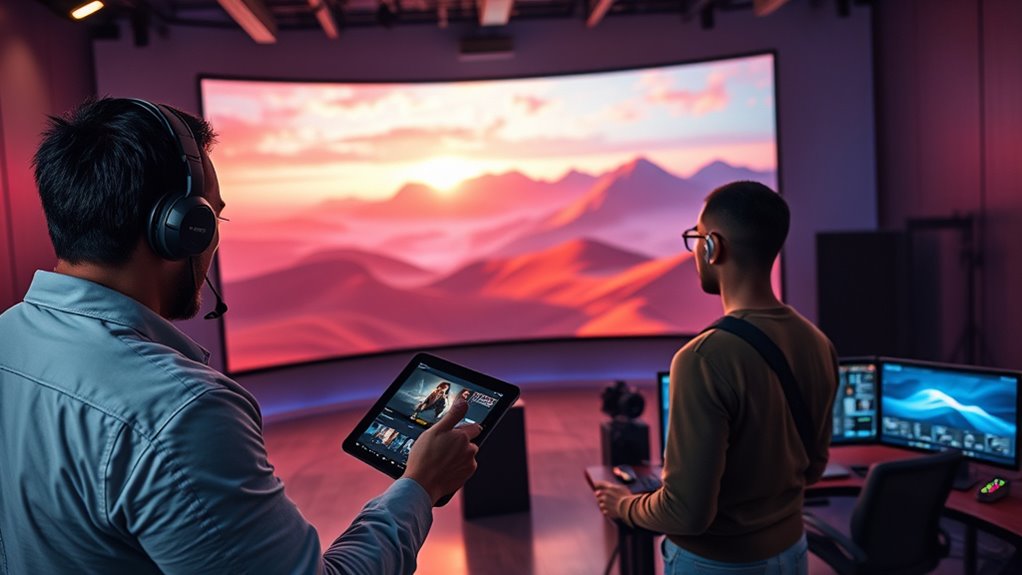

AI is transforming film production by replacing traditional casting with virtual avatars, saving time and resources. It enhances visual effects, making them more detailed, seamless, and cost-effective. AI also supports creative ideas by generating storyboards and helping visualize scenes with different actors. Additionally, it streamlines tasks like upscaling old footage and creating immersive worlds. Keep exploring—there’s much more to discover about how AI is shaping the future of filmmaking.
Key Takeaways
- AI-powered virtual casting replaces traditional auditions with digital avatars, saving time and resources.
- Machine learning automates complex visual effects, making scenes more seamless and cost-effective.
- AI tools assist in generating storyboards, scripts, and visualizing characters to enhance creative ideation.
- Automation of tasks like effects and casting accelerates production timelines and boosts efficiency.
- AI integration enables the creation of immersive worlds and innovative storytelling techniques in filmmaking.
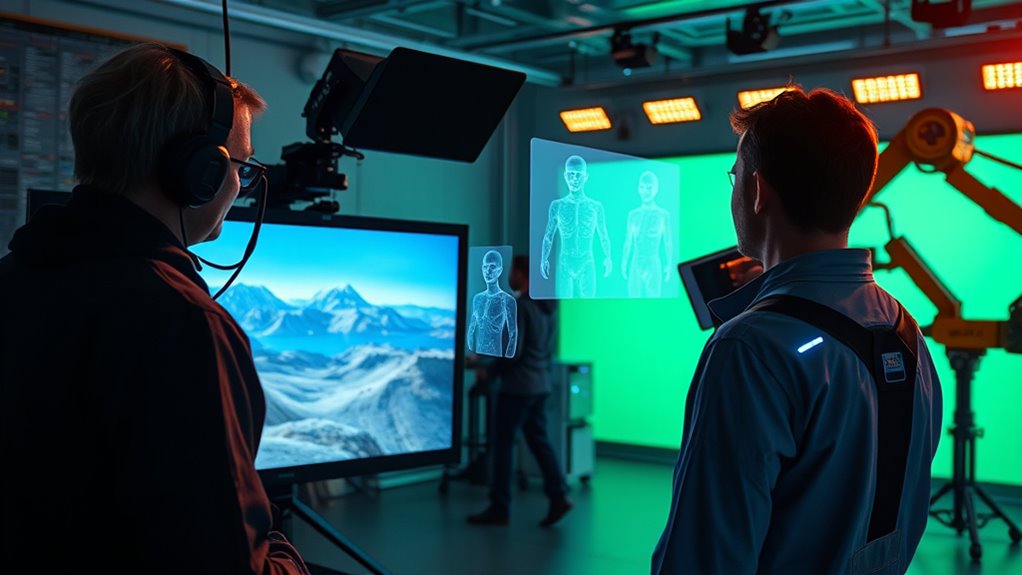
Have you ever wondered how artificial intelligence is transforming the way movies are made? AI is revolutionizing the film industry in ways you might not immediately see but are increasingly influential in the production process. One of the most noticeable changes is in virtual casting. Traditionally, casting involves auditions, callbacks, and negotiations, which can be time-consuming and costly. Now, with AI-powered virtual casting, filmmakers can create digital avatars of actors or even generate entirely new characters based on specific traits. This technology allows you to visualize how a character might look and move before casting decisions are made, saving time and resources. It also opens up possibilities for casting actors who may not be available or are too costly, by creating realistic digital representations. Virtual casting isn’t just about replacing human actors; it helps in the ideation phase, giving directors and producers a clearer picture of how different actors or characters could fit into the story.
Beyond casting, AI’s impact on visual effects has been groundbreaking. In the past, creating complex visual effects required extensive manual work by teams of artists and technicians, often taking months to complete. Today, AI can automate and enhance many of these processes. For example, machine learning algorithms analyze scenes and generate realistic effects like explosions, weather conditions, or fantastical creatures with greater speed and precision. You might not even notice the difference, but these AI-driven visual effects can be more seamless, detailed, and cost-effective. AI also assists in upscaling and restoring older footage, making it clearer and more vibrant, which is especially useful for remasters or integrating vintage footage into modern films. Additionally, AI tools can simulate natural movements and lighting, making CGI characters and environments more lifelike than ever before. This means filmmakers can push creative boundaries without the usual constraints of time and budget. Furthermore, as familiarity with storytelling techniques grows among filmmakers, AI tools are increasingly integrated into the creative process to generate storyboards and script ideas, enhancing collaborative storytelling.
In essence, AI is making film production smarter and more efficient. It streamlines complex tasks like virtual casting and visual effects, freeing up creative teams to focus on storytelling and artistic vision. As these technologies continue advancing, you can expect even more innovative ways for filmmakers to craft immersive worlds and compelling characters. The future of cinema is increasingly intertwined with AI, and it’s transforming the entire process into a faster, more flexible, and more imaginative endeavor. Whether you’re a viewer or a creator, the ways AI is shaping movies will continue to impact the stories you see on screen, making each film a little more extraordinary than the last.
Frequently Asked Questions
How Does AI Impact the Creativity of Filmmakers?
AI enhances your creativity in filmmaking by expanding your visual storytelling options and streamlining the creative process. It allows you to experiment with new ideas quickly and refine your vision through creative collaboration with AI tools. Instead of limiting your originality, AI supports your artistic choices, helping you craft more compelling stories. You stay in control while leveraging technology to push the boundaries of traditional filmmaking, making your work more innovative and dynamic.
Are There Ethical Concerns With AI Replacing Human Roles?
You might worry that AI replacing human roles creates ethical dilemmas and threatens jobs. While AI can streamline production, it also raises concerns about employment implications and dehumanizing creativity. The juxtaposition of innovation and job loss sparks emotional debate. You must consider if AI enhances storytelling or diminishes human touch, ensuring ethical standards guide its integration. Balancing technological progress with job security remains a critical challenge for filmmakers today.
What Are the Costs Associated With Integrating AI in Film?
When you integrate AI in film, you should consider budget considerations and licensing fees. AI tools can be costly upfront, requiring significant investment in software and hardware. Additionally, licensing fees for proprietary AI technology or content can add ongoing expenses. These costs impact your overall budget, so you need to carefully evaluate whether the benefits of AI justify the investment, ensuring your project stays financially viable.
How Is AI Training Data Sourced for Film Applications?
Did you know that over 70% of AI training data in film comes from machine learning models? You source this data through data annotation, where human reviewers label images, videos, and scripts to teach AI systems. This process helps AI understand visual effects, character movements, or dialogue patterns. By carefully curating and annotating data, you guarantee AI models learn accurately, making your film projects more realistic and efficient.
Can AI Predict Box Office Success Before Release?
Yes, AI can predict box office success before a film’s release. It uses predictive analytics to analyze factors like genre, cast, and release date. Audience segmentation helps AI identify target viewers and gauge their likely interest. By combining these insights, you can make informed predictions about a film’s potential performance, enabling studios to optimize marketing strategies and distribution plans for better box office results.
Conclusion
As you explore how AI transforms film production, you’ll see it streamlines processes and sparks creativity. Did you know that AI-powered editing tools can cut editing time by up to 50%? This innovation not only accelerates production but also opens new creative horizons. Embracing AI means you can bring your cinematic visions to life faster and more efficiently than ever before. The future of filmmaking is here, and AI is leading the way.