
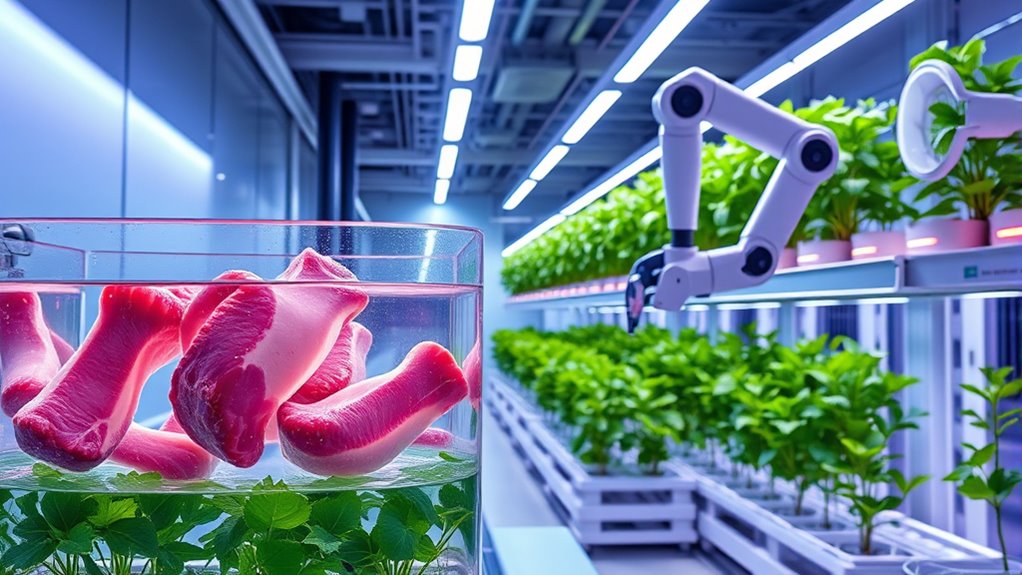

The future of food involves innovations like lab-grown meat and AI-powered agriculture that aim to make our systems more sustainable and efficient. Lab-grown meat offers a way to enjoy real meat without harming animals or the environment, while AI helps optimize farming practices, reducing waste and conserving resources. These advancements work together to create a healthier planet and resilient food supply. Keep exploring to discover how these technologies are shaping what we eat tomorrow.
Key Takeaways
- Lab-grown meat offers a sustainable, cruelty-free alternative that reduces environmental impact and supports food security.
- AI-driven agriculture optimizes resource use, increasing crop yields while minimizing waste and chemical inputs.
- Innovations like genetic engineering develop crops resistant to pests and climate changes, ensuring resilient food supplies.
- These technologies promote eco-friendly farming practices, lowering carbon footprints and conserving biodiversity.
- The integration of lab-grown meat and AI in agriculture aims to create a more sustainable, efficient, and ethical food system.

As technology advances rapidly, the future of food is being reshaped by innovations like lab-grown meat and AI-driven agriculture. These breakthroughs are transforming how you produce, consume, and think about food, aiming for a more sustainable and efficient system. One key area driving this change is sustainable farming, which utilizes cutting-edge methods to minimize environmental impact while maximizing productivity. Through genetic engineering, scientists are developing crops that require less water, resist pests naturally, and thrive in changing climates. This not only ensures food security but also reduces reliance on harmful pesticides and fertilizers, making farming more eco-friendly. As a consumer, you may notice that these innovations lead to fresher produce, fewer chemical residues, and a smaller carbon footprint associated with your food.
In the domain of lab-grown meat, the focus shifts toward creating real meat without the environmental toll of traditional livestock farming. By cultivating muscle cells in controlled environments, producers can generate meat that’s virtually identical to that from animals but without the need for land, water, or feed that conventional farming demands. This approach directly supports sustainable farming practices by reducing greenhouse gas emissions, conserving biodiversity, and lowering water consumption. As someone who cares about the planet, you’ll appreciate how this method offers a meat option that’s cruelty-free and environmentally sound, while still satisfying your culinary preferences.
Meanwhile, AI-driven agriculture enhances efficiency by analyzing data from soil sensors, weather forecasts, and crop health monitors. It helps you understand exactly when and where to plant, irrigate, and harvest, reducing waste and optimizing resource use. These intelligent systems enable farmers to adopt more precise, sustainable farming techniques, which can lead to higher yields with fewer inputs. As a result, you benefit from more reliable food supplies and potentially lower prices, all while supporting practices that are better for the environment. This integration of AI and genetic engineering also accelerates research, allowing for faster development of resilient crop varieties tailored to local conditions, further advancing sustainable farming efforts.
Ultimately, these innovations are shaping a future where food production aligns more closely with ecological balance and resource conservation. You’re part of a growing movement that values sustainable farming and scientifically driven solutions like genetic engineering and lab-grown meat. As these technologies mature, expect a deeper connection between what you eat and the health of the planet, creating a more resilient, ethical, and sustainable food system for generations to come.
Frequently Asked Questions
What Are the Environmental Impacts of Lab-Grown Meat Compared to Traditional Farming?
Lab-grown meat offers significant sustainability benefits over traditional farming, reducing land use and greenhouse gas emissions. It also conserves water, since it requires much less compared to conventional livestock farming. By choosing lab-grown meat, you help lower environmental impacts, promote water conservation, and support sustainable food practices. This innovation can lead to a healthier planet while still providing delicious, protein-rich meals for you and future generations.
How Affordable Will Lab-Grown Meat Become for Average Consumers?
You’ll likely see lab-grown meat become more affordable within the next decade, as costs decrease markedly through technological advancements and increased production scale. Currently, prices are dropping by around 35% annually, making it more accessible to the average consumer. This cost reduction will improve market accessibility, allowing more people to choose sustainable, ethical options without breaking the bank. Expect lab-grown meat to be a common part of grocery stores soon.
What Ethical Concerns Surround Ai-Driven Agricultural Practices?
You should be aware that AI-driven agriculture raises ethical concerns like data privacy and algorithmic bias. Your personal data might be collected and used without clear consent, risking misuse. Additionally, biased algorithms could lead to unfair resource distribution or environmental practices, affecting communities and ecosystems. Staying informed and advocating for transparent AI policies can help guarantee these technologies benefit everyone ethically and equitably.
How Will Lab-Grown Meat Affect Global Food Security?
Lab-grown meat can substantially boost global food security by providing a sustainable, efficient protein source that reduces reliance on traditional livestock. You’ll see improved global nutrition as it offers a nutrient-rich alternative, helping to address hunger and malnutrition worldwide. By lowering environmental impacts and increasing production efficiency, lab-grown meat guarantees more consistent, affordable food supplies, making it an essential tool in feeding a growing population.
What Are the Potential Health Benefits or Risks of Lab-Grown Meat?
You might enjoy lab-grown meat’s potential health benefits, like consistent nutritional safety and reduced contamination risks. However, be aware of allergy risks, as lab-grown meat could introduce new allergens or affect existing ones. While it offers a cleaner, controlled environment, ongoing research is vital to guarantee safety standards. Overall, it could be a healthier alternative if it’s carefully tested and regulated to mitigate possible health risks.
Conclusion
So, here you are, relying on robots and lab experiments to fill your plate, all while dreaming of a natural farm. Ironically, as technology promises to save the planet, it might just turn food into a high-tech mystery. But hey, who needs farm-fresh when you can have perfectly shaped, lab-made meat? Maybe the future of food is less about nature and more about how convincingly we can fake it—deliciously, of course.