


You’ll notice that LGBTQ dating norms have changed a lot across generations. Older generations faced secrecy, risks, and societal stigma, often relying on underground networks and community support. Today, you see more open, honest relationships with greater acceptance and diverse structures like polyamory or non-binary partnerships. Society now values authenticity and individual choice, reducing the influence of traditional roles. If you want to explore how these shifts shape today’s connections, keep exploring the evolving landscape of LGBTQ relationships.

Get gifts for the two of you delivered free — and shop member deals
- Fast, free delivery on millions of items
- Access to Prime Big Deal Days deals on October 6–7
- Prime Video, Amazon Music and more included
Key Takeaways
- Older generations often practiced secrecy and discretion due to societal stigma and legal risks.
- Modern LGBTQ dating emphasizes openness, honesty, and diverse relationship structures.
- Generational shifts reflect decreased reliance on underground networks and increased mainstream acceptance.
- Traditional gender roles persisted in earlier generations, while current norms favor personal values and equality.
- Media representation has significantly influenced evolving attitudes and norms across different generations.
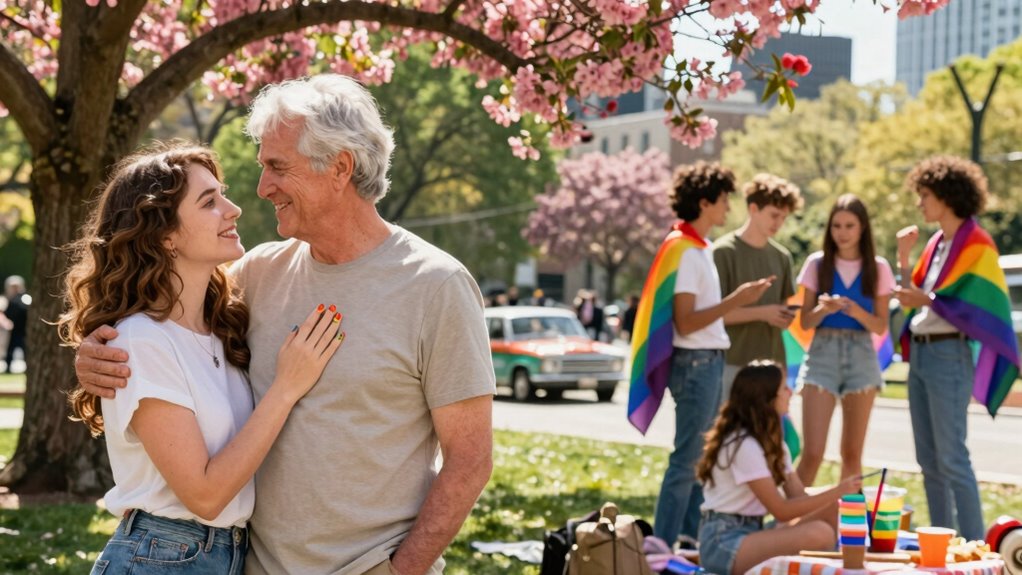
Have dating norms within the LGBTQ community evolved considerably over the years? Absolutely. When you look back, you’ll notice that queer representation was once scarce, often hidden or criminalized, which made forming relationships risky and secretive. Today, increased visibility and acceptance have reshaped how you approach dating and relationships. You might find that older generations had to navigate a world where openly expressing their identity was fraught with danger, and that affected relationship dynamics profoundly. You may even realize that their experiences set the groundwork for more open, diverse expressions of love today.
LGBTQ dating has shifted from secrecy and risk to openness and celebration of diverse love.
In earlier generations, dating within the LGBTQ community was often marked by caution and discretion. Queer representation was limited or outright absent in mainstream media, so you might have had to find community spaces or underground networks to meet others. This created a relationship dynamic rooted in secrecy and resilience. People had to hide their identities, which made forming authentic connections difficult. As a result, many relationships were built on trust and shared understanding, but they also carried the constant risk of exposure or rejection if discovered. For older LGBTQ individuals, these early experiences shaped their perspectives on love and partnership—sometimes cautious, sometimes fiercely committed despite societal obstacles. The social climate of those times significantly influenced how relationships were formed and maintained. Additionally, the lack of widespread queer visibility often meant that community support networks became vital for emotional resilience and connection. The absence of mainstream media representation made it harder for these relationships to gain social acceptance and recognition.
Contrast that with today’s environment, where queerness is more visible and accepted. You’re likely to see a broader spectrum of queer representation in media, which helps normalize diverse relationship models. This visibility influences relationship dynamics by fostering more open communication, honesty, and equality. You’re encouraged to express your authentic self without fear of shame or repercussions, making dating more about genuine connection than survival. The norms around dating have shifted from secretiveness to openness, with many communities celebrating diverse relationship structures—polyamory, non-binary partnerships, same-sex marriages, and more.
Generational differences are also evident in how you approach commitment and roles within relationships. Older generations often adhered to more traditional or rigid expectations, sometimes adopting heteronormative roles even within same-sex partnerships. Today, however, the focus tends to be on individual preferences and mutual understanding, rather than prescribed gender roles. You’re more likely to navigate relationship dynamics based on personal values and shared goals rather than societal expectations. Overall, the evolution of LGBTQ dating norms reflects a broader journey toward visibility, acceptance, and authenticity—transforming how you find, forge, and sustain love across generations. Additionally, the increased queer representation in media has played a crucial role in shaping modern attitudes toward diverse relationship models.
As an affiliate, we earn on qualifying purchases.
Frequently Asked Questions
How Have Social Media Influenced LGBTQ Dating Norms Over Generations?
Social media has substantially shaped LGBTQ dating norms by making online dating more accessible and widespread. You now easily find potential partners through apps, fostering connections across distances. However, you also face privacy concerns, as sharing your identity online can sometimes lead to unwanted exposure or discrimination. Overall, social media encourages openness and diversity, but it requires you to navigate new challenges around privacy and safety in your dating experiences.
What Role Has Legal Progress Played in Changing Dating Expectations?
Legal reforms have substantially shaped your dating expectations by fostering societal acceptance and reducing stigma. As laws protect LGBTQ rights, you feel more confident and open to forming relationships without fear of discrimination. This progress encourages honesty and authenticity in dating, allowing you to express your true self. Overall, legal advances create a safer, more inclusive environment where your relationship choices are respected and celebrated.
Are Dating Norms Different Between LGBTQ Sub-Communities?
You’ll find that dating norms vary between LGBTQ sub-communities, influenced by intersectional identities and community visibility. For example, transgender individuals might navigate different expectations than gay or lesbian communities. Visibility plays a vital role, as increased acceptance helps shape healthier, more inclusive dating practices. These differences are shaped by unique cultural experiences, making each sub-community’s norms distinct, yet interconnected through shared experiences of resilience and evolving societal acceptance.
How Do Cultural Differences Affect LGBTQ Dating Practices Historically?
You see, cultural differences have historically shaped LGBTQ dating practices through secrecy due to societal rejection. In some cultures, you had to hide relationships, fostering clandestine meetings. Over time, cultural shifts have gradually eased restrictions, encouraging more open expressions of love. These changes influence how you approach dating today, making it more inclusive and visible, but the legacy of secrecy still echoes in many communities, affecting your dating experiences.
What Future Trends Might Shape LGBTQ Dating Norms?
You’ll see future LGBTQ dating norms shaped by intersectional identities and generational shifts, transforming how you connect, communicate, and commit. As more people embrace diverse identities, dating will become more inclusive, authentic, and personal. Technology will continue to evolve, fostering safer spaces for expression. These shifts will empower you to navigate relationships with greater understanding, acceptance, and fluidity, creating a more open and vibrant dating landscape for all.
queer relationship communication tools
As an affiliate, we earn on qualifying purchases.
As an affiliate, we earn on qualifying purchases.
Conclusion
As you navigate the evolving landscape of LGBTQ dating norms, remember that each generation is like a chapter in a vibrant storybook, filled with unique tales and lessons. The past’s ink has shaped today’s canvas, but your own brush can add fresh, bold strokes. Embrace these changes like a dance—sometimes slow, sometimes fast—and celebrate the rich tapestry of love that keeps weaving itself brighter with every passing generation.
As an affiliate, we earn on qualifying purchases.
non-binary relationship accessories
As an affiliate, we earn on qualifying purchases.
As an affiliate, we earn on qualifying purchases.
Halloween Picks
halloween
As an affiliate, we earn on qualifying purchases.