

In 2026, understanding LGBTQ slang and terminology means recognizing how language evolves to promote respect and inclusivity. You’ll learn that terms like gay, lesbian, bisexual, transgender, and more recently, queer, genderqueer, and non-binary, better reflect personal identities. Respecting individual preferences and staying current with slang fosters genuine connection. As language continues to shift, keeping informed helps you communicate with sensitivity. Continuing to explore these changes will deepen your understanding and support your respectful interactions.
Key Takeaways
- The LGBTQ glossary continues to expand, including terms like genderqueer and non-binary that challenge traditional binaries.
- Evolving language emphasizes respect for individual preferences and promotes inclusivity across diverse identities.
- Reclaimed terms like “queer” serve as inclusive umbrella words, fostering community pride and acceptance.
- Acronyms such as LGBTQ+ and LGBTQIA+ recognize and validate a wide range of identities, supporting empowerment.
- Staying informed about contemporary terminology helps foster respectful communication and dismantle outdated stereotypes.
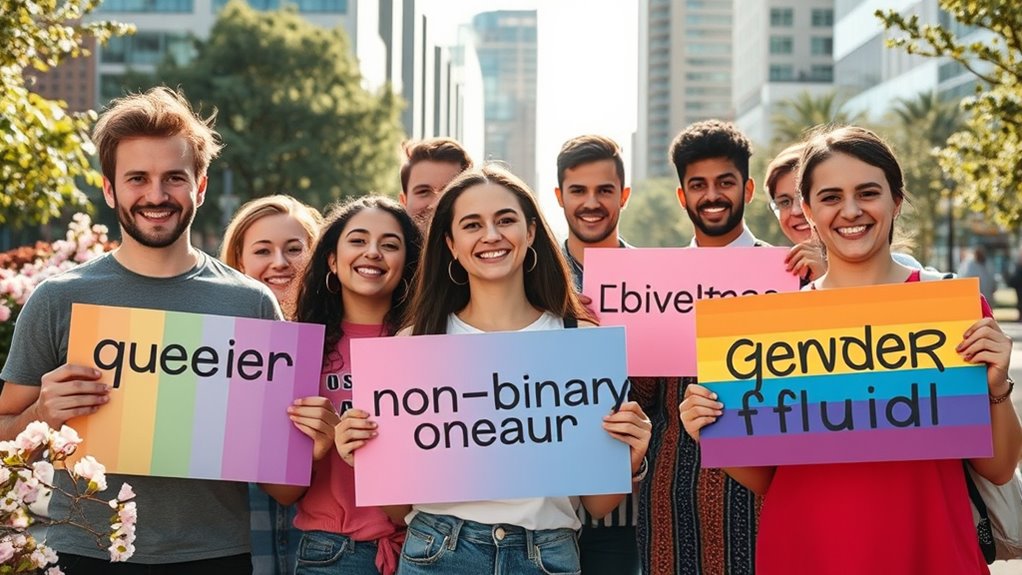
Ever wonder what the latest LGBTQ terms really mean? The language surrounding LGBTQ identities is constantly evolving, blending historical terminology with contemporary slang to create a vibrant, inclusive vocabulary. Understanding these terms helps you communicate respect and foster understanding in diverse communities. Historically, terminology was often limited or rooted in outdated notions, like using “homosexual” or “pervert,” which carried negative connotations. Over time, the community reclaimed and reshaped language, emphasizing identity and pride. Today, terms like gay, lesbian, bisexual, and transgender are standard, but even these have nuanced meanings that continue to evolve. You might hear about genderqueer or non-binary, which challenge traditional gender binaries and reflect a broader understanding of gender identity. While historical terminology provided a foundation, it often lacked the nuance and respect we now consider essential. Contemporary slang, on the other hand, is more fluid and inventive, capturing the dynamic nature of LGBTQ culture today. Words like “queer” have been reclaimed and embraced, serving as an umbrella term for those who don’t identify strictly as heterosexual or cisgender. Other slang terms like “femme” or “masc” describe gender expression, helping people articulate their identity without lengthy explanations. Acronyms like LGBTQ+ or LGBTQIA+ expand to include more identities, acknowledging the diversity within the community. These terms are not just labels but tools for empowerment and connection. As language shifts, it’s important to stay informed and respectful, recognizing that slang can be playful but also potentially exclusionary if misused. You should approach these terms with curiosity and an open mind, understanding that what’s trendy today might change tomorrow. It’s also crucial to respect individual preferences—some may prefer specific labels over others, and that choice deserves recognition. The blend of historical terminology and contemporary slang illustrates the journey towards greater inclusivity and understanding. It’s about honoring the past while embracing the present, ensuring everyone feels seen and validated. As you learn these terms, you participate in a broader movement that values authentic self-expression and respect. Remember, language is a powerful tool—using it thoughtfully helps dismantle stereotypes and foster a more accepting environment. Whether you’re simply expanding your vocabulary or engaging more deeply with LGBTQ communities, staying attuned to this evolving language shows genuine respect and a commitment to inclusivity. The landscape of LGBTQ terminology is rich and complex, reflecting the diverse experiences of individuals worldwide. Keep learning, listening, and using these words with care, and you’ll help build a culture where everyone’s identity is acknowledged and celebrated.
Frequently Asked Questions
How Do I Respectfully Ask Someone About Their LGBTQ Identity?
When you want to learn about someone’s LGBTQ identity, approach with respectful communication and ask appropriate questions. You might say, “If you’re comfortable sharing, I’d love to understand your identity better.” Remember, it is crucial to respect their boundaries and be mindful that they may choose not to answer. Show genuine curiosity, listen carefully, and avoid pressing if they seem hesitant. Respect always fosters trust and understanding.
What Are Common Misconceptions About LGBTQ Terminology?
Don’t judge a book by its cover; many misconceptions about LGBTQ terminology stem from stereotypes rather than true identities. People often confuse labels with stereotypes, mistakenly believing all individuals with a certain label share the same traits. Remember, misconceptions about LGBTQ terminology can lead to misunderstandings, so it’s essential to recognize that labels are tools for identity, not stereotypes. Respectful curiosity helps bridge gaps and fosters genuine understanding.
How Has LGBTQ Language Evolved Over the Past Decade?
Over the past decade, LGBTQ language has become more inclusive and precise, reflecting a deeper understanding of gender identity and sexual orientation. You’ve seen the rise of terms like genderqueer, non-binary, and pansexual, which help people describe themselves more accurately. This evolution promotes respect and awareness, encouraging society to recognize diverse identities. As language continues to develop, you’re part of a movement that fosters understanding and acceptance for everyone’s unique experiences.
Can Terminology Differ Across Cultures Within the LGBTQ Community?
Imagine walking through a vibrant marketplace, where words and colors shift with each stall. Cultural language differences and regional terminology variations shape how the LGBTQ community expresses identity worldwide. You’ll find terms that resonate deeply in one country, yet feel unfamiliar or carry different connotations elsewhere. These linguistic nuances reflect diverse histories and experiences, reminding you that language evolves uniquely across cultures, fostering understanding while sometimes creating beautiful, complex tapestry of identities.
How Do I Stay Updated on Changing LGBTQ Language Standards?
To stay updated on changing LGBTQ language standards, you should regularly check community resources and trusted online platforms that focus on linguistic updates. Follow social media accounts, blogs, and organizations dedicated to LGBTQ advocacy, as they often share the latest terminology and respectful language practices. Engaging with these resources helps you stay informed, respectful, and inclusive, ensuring your language aligns with current standards and reflects ongoing cultural and social shifts.
Conclusion
As language continues to evolve, so does our understanding and respect for the LGBTQ community. Some argue that constantly changing terminology might cause confusion, but it actually reflects society’s growing awareness and acceptance. Embracing this evolving language helps foster inclusion and understanding. By staying informed about the latest terms, you show respect and support for others’ identities. Remember, language shapes perception—so keep learning, listening, and adapting to create a more respectful world.