


Your love feels political because society often laws, norms, and attitudes that shame or restrict LGBTQ relationships. When you come out or show affection, you’re challenging societal judgments, prejudices, and legal barriers meant to silence and marginalize you. Every act of love becomes a statement of resistance and a fight for acceptance and rights. If you want to understand how these struggles shape your experience and what others are doing to push for change, there’s more to explore below.

Get gifts for the two of you delivered free with Prime
- Fast, free delivery on millions of items
- Prime Video, Amazon Music and more included
- Member-only deals all year
Key Takeaways
- Laws often deny or restrict marriage for LGBTQ couples, making their love a form of resistance.
- Societal stigma and prejudice label LGBTQ love as abnormal, turning expressions of affection into acts of defiance.
- Public acts of love challenge ingrained norms and societal expectations, transforming love into a political statement.
- Cultural norms and social attitudes influence acceptance, making love a battleground for broader human rights issues.
- Fighting for recognition and acceptance affirms LGBTQ love as a symbol of resistance against systemic discrimination.
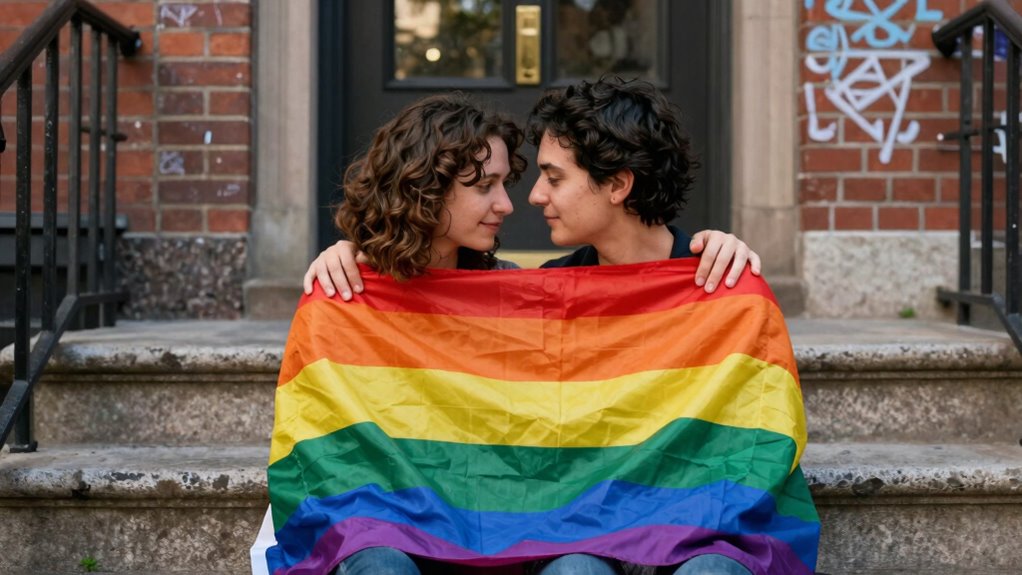
Why does love sometimes feel like an act of rebellion for LGBTQ couples? It’s because your love often exists in a landscape riddled with obstacles designed to suppress it. Legal barriers, for instance, are persistent hurdles that can make simple acts—like marrying the person you love—feel like a victory against a system that tries to deny your rights. Many countries still lack marriage equality, and even where it exists, legal processes can be complex, costly, or fraught with discrimination. These laws aren’t just bureaucratic challenges; they are symbols of societal rejection that reinforce the idea that your love isn’t valid or deserving of recognition. So, when you fight for legal recognition, it’s more than just a formality—it’s a stand against a system built to marginalize your relationship.
Societal stigma further complicates your experience. From family to community, you might face judgment, exclusion, or outright hostility simply because of who you love. This stigma isn’t always overt; it can be subtle—whispered comments, social ostracism, or the pressure to hide your identity. Living in a society that often views your love as abnormal or wrong makes every act of affection a form of resistance. When you hold hands in public or come out to friends and family, you’re challenging deeply ingrained prejudices that seek to keep you invisible. Every step toward openness is a defiance of societal norms that seek to shame or silence you. Recognizing how societal attitudes are shaped by cultural norms helps explain why acceptance can be so difficult, and why activism remains vital. Additionally, understanding the impact of social attitudes can empower individuals and allies to foster greater acceptance and change. Moreover, challenging these attitudes often requires a collective effort to shift public perceptions and promote inclusive narratives. By highlighting these issues, communities can work toward creating safer spaces where love is seen as universal, not political.
These combined pressures make your love feel inherently political. It’s not just about two people in a relationship; it’s about fighting for recognition and acceptance in a world that’s often hostile. Each legal victory, each moment of courage to be yourself publicly, becomes a small act of rebellion against the forces that try to erase or diminish your love. Your relationship becomes a statement—a refusal to accept the restrictions imposed by laws or social attitudes. Living openly and authentically in spite of these challenges is a way of asserting your right to love freely. The ongoing social movements and advocacy efforts worldwide continue to inspire hope and progress, reminding us that change is possible through collective action.
In essence, the political nature of your love arises from the ongoing struggle against unjust laws and social stigma. Your love defies the barriers meant to keep you apart and the prejudices designed to keep you silent. Every act of love, every step toward equality, becomes a form of resistance—an affirmation that love in all its forms deserves respect and recognition, regardless of societal or legal opposition. Recognizing the importance of legal equality and social acceptance helps frame your love as a vital part of the broader fight for human rights and dignity.
As an affiliate, we earn on qualifying purchases.
Frequently Asked Questions
How Does Societal Acceptance Impact LGBTQ Couples’ Relationships?
Societal acceptance influences your relationship by shaping how cultural norms and familial expectations affect you. When society is accepting, you feel freer to express your love openly, strengthening your bond. Conversely, rejection or discrimination can create stress, fear, or secrecy, making your relationship more challenging. Acceptance fosters a sense of belonging and validation, allowing you to build a healthier, more resilient relationship free from societal pressures.
What Legal Challenges Do LGBTQ Couples Face Worldwide?
You face significant legal challenges worldwide, including hurdles to legal recognition like marriage rights, adoption, and parental recognition. Diplomatic barriers often block progress, with some countries refusing to acknowledge same-sex relationships officially. These obstacles keep many LGBTQ couples from enjoying full equality and protection under the law, making it feel like the world is still playing catch-up. Overcoming these issues requires persistent advocacy and international cooperation.
How Does Media Representation Influence LGBTQ Love Stories?
Media representation influences LGBTQ love stories by shaping perceptions through stereotypes and promoting diversity. When media portrays authentic, varied love stories, you see a broader, more inclusive view, helping you feel seen and understood. Conversely, stereotypes can reinforce misconceptions, making you feel marginalized. Your exposure to diverse representation fosters acceptance, community, and hope, empowering you to embrace your love story confidently and challenging societal biases that may otherwise make your love feel political.
Why Do Some Countries Criminalize LGBTQ Relationships?
You might wonder why some countries criminalize LGBTQ relationships. It’s often because deeply rooted cultural norms and religious doctrines act like unyielding walls, shaping laws that refuse to accept love in all its forms. These societies see LGBTQ identities as threats to tradition, turning love into a political battleground. Until these beliefs soften, legal restrictions remain, casting shadows over love’s true freedom and expression.
How Can Allies Support LGBTQ Couples Politically?
You can support LGBTQ couples politically by engaging in legal advocacy and pushing for policy reform. Contact your representatives to advocate for equal rights, participate in campaigns promoting anti-discrimination laws, and educate others about LGBTQ issues. Your active involvement helps shape inclusive policies and fights unjust laws, showing your support. By standing up for equality through these actions, you make a tangible difference in creating a more accepting and fair society for LGBTQ couples.
As an affiliate, we earn on qualifying purchases.
Conclusion
So, next time you see an LGBTQ couple holding hands, remember—they’re not just sharing a moment; they’re defying a system that’s keen to keep love in its “appropriate” box. Love might be simple, but for many, it’s also a tiny act of rebellion. Because when love becomes political, every kiss is a handshake with justice, and every smile is a silent protest. Keep loving loudly—you’re not just living, you’re leading.
As an affiliate, we earn on qualifying purchases.
Supportive social activism books
As an affiliate, we earn on qualifying purchases.
As an affiliate, we earn on qualifying purchases.
Halloween Picks
halloween
As an affiliate, we earn on qualifying purchases.