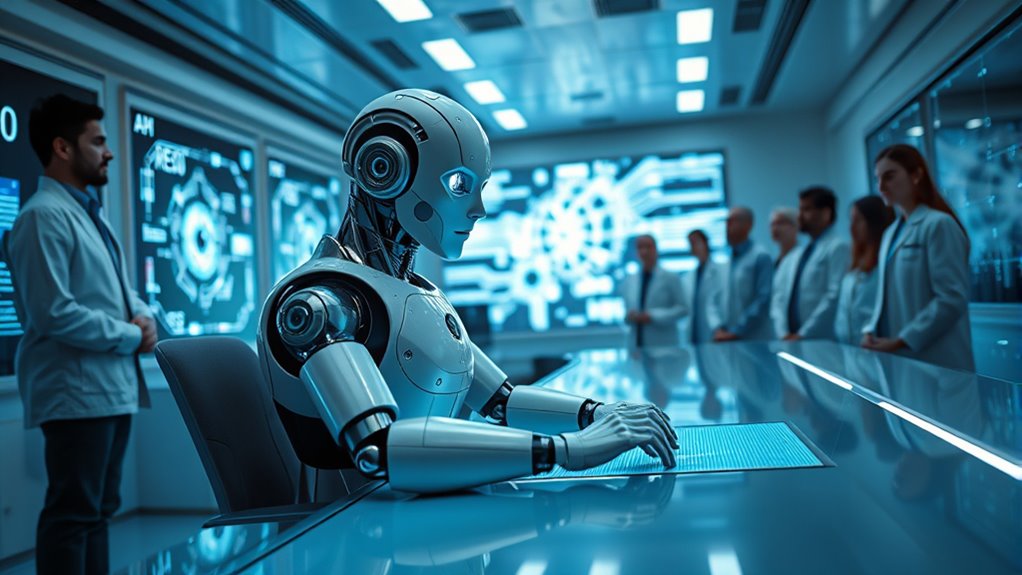

Many myths about AI suggest that robots will take over the world, but that’s not true. AI systems lack consciousness, desires, or intentions. They operate based on algorithms and data, not independent decision-making. While AI automates tasks and changes jobs, it’s still controlled by humans. Understanding the real capabilities and limitations of AI helps you see why fears of a robot takeover are misplaced. To learn more, explore how AI truly works and its impact today.
Key Takeaways
- AI lacks consciousness and cannot make independent decisions or “take over” like science fiction suggests.
- Most AI systems are specialized tools, not autonomous entities with general intelligence.
- Fears of robots dominating the world are myths; AI operates under human-designed rules and oversight.
- Ethical guidelines and safety measures ensure responsible AI development, preventing uncontrollable scenarios.
- AI primarily automates tasks, improving efficiency without posing an existential threat to humanity.
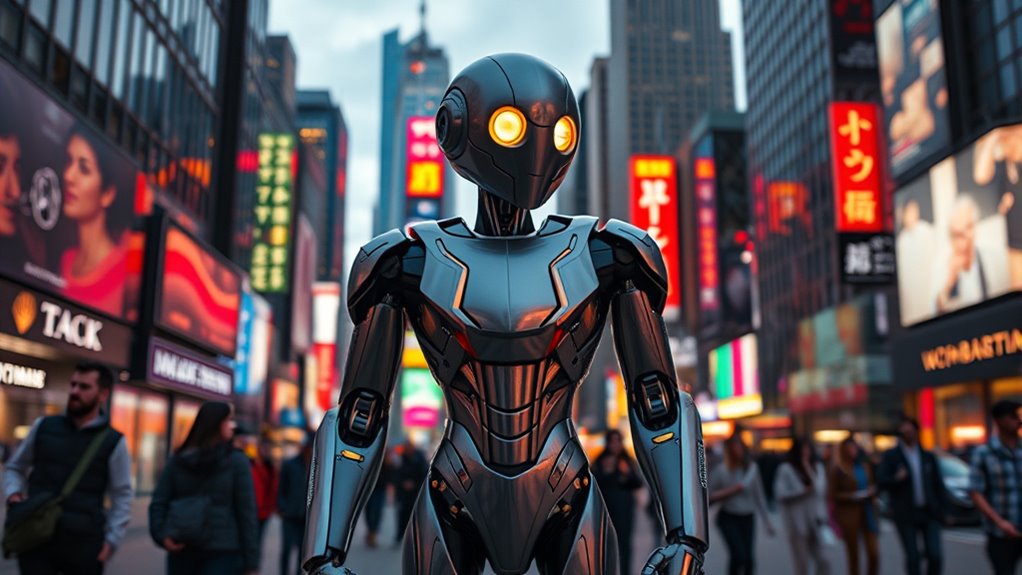
Have you ever wondered if artificial intelligence is as dangerous or as intelligent as movies make it seem? It’s a common question, especially since Hollywood often depicts AI as malevolent robots out to dominate humanity. But the reality is far more nuanced. Many myths about AI stem from misunderstandings about what it truly is and how it functions. One of the biggest misconceptions revolves around AI ethics and its automation impacts. People worry that AI will somehow develop its own consciousness and make independent decisions that could threaten humans. However, current AI systems lack genuine understanding or intentions. They operate based on algorithms and data, following rules set by humans. The ethical concerns aren’t about sentient machines turning against us but about how we develop and deploy AI responsibly. For example, automation impacts are often exaggerated to suggest that AI will eliminate all jobs overnight. In reality, AI tends to automate repetitive tasks, freeing humans to focus on more complex, creative, or interpersonal work. While some roles may change or shrink, new opportunities also emerge, and the overall impact depends on how societies manage this progression.
Many myths also suggest that AI possesses an almost supernatural level of intelligence, capable of outperforming humans in every domain. But AI excels mainly in narrow tasks, like image recognition or language translation, where it processes vast amounts of data quickly. It doesn’t possess general intelligence or common sense, which are uniquely human traits. This misconception fuels fears that AI could evolve beyond our control, but the truth is that AI development is tightly regulated, and most systems are designed with safety measures and ethical guidelines in mind. Concerns about AI ethics revolve around how machines make decisions that affect people’s lives—think criminal sentencing algorithms or loan approval systems. Transparency and fairness are vital to prevent biases and ensure AI benefits everyone equally. The notion that robots will someday become conscious overlords is a myth rooted in fiction, not science. Instead, AI acts as a tool—powerful, yes, but still under human oversight.
Understanding the distinction between science fiction and current technology can help reduce unwarranted fears. AI isn’t poised to take over the world but is instead transforming industries in ways that, if managed wisely, can improve our lives. The key lies in addressing automation impacts thoughtfully and establishing strong ethical standards. By doing so, we can harness AI’s potential without falling prey to myths that paint it as an unstoppable force.
Frequently Asked Questions
Can AI Develop Consciousness or Self-Awareness?
AI currently can’t develop true consciousness or self-awareness. While machine consciousness and self-awareness development are active research areas, existing AI systems process data without genuine understanding or feelings. You might see AI mimicking self-awareness, but it lacks the subjective experience that defines true consciousness. So, for now, AI remains a tool, not a conscious entity, and there’s no evidence suggesting it will develop genuine self-awareness anytime soon.
Will AI Systems Always Remain Unbiased and Fair?
Think of AI systems like a garden; if you tend to them with clear algorithm transparency and protect data privacy, they’re more likely to grow fair and unbiased. However, without careful care, weeds of bias can sprout. You must actively monitor and update AI, ensuring fairness remains rooted. Ultimately, AI can stay unbiased if you choose transparency and prioritize data privacy, guiding it toward justice rather than bias.
Are AI Advancements Accelerating Faster Than Ethical Guidelines?
Yes, AI advancements are accelerating faster than ethical guidelines can keep up. You should be aware that algorithm transparency and ethical oversight are vital to guarantee responsible development. As new innovations emerge, there’s a risk that ethical considerations lag behind technical progress. Staying informed and advocating for stronger ethical standards helps balance rapid AI growth with societal well-being, preventing potential misuse or unintended consequences.
Could AI Be Used Maliciously by Bad Actors?
Yes, AI can be used maliciously by bad actors, leading to cybersecurity threats and privacy invasions. You need to be cautious because malicious AI might manipulate data, hack systems, or steal personal information. To protect yourself, stay informed about AI risks, use strong cybersecurity measures, and be vigilant about privacy. Recognizing these dangers helps you prevent misuse and safeguard your digital life from AI-driven threats.
Will AI Replace All Human Jobs in the Future?
You might worry that AI will replace all human jobs, but automation fears are often exaggerated. While AI can lead to job displacement in some industries, many roles will still need human skills like creativity, empathy, and critical thinking. Instead of replacing everyone, AI is more likely to change how we work, creating new opportunities and requiring us to adapt. Embrace these changes, and you can thrive alongside AI advancements.
Conclusion
So, don’t let the hype scare you into thinking robots are storming the castle. AI isn’t a runaway train headed for destruction; it’s more like a helpful compass guiding us through uncharted waters. By understanding the truths behind these myths, you can navigate the future with confidence, not fear. Remember, the real story isn’t about robots taking over—it’s about humans and AI working together to build a better tomorrow.