


When people search for a relationship book, two titles dominate recommendations more than any others: The 5 Love Languages by Gary Chapman and Attached by Amir Levine and Rachel Heller. They get recommended interchangeably in online discussions, but they are solving very different problems, and choosing the wrong one for your situation wastes the reading effort that could have helped.

Get gifts for the two of you delivered free with Prime
- Fast, free delivery on millions of items
- Prime Video, Amazon Music and more included
- Member-only deals all year
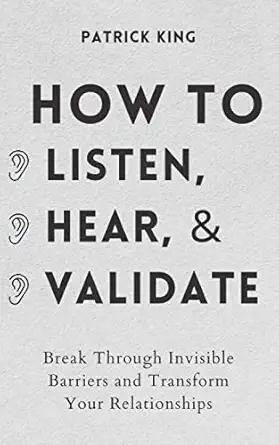
How to Listen, Hear, and Validate: Break Through Invisible Barriers and Transform Your Relationships
- ✔ Format: Book
- ✔ Series: How to be More Likable and Charismatic
- ✔ Topic: Communication & Relationship Skills

Act Like a Lady, Think Like a Man, Expanded Edition
- ✔ Format: Book
- ✔ Edition: Expanded Edition
- ✔ Genre: Dating and Relationships

The Let Them Theory: A Life-Changing Tool That Millions of People Can’t Stop Talking About
- ✔ Format: Book
- ✔ Core Concept: Letting go of things outside your control
- ✔ Primary Benefit: Stress reduction and reclaimed personal power
The 5 Love Languages argues that people give and receive love in five distinct ways — words of affirmation, quality time, gifts, acts of service, and physical touch — and that most relationship friction comes from partners speaking different languages. Attached, grounded in attachment theory research, argues that your adult bonding style — anxious, avoidant, or secure — shapes who you pick, how you behave when intimacy deepens, and why the same painful dynamics repeat across different partners.
The real decision tension is this: do you want a practical communication tool you can apply this week with a basically good partner, or a deeper diagnostic framework for understanding destructive patterns in how you connect? This guide compares them across the criteria that actually matter — the problems each addresses, depth of explanation, practical usability, scientific grounding, and fit for different relationship situations — so you can pick the right tool instead of reading both hoping one sticks.
At a Glance
| Criteria | The 5 Love Languages by Gary Chapman | Attached by Amir Levine and Rachel Heller | Winner |
|---|---|---|---|
| Core problem it addresses | Mismatched ways of expressing affection | Repeated dysfunctional patterns of intimacy and partner selection | Depends |
| Depth of explanation | Shallow — one framework, heavily illustrated with anecdotes | Deep — explains root causes of behavior, not just expression | B |
| Practical usability | Very high — a quiz and vocabulary you can use immediately | Moderate — requires self-diagnosis and sustained behavior change | A |
| Scientific grounding | Weak — framework predates and ignores attachment research | Strong — built on decades of attachment research | B |
| Best-fit relationship situation | Stable couples who feel underappreciated or disconnected | People stuck in anxious-avoidant cycles or repeated bad patterns | Depends |
| Accessibility and reading effort | Very easy; short book, memorable concept | Moderate — more pages, more concepts, but clearly written | A |
| Risk of misapplication | Moderate — can excuse serious incompatibility as a language gap | Moderate — risk of over-labeling self or partner | Depends |
| Long-term usefulness | Moderate — useful vocabulary, but limited once applied | High — framework keeps explaining new situations over time | B |
How to Listen, Hear, and Validate: Break Through Invisible Barriers and Transform Your Relationships
Of the three books here, this is the only one that treats communication as a learnable skill rather than a puzzle to decode or a mindset to adopt. That distinction is why it earns our top spot. Where Act Like a Lady, Think Like a Man focuses on understanding one specific audience (men, in dating contexts), this book works across the full spectrum of your relationships — partners, friends, family, coworkers, and difficult conversations of any kind. That breadth matters if your friction isn’t confined to romance.The core promise is teaching validation: making the other person feel genuinely heard before you respond. Compared with The Let Them Theory, which asks you to change your internal reactions, this book asks you to change your external behavior — a more demanding path, but one with more immediate, observable results in conversations. The techniques around breaking through "invisible barriers" are especially useful for people who find themselves repeating the same argument with a partner without knowing why.The honest tradeoff: this is a practice book, not a read book. If you want entertaining storytelling or a single memorable mantra, Steve Harvey’s conversational style or the Let Them framework will feel more engaging. This option also has a lower profile than the other two — it lacks the mainstream buzz and media footprint of a bestselling title — so you’re buying it on the strength of its methods, not its reputation. It’s also part of a broader series on likability and charisma, which some readers will see as a bonus pathway and others as an upsell.
Pros:
- Teaches a transferable skill — listening and validation — rather than situation-specific advice
- Works for romantic, professional, and family relationships alike
- Practical, exercise-driven approach that produces changes you can observe in real conversations
- Part of a broader series for readers who want to continue building social skills
Cons:
- Requires actual practice; skimming it will change nothing
- Lower visibility and fewer reader discussions than the blockbuster titles in this lineup
- The series framing may feel like a funnel into further purchases
Best for: Couples and individuals whose real problem is miscommunication, repeated arguments, or feeling unheard
Not ideal for: Readers looking for dating-specific strategy or a light, single-idea motivational read
Bottom line: If you only buy one book from this list, buy this one — it’s the only pick that permanently upgrades how you communicate with everyone in your life.
“If you only buy one book from this list, buy this one — it’s the only pick that permanently upgrades how you communicate with everyone in your life.”
Act Like a Lady, Think Like a Man, Expanded Edition
This is the most narrowly targeted book in the lineup, and that’s precisely its strength. Steve Harvey writes directly to women who want a candid explanation of how men approach love, intimacy, and commitment — the kind of straight talk that the other two books don’t attempt. Where How to Listen, Hear, and Validate teaches you to understand the person in front of you through better listening, this book hands you one author’s map of how men supposedly operate in dating. If you’re early in the dating process and trying to filter partners, that map is arguably more immediately useful than conversation technique.The Expanded Edition adds material beyond the original bestseller, which makes it the better version to buy if you’re choosing fresh. Stylistically, it’s the most entertaining of the three — conversational, funny, and easy to race through on a weekend, a sharp contrast to the workbook feel of our top pick. For readers who find dense self-help a chore, this is the most frictionless entry point in the roundup.But be clear-eyed about the tradeoffs. The advice is generalized by design — it describes men in broad strokes, and readers dating outside traditional heteronormative scripts will find much of it doesn’t map to their lives. It also reflects one man’s viewpoint with considerable confidence; some of the framing reads as dated to modern audiences. Compared with The Let Them Theory, it offers far less personal-growth substance — it’s about understanding others, not managing yourself. Treat it as a perspective-shifter and conversation starter, not gospel, and it delivers good value.
Pros:
- Candid, unfiltered insight into how men think about commitment and intimacy
- Highly readable and entertaining — the easiest read of the three
- Expanded Edition includes additional content beyond the original edition
- Written by a widely known, bestselling author with a distinctive voice
Cons:
- Advice is heavily generalized and reflects one author’s personal viewpoint
- Some framing may feel dated or out of step with modern relationship norms
- Offers little for readers already in established relationships or beyond the dating stage
Best for: Women navigating dating who want a blunt, entertaining explanation of male behavior and intentions
Not ideal for: Readers in same-sex relationships, those seeking research-based guidance, or anyone wanting self-development rather than partner-decoding
Bottom line: A fun, direct peek into the male dating mindset that works best as a perspective piece rather than a rulebook.
“A fun, direct peek into the male dating mindset that works best as a perspective piece rather than a rulebook.”
The Let Them Theory: A Life-Changing Tool That Millions of People Can’t Stop Talking About
The Let Them Theory sits in this lineup as the mindset-first alternative, and it’s important to understand it isn’t really a relationship technique book at all. Its central tool is disarmingly simple: let people do what they’re going to do, and stop spending your energy trying to control outcomes you can’t. That makes it the ideal pick for a reader whose relationship stress comes from over-investment — the partner, friend, or family member whose behavior you’ve been trying to manage, fix, or resent. Neither of the other two books addresses this problem: the listening guide teaches you to engage more skillfully, while Harvey’s book teaches you to decode; this one teaches you to release.Where it shines compared with the other picks is speed of application. There’s no skill to practice and no perspective to absorb — the concept lands in the first chapter and you can start using it the same day. For overwhelmed readers who don’t have bandwidth for a workbook, that immediacy is genuinely valuable, and its massive reader discussion means there are abundant communities and companion content for anyone who wants reinforcement.The flip side is depth. A single idea stretched across a full book inevitably becomes repetitive, and experienced self-help readers will recognize much of the underlying philosophy from stoicism and existing acceptance-based frameworks. If you’ve already read widely in this genre, you’ll likely finish it feeling you got one good paragraph expanded into two hundred pages. It also does nothing for readers who need concrete communication tools — "letting them" won’t teach you how to validate a hurting partner. Buy it for the specific problem it solves, not as a general relationship manual.
Pros:
- Simple, single-concept tool you can apply immediately
- Effective for reducing stress around other people’s choices and opinions
- Broad, active reader community for ongoing discussion and support
- Applicable to relationships, work, and family situations alike
Cons:
- One idea stretched across a full book; noticeably repetitive in later chapters
- Too basic for readers already familiar with acceptance-based or stoic philosophies
- Does not teach practical communication or dating skills
Best for: Stressed, over-invested readers who need to stop controlling others’ behavior and reclaim emotional energy
Not ideal for: Experienced self-help readers or those who need concrete communication and dating skills
Bottom line: A powerful one-tool book for letting go of what you can’t control — just don’t expect it to fix how you communicate.
“A powerful one-tool book for letting go of what you can’t control — just don’t expect it to fix how you communicate.”
As an Amazon Associate we earn from qualifying purchases.
Key Differences
The most important difference is what each book treats as the cause of relationship trouble. Chapman locates the problem in communication: partners love each other but express it in ways the other doesn’t register, so the fix is learning to speak the partner’s language. Levine and Heller locate the problem in attachment patterns: the anxious partner’s protest behaviors and the avoidant partner’s distancing are hardwired strategies for managing closeness, and the fix is recognizing your style, choosing compatible partners, and learning to communicate needs in ways that don’t trigger the other person’s defenses. In practice, The 5 Love Languages gives you a vocabulary for asking for what you want; Attached gives you an explanation for why you want it so urgently — or why you flee when you get it.
The second major difference is scientific footing. Attached is built on adult attachment theory, a well-established body of research in developmental and social psychology, and the book cites studies throughout. The five love languages framework, by contrast, came from Chapman’s pastoral counseling observations and has limited empirical support — subsequent research on the concept has been mixed at best. This doesn’t automatically make Attached the better choice: a framework can be scientifically loose yet still practically useful as a conversation starter. But if you care about why the advice works, or you’re skeptical of pop psychology, the gap matters.
The third difference is scope. The 5 Love Languages is essentially one idea stretched into a book: take the quiz, learn your languages, apply them. That’s a strength for busy readers and a weakness for anyone with a serious, recurring problem. Attached is a diagnostic and prescriptive system that covers partner selection, conflict de-escalation, and self-management of anxious or avoidant tendencies. It asks more of the reader but pays back with a framework that keeps explaining new relationship situations years later.
Detailed Comparison
Core problem addressed (major difference)
The books target fundamentally different failure modes. The 5 Love Languages addresses the couple who genuinely loves each other but feels unappreciated — the classic ‘I do so much for him and he never notices’ versus ‘I tell her I love her and she says I never help.’ Attached addresses the couple locked in pursuit-and-withdrawal: one partner anxious about closeness and constant reassurance, the other suffocated and withdrawing, both escalating each other’s worst behaviors. If your problem is affection expressed in the wrong currency, Chapman’s book is directly on target. If your problem is a repeating cycle of anxiety, jealousy, emotional unavailability, or a pattern of choosing the wrong people, Chapman has almost nothing to say, and Attached is squarely aimed at you. This is the single most important criterion, and the answer genuinely depends on your situation.
Depth of explanation (Attached by Amir Levine and Rachel Heller wins — major)
Attached wins clearly. It doesn’t just label behavior; it explains the developmental origins of attachment styles, how they play out in adult romantic relationships, and why anxious-avoidant pairings are so common and so painful. Readers frequently describe finally understanding decades of their own behavior. The 5 Love Languages is a single concept with many illustrative anecdotes — engaging, but you fully grasp the idea in the first chapter and the rest is application. If you want insight that changes how you interpret your own relationship history, Attached is the deeper read by a wide margin. If you want depth of explanation, the gap here is major.
Practical usability (The 5 Love Languages by Gary Chapman wins — moderate)
The 5 Love Languages wins, and this is its genuine strength. The book includes a quiz, produces a shareable result, and gives you a concrete script: ‘My language is quality time — here’s what that looks like for me.’ A couple can read it in a weekend and have a productive conversation by Monday. Attached offers practical guidance too — including effective communication scripts for anxious and avoidant readers — but applying it requires honest self-diagnosis of your attachment style, sustained effort to change ingrained responses, and in some cases the harder conclusion that a partner is wrong for you. Its advice is more powerful but slower and more demanding to use. The gap is moderate: both are usable, but one is fast and the other is work.
Scientific grounding (Attached by Amir Levine and Rachel Heller wins — major)
Attached is written by a psychiatrist and psychologist and rests on decades of attachment research, one of the more robust traditions in relationship science. The five love languages framework originated from one counselor’s observations, was published in 1992 before attachment research entered the popular mainstream, and has received mixed empirical support since — studies testing it have found only partial confirmation of its structure. For readers who want advice they can trust because it’s evidence-based, Attached wins decisively. That said, scientific rigor is not the same as usefulness, and many readers find the languages framework helpful despite its thin research base. The gap in grounding is major, even if its practical impact is smaller.
Best-fit relationship situation (major difference)
The 5 Love Languages fits stable relationships that work but feel flat: long-married couples, new couples wanting to start well, partners who like each other but keep missing each other’s bids for affection. Attached fits situations with real distress: repeated breakups with the same dynamic, relationships with a pursue-withdraw pattern, people who feel chronically insecure in love or chronically trapped by it, and single people trying to understand why they keep choosing emotionally unavailable partners. Notably, Attached also serves single readers choosing whom to date, while The 5 Love Languages assumes you already have a partner to communicate with. The right choice depends entirely on which situation describes you, and choosing wrong is costly: a couple in an anxious-avoidant spiral will not fix it with love languages, and a happy couple doesn’t need attachment diagnostics.
Accessibility and reading effort (The 5 Love Languages by Gary Chapman wins — moderate)
The 5 Love Languages is shorter, simpler, and written in a warm pastoral style with lots of stories. Almost anyone can read it quickly and absorb the concept fully. Attached is longer and introduces more concepts — three attachment styles, their origins, their signatures, and intervention strategies — though it remains very readable for a research-based book, with self-assessment questionnaires included. Neither is difficult, but Chapman requires a few evenings while Attached asks for genuine attention. For a busy or reluctant reader — or a partner you’re trying to get to read along — the accessibility advantage is real. The gap is moderate.
Risk of misapplication (minor difference)
Both carry risks worth knowing. The 5 Love Languages can be misused to excuse genuinely poor treatment: ‘his language just isn’t acts of service’ can rationalize a partner who never contributes. It also frames serious incompatibility or emotional neglect as a translation problem, which it often isn’t. Attached risks over-labeling: readers sometimes diagnose themselves and partners with attachment styles after one chapter, using ‘you’re avoidant’ as a weapon or an identity rather than a starting point. Both risks are manageable with a little critical reading. The risks are roughly comparable — different in kind, similar in severity. The gap is minor.
Long-term usefulness (Attached by Amir Levine and Rachel Heller wins — moderate)
Attached has more staying power. Once internalized, the attachment framework keeps generating insight — it explains new conflicts as they arise, informs partner selection if the relationship ends, and applies to friendships and parenting too. The 5 Love Languages tends to deliver most of its value in the first month: the vocabulary sticks, but the book itself becomes reference material you rarely reopen. If you read one book and want it to keep paying off, Attached is the better long-term investment. The gap is moderate.
The 5 Love Languages by Gary Chapman: Pros and Cons
Pros:
- Extremely fast to read and apply — usable within days
- Built-in quiz creates an easy, low-conflict couple conversation
- Gives partners concrete vocabulary for expressing needs
- Very accessible style; easy to get a reluctant partner to read it
- Low emotional intensity — safe for couples avoiding blame
Cons:
- Weak scientific foundation; the framework has mixed research support
- One idea stretched across a whole book
- Can’t address serious dynamics like anxiety-driven pursuit or avoidance
- May wrongly frame real incompatibility or neglect as a communication gap
- Assumes you already have a willing partner; little for singles
Attached by Amir Levine and Rachel Heller: Pros and Cons
Pros:
- Grounded in decades of attachment research
- Explains root causes, not just symptoms — deep self-insight
- Directly addresses the anxious-avoidant trap and repeated bad patterns
- Useful for singles deciding whom to date, not just existing couples
- Framework keeps explaining new situations long after reading
Cons:
- Requires honest, sometimes uncomfortable self-diagnosis
- Slower to translate into action than a simple framework
- Longer and conceptually heavier read
- Risk of over-labeling yourself or your partner
- Can lead to conclusions you may not want, including that a relationship won’t work
Who Should Choose What
Choose The 5 Love Languages by Gary Chapman if:
- Your relationship is basically good but feels emotionally disconnected or underappreciated
- You want a shared conversation starter that a skeptical or busy partner will actually read
- You’re in a new relationship and want a low-pressure way to talk about needs early
- You want quick, concrete actions rather than psychological analysis
Choose Attached by Amir Levine and Rachel Heller if:
- You keep repeating the same painful pattern across different relationships
- You or your partner shows anxious clinging or avoidant withdrawing during conflict
- You’re single and want to understand why you’re drawn to unavailable people
- You’ve tried communication advice and it hasn’t fixed the underlying dynamic
- You want advice you can trust because it’s grounded in research
Skip both if: Your relationship involves abuse, addiction, or untreated mental illness — these books are for improving ordinary relationships, not a substitute for couples therapy or professional intervention in serious situations.
Value for Money
Neither book is expensive — both are mass-market paperbacks or cheap ebooks, typically in the ten-to-twenty dollar range, and library copies are everywhere. At that price, value is about time and fit, not money. On cost-per-insight, Attached delivers more: one reading yields a framework you’ll use for years across multiple relationships and situations. The 5 Love Languages delivers most of its value in the first few weeks, which is perfectly fine for what it is. Paying more should not be the question here; paying attention should be. If you only have the attention budget for one book, choose based on your problem, not on depth alone: a couple with a mild appreciation gap will get full value from the cheaper, faster read, while a reader stuck in a painful cycle needs Attached regardless of the extra effort it demands. And honestly, at these prices, reading both in the right order — Attached to understand the pattern, The 5 Love Languages to improve daily communication — is a reasonable option for anyone serious about the work.
Final Verdict
For most readers who are choosing between these because something feels wrong in their love life, Attached is the better single purchase. It explains more, it’s grounded in real research, it applies whether you’re dating or partnered, and its insights compound over time. The recurring problems that drive people to buy relationship books — insecurity, emotional unavailability, the same fight happening over and over — are attachment problems, and Chapman’s framework simply doesn’t reach them.
Choose The 5 Love Languages instead when your relationship is fundamentally sound and the issue is affection lost in translation. It’s the faster, gentler, more immediately usable tool, and for a stable couple that just feels unseen, it may be all you need. It’s also the better pick for getting a reluctant partner to read something together, because it asks nothing threatening of either of you.
The single biggest deciding factor is the severity and pattern of your problem: one-time communication friction points to Chapman; a repeating cycle across time or partners points to Levine and Heller. And if your situation involves abuse, addiction, or crisis, skip both and find a therapist — books like these help willing people improve working relationships; they don’t fix relationships that are actively harming you.
Frequently Asked Questions
Can I read both books, or do they contradict each other?
They don’t contradict each other — they operate at different levels. Attached explains why you and your partner behave the way you do in intimate moments; The 5 Love Languages gives you a practical tool for expressing affection day to day. Reading Attached first, then using the love languages vocabulary for everyday communication, is a coherent combination many couples find useful.
Which book is better for saving a struggling relationship?
It depends on what ‘struggling’ means. If the struggle is feeling unappreciated or emotionally distant despite mutual commitment, The 5 Love Languages can help quickly. If the struggle involves anxiety, jealousy, emotional withdrawal, repeated conflicts with a pursue-withdraw pattern, or thoughts that you chose the wrong person again, Attached addresses the actual mechanism. Most couples describing a relationship as ‘struggling’ are describing an attachment dynamic, which makes Attached the more common answer.
Is The 5 Love Languages scientifically valid?
The framework has weak empirical support. It originated from one counselor’s observations rather than research, and studies testing it since have found only partial confirmation of its five-category structure. That said, limited scientific validity doesn’t mean it’s useless — many couples find it a genuinely helpful conversation tool. Readers who want evidence-based frameworks should lean toward Attached, which is built on a well-established research tradition.
Are these books useful if I’m single?
Attached is genuinely useful for singles — understanding your attachment style helps you recognize compatible partners and break patterns of choosing emotionally unavailable people. The 5 Love Languages has limited value for singles since its framework is designed for expression within an existing relationship, though knowing your own language can still inform what you look for.
Can a book actually fix my relationship, or do I need therapy?Books can meaningfully improve relationships where both partners are engaged and the problems are patterns of miscommunication or mismatched habits. They are not sufficient where there is abuse, addiction, untreated mental illness, or one partner unwilling to participate. If reading a good book produces no change after genuine effort, that’s a signal to involve a couples therapist rather than buy another book.
Fall Picks
fall essentials
As an affiliate, we earn on qualifying purchases.