


The best relationship book for couples depends on what’s actually straining your relationship: poor communication, recurring conflict, fading intimacy, or simply drifting apart. My top pick overall is The Seven Principles for Making Marriage Work, because it pairs decades of clinical research with exercises a couple can start the same evening. If you want something more interactive, Love More, Fight Less works as a guided workbook, and Eight Dates is the best choice for couples who’d rather talk through structured dates than read theory. The main tradeoff in this category is between research-heavy classics that demand patience and slim practical workbooks that deliver faster results but less depth. Keep reading for the full breakdown of all ten.

Get gifts for the two of you delivered free with Prime
- Fast, free delivery on millions of items
- Prime Video, Amazon Music and more included
- Member-only deals all year
Key Takeaways
- Research-backed books by clinicians (Gottman, Johnson, Hendrix) consistently offered deeper diagnosis of relationship problems, but they demand more reading time than the workbooks.
- Workbook-style picks like Love More, Fight Less and Eight Dates were the only options structured for couples to complete together, making them better for partners who won’t read a full book solo.
- The 5 Love Languages was the easiest entry point in the lineup, but its framework felt reductive compared with the conflict-management depth of Fight Right or Hold Me Tight.
- Three of the ten books (Communication Skills for Couples, Communicate Your Feelings, His Needs Her Needs) overlap heavily on basic communication advice — only one of them earned a top-five spot.
- Books focused specifically on conflict (Fight Right, Hold Me Tight) are better suited to couples in active distress, while date-based and framework books suit stable couples wanting to grow closer.
| Communication Skills for Couples: Guide to Improve Communications, Resolve Conflict, Deepen Intimacy, Strengthen Marriage and Create a Healthy Relationship |  | Best Beginner-Friendly Starting Point | Format: Paperback | Topic: Couple communication and conflict resolution | Approach: Practical, exercise-free guidance | VIEW ON AMAZON | See Our Full Breakdown |
| Love More, Fight Less: Communication Skills Every Couple Needs – A Relationship Workbook for Couples | 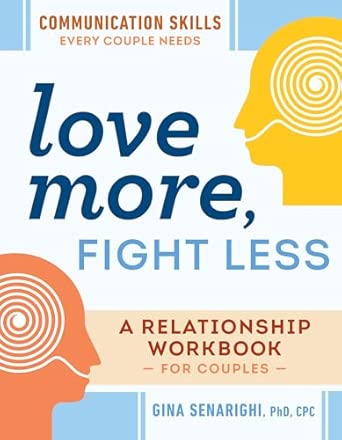 | Best Value Workbook | Format: Workbook | Topic: Communication skills and conflict reduction | Approach: Practical exercises and prompts | VIEW ON AMAZON | See Our Full Breakdown |
| The Seven Principles for Making Marriage Work: A Practical Guide from the Country’s Foremost Relationship Expert |  | Best Overall | Format: Paperback / Hardcover / Audiobook | Author: John Gottman, PhD, with Nan Silver | Basis: Longitudinal clinical research on marriage | VIEW ON AMAZON | See Our Full Breakdown |
| The 5 Love Languages®: The Secret to Love that Lasts |  | Best for Understanding Your Partner | Format: Paperback / Hardcover / Audiobook / Kindle | Author: Gary Chapman | Core Framework: Five love languages | VIEW ON AMAZON | See Our Full Breakdown |
| His Needs, Her Needs: Making Romantic Love Last – A Practical Relationship Guide for Couples |  | Best for Married Couples in a Rut | Format: Book (Paperback / Hardcover) | Author: Willard F. Harley, Jr. | Topic: Marriage and romantic relationships | VIEW ON AMAZON | See Our Full Breakdown |
| Getting the Love You Want: A Guide for Couples (Third Edition) |  | Best for Healing Old Wounds | Format: Book | Edition: Third Edition | Topic: Couples / Relationship Therapy | VIEW ON AMAZON | See Our Full Breakdown |
| Communicate Your Feelings (Without Starting a Fight): What to Say and What Not to Say to Your Partner |  | Best Budget-Friendly Starter | Format: Book | Series: Mental & Emotional Wellness | Topic: Relationship Communication | VIEW ON AMAZON | See Our Full Breakdown |
| Fight Right: How Successful Couples Turn Conflict Into Connection |  | Best for Conflict-Prone Couples | Format: Book | Topic: Conflict resolution / Couples relationships | Approach: Gottman research-based conflict method | VIEW ON AMAZON | See Our Full Breakdown |
| Eight Dates: Essential Conversations for a Lifetime of Love |  | Best Structured Program | Format: Book | Topic: Relationships / Marriage | Authors: John Gottman and Julie Schwartz Gottman | VIEW ON AMAZON | See Our Full Breakdown |
| Hold Me Tight: Seven Conversations for a Lifetime of Love (The Dr. Sue Johnson Collection, 1) | 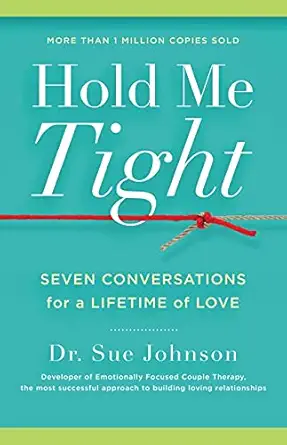 | Best for Emotional Reconnection | Format: Book | Series: The Dr. Sue Johnson Collection, Book 1 | Topic: Couples / Attachment and emotional connection | VIEW ON AMAZON | See Our Full Breakdown |
| relationship books for couple | Format | Approach | Topic | Audience |
|---|---|---|---|---|
| Communication Skills for Coupl | Paperback | Practical, exercise-free guidance | Couple communication and conflict resolution | Couples at any stage, beginner-friendly |
| Love More | Workbook | Practical exercises and prompts | Communication skills and conflict reduction | Couples at any relationship stage |
| The Seven Principles for Makin | Paperback / Hardcover / Audiobook | Seven principles with exercises and self-tests | — | Married and committed couples |
| The 5 Love Languages®: The Sec | Paperback / Hardcover / Audiobook / Kindle | Concept-driven with reflection prompts | — | Dating, engaged, and married couples |
| His Needs | Book (Paperback / Hardcover) | Practical, checklist-style guidance | Marriage and romantic relationships | Married couples |
| Getting the Love You Want: A G | Book | Imago relationship therapy | Couples / Relationship Therapy | — |
| Communicate Your Feelings | Book | Scripted phrases and conflict scenarios | Relationship Communication | — |
| Fight Right: How Successful Co | Book | Gottman research-based conflict method | Conflict resolution / Couples relationships | — |
| Eight Dates: Essential Convers | Book | — | Relationships / Marriage | — |
| Hold Me Tight: Seven Conversat | Book | Emotionally Focused Therapy (EFT) | Couples / Attachment and emotional connection | — |
More Details on Our Top Picks
Communication Skills for Couples: Guide to Improve Communications, Resolve Conflict, Deepen Intimacy, Strengthen Marriage and Create a Healthy Relationship
Couples who have never picked up a relationship book often stall with dense, theory-heavy titles, and this is where Communication Skills for Couples earns its spot. It skips the clinical backstory you get in The Seven Principles for Making Marriage Work and gets straight to readable, actionable guidance on conflict, intimacy, and day-to-day communication. Compared with Love More, Fight Less, it asks less of the reader — there are no worksheets demanding both partners sit down together, which makes it a lower-pressure entry point. The tradeoff is depth: readers already familiar with concepts like love languages or repair attempts will find the material foundational rather than transformative. It works best as a first step that builds momentum before graduating to a structured workbook.
Pros:- Approachable writing that doesn’t require prior relationship-book experience
- Covers communication, conflict, and intimacy in one compact volume
- No exercises required, so one partner can read it independently
- Broad enough to apply to dating couples and married partners alike
Cons:- Light on clinical research and proven frameworks compared with Gottman-based titles
- Surface-level treatment of topics that other books explore in depth
- May feel repetitive for couples who have already read similar guides
Best for: Couples new to relationship books who want an easy, low-commitment read before trying workbooks
Not ideal for: Readers who already know communication basics and want research depth or structured exercises
- Format:Paperback
- Topic:Couple communication and conflict resolution
- Approach:Practical, exercise-free guidance
- Audience:Couples at any stage, beginner-friendly
- Focus Areas:Communication, conflict, intimacy, marriage
- Reading Commitment:Low — can be read solo
Our verdict“A sensible first purchase for couples dipping a toe into relationship self-help without the commitment of a workbook.”
Love More, Fight Less: Communication Skills Every Couple Needs – A Relationship Workbook for Couples
This is the pick for couples who want to practice, not just read. Where Communication Skills for Couples explains concepts, this workbook forces partners to apply them through hands-on exercises designed to lower the frequency and heat of arguments. Compared with Eight Dates, which structures learning around scheduled conversations, this format spreads smaller exercises throughout, so it suits couples who struggle to carve out full evening date nights. The honest tradeoff: a workbook only works if both partners participate. If one partner is checked out, the pages stay blank and the value evaporates. It also lacks the scientific grounding of Hold Me Tight, relying instead on practical framing — a fair exchange for couples who want results-oriented tools over attachment theory.
Pros:- Exercise-based format that turns reading into real behavior change
- Accessible for couples at any stage, from dating to long-married
- Focused specifically on reducing conflict, with immediately usable tools
- Works in short sessions rather than requiring long dedicated evenings
Cons:- Requires genuine commitment from both partners to deliver results
- Workbook format means writing in it, which some couples find awkward
- Limited theoretical depth for readers who want the why behind the exercises
Best for: Motivated couples who will actually do the exercises together and want affordable, structured practice
Not ideal for: Couples where one partner won’t engage, or readers who prefer narrative-driven books over fill-in exercises
- Format:Workbook
- Topic:Communication skills and conflict reduction
- Approach:Practical exercises and prompts
- Audience:Couples at any relationship stage
- Participation:Designed for both partners
- Session Length:Short, flexible exercise blocks
Our verdict“The best choice for couples ready to do the work together rather than passively read about communication.”
The Seven Principles for Making Marriage Work: A Practical Guide from the Country’s Foremost Relationship Expert
If I had to point a couple to a single book, it would be this one. John Gottman’s decades of observational research give The Seven Principles for Making Marriage Work an evidence base that no other title in this lineup matches — including Love More, Fight Less, which borrows heavily from the same research tradition without the depth. The book identifies predictable patterns that end marriages (criticism, contempt, stonewalling) and pairs each principle with exercises and self-tests, landing between a narrative read and a full workbook. The tradeoffs are real: it is longer and denser than lighter titles like The 5 Love Languages, and its marriage framing assumes a committed, long-horizon relationship — dating couples may find the tone premature. For married or engaged partners, it remains the reference standard.
Pros:- Grounded in decades of Gottman’s clinical research on real couples
- Identifies specific destructive patterns with clear warning signs
- Includes practical exercises and self-assessments, not just theory
- Applicable across nearly every long-term relationship stage
Cons:- Longer and more dense than most alternatives in this category
- Marriage-centric framing can feel premature for non-married couples
- Exercises are less structured than a dedicated workbook’s
Best for: Committed and married couples who want research-backed insight and are willing to invest time in a longer book
Not ideal for: Newly dating couples or readers wanting a quick, breezy read — the length and marriage focus will feel heavy
- Format:Paperback / Hardcover / Audiobook
- Author:John Gottman, PhD, with Nan Silver
- Basis:Longitudinal clinical research on marriage
- Approach:Seven principles with exercises and self-tests
- Audience:Married and committed couples
- Length:Substantial, chapter-per-principle structure
- Newer Edition:Revised and updated edition available
Our verdict“The most complete, evidence-based choice for couples who want one definitive relationship book.”
The 5 Love Languages®: The Secret to Love that Lasts
Few frameworks have shaped couple communication like Gary Chapman’s five love languages, and the concept alone justifies a place on this list. Compared with The Seven Principles for Making Marriage Work, this is the lighter, faster read — couples can finish it in a weekend and walk away with a shared vocabulary for expressing affection that genuinely changes daily interactions. Its simplicity is also its ceiling: where Hold Me Tight digs into attachment wounds beneath conflict, this book offers little help for serious problems like resentment, infidelity fallout, or chronic fighting. Some readers also find the examples dated and heteronormative in tone. Treat it as a connection-building tool for stable couples, not a repair manual for relationships in crisis.
Pros:- Simple, memorable framework couples can apply immediately
- Quick, easy read that works even for partners who rarely read
- Gives partners a shared vocabulary for discussing emotional needs
- Widely applicable across dating, engaged, and married couples
Cons:- Shallow on conflict resolution compared with research-based titles
- Examples can feel dated and traditional in tone
- Framework alone won’t address serious underlying relationship problems
Best for: Stable couples who want a simple shared framework for expressing and receiving affection
Not ideal for: Couples in active crisis or dealing with deep resentment — it isn’t designed for repair work
- Format:Paperback / Hardcover / Audiobook / Kindle
- Author:Gary Chapman
- Core Framework:Five love languages
- Approach:Concept-driven with reflection prompts
- Audience:Dating, engaged, and married couples
- Reading Time:Short — weekend-readable
- Editions:Multiple updated editions and related titles
Our verdict“The easiest win on this list for happy couples who want to understand each other better, not fix what’s broken.”
His Needs, Her Needs: Making Romantic Love Last – A Practical Relationship Guide for Couples
Willard Harley’s ten basic emotional needs framework targets a specific problem the other picks handle less directly: romantic love quietly fading in a long marriage. While The 5 Love Languages offers five broad categories, this book gets more granular about needs like affection, conversation, and recreational companionship — and about how unmet needs lead partners to look elsewhere, including its blunt chapters on affair prevention. That directness is divisive. The advice leans traditional and gender-role oriented, which will alienate couples wanting an egalitarian framing like Eight Dates offers. But for married couples who feel more like roommates than partners and want concrete, checklist-style steps rather than therapy-adjacent theory, this remains a genuinely useful corrective.
Pros:- Concrete framework of ten specific needs partners can identify and discuss
- Directly addresses romantic drift and emotional distance in long marriages
- Includes frank, practical guidance on affair prevention
- Actionable steps rather than abstract theory
Cons:- Advice is explicitly traditional and gender-role oriented
- Heterosexual, marriage-focused framing limits its applicability
- Blunt tone can feel prescriptive rather than collaborative
Best for: Long-married couples who feel romantic connection fading and want direct, structured advice on rebuilding it
Not ideal for: Couples seeking a modern, egalitarian perspective — the gender-based framing will frustrate progressive readers
- Format:Book (Paperback / Hardcover)
- Author:Willard F. Harley, Jr.
- Topic:Marriage and romantic relationships
- Core Framework:Ten vital emotional needs
- Approach:Practical, checklist-style guidance
- Audience:Married couples
- Special Focus:Romantic reconnection and affair prevention
Our verdict“A worthwhile pick for traditional married couples fighting romantic drift, provided the gender-based framing sits well with both partners.”
Getting the Love You Want: A Guide for Couples (Third Edition)
Most communication books on this list, like Fight Right or Love More, Fight Less, teach you how to manage a disagreement in the moment. Getting the Love You Want goes a layer deeper, using Imago therapy to argue that recurring conflicts usually trace back to unresolved experiences each partner brought into the relationship. That framing makes this pick better suited to couples who keep circling the same fight and suspect something older is underneath it. The third edition refreshes the classic text for modern couples, and the structured exercises give the ideas somewhere concrete to land. The tradeoff is real, though: this is not a passive read. If only one partner does the work, the exercises stall and the book can feel like homework assigned to an absent student.
Pros:- Grounded in the widely respected Imago relationship therapy model
- Includes hands-on exercises that turn theory into practice
- Updated third edition speaks to modern couples rather than dating the reader
- Addresses root causes of conflict, not just surface arguments
Cons:- Requires active participation from both partners to produce results
- The therapeutic depth makes it a slower, heavier read than skill-based guides
Best for: Couples stuck in repetitive conflict patterns who are both willing to explore the deeper roots of their dynamic
Not ideal for: Couples where only one partner is engaged, or anyone wanting a quick communication-tips format rather than therapeutic self-examination
- Format:Book
- Edition:Third Edition
- Topic:Couples / Relationship Therapy
- Approach:Imago relationship therapy
- Includes:Practical couples exercises
- Best Use:Couples counseling supplement or deep self-work
Our verdict“This makes the most sense for couples who want to understand why they fight, not just how to fight nicer.”
Communicate Your Feelings (Without Starting a Fight): What to Say and What Not to Say to Your Partner
Where Eight Dates asks you to schedule structured conversations and Hold Me Tight walks you through seven emotionally intense dialogues, this book takes the opposite approach: it gives you ready-to-use phrases for the moments when a conversation is already heating up. That do-this-not-that structure is what sets it apart — instead of theory, you get scripts for common conflict scenarios, which is genuinely useful for a partner who freezes or escalates under pressure. The flip side is depth. Compared with research-backed titles like The Seven Principles for Making Marriage Work, the material here is thinner and less rigorous, and it works best as an entry point or quick reference rather than a couple’s primary relationship book.
Pros:- Scripted what-to-say guidance works in the heat of real conversations
- Addresses familiar conflict scenarios couples actually encounter
- Short and approachable for readers intimidated by dense therapy-based books
- Part of a broader mental and emotional wellness series for continued reading
Cons:- Lacks the research foundation and depth of Gottman- or Johnson-based titles
- Limited depth on underlying relationship dynamics — it treats symptoms, not causes
Best for: Couples or individuals on a budget who want quick, actionable phrases for everyday conflicts before investing in a deeper program
Not ideal for: Couples seeking research-grounded depth or a structured long-term program — this is a lightweight entry point, not a substitute
- Format:Book
- Series:Mental & Emotional Wellness
- Topic:Relationship Communication
- Approach:Scripted phrases and conflict scenarios
- Depth:Beginner / quick-reference
- Best Use:Everyday conflict de-escalation
Our verdict“A low-commitment starting point for partners who need words for tough moments now, not a full relationship overhaul.”
Fight Right: How Successful Couples Turn Conflict Into Connection
Plenty of books in this roundup try to help you fight less; Fight Right accepts that conflict is inevitable and teaches you to do it better. That premise alone differentiates it from Communicate Your Feelings (Without Starting a Fight), which aims to prevent blowups through phrasing. Built on the Gottmans’ decades of research, this option reframes arguments as opportunities for connection, walking readers through how successful couples behave mid-conflict — the moments when most relationships go sideways. Compared with Getting the Love You Want, it stays more present-focused: less excavation of childhood wounds, more repair in the here and now. The drawback is that couples in genuine crisis may need more than technique — if trust is broken, conflict tactics alone won’t rebuild it.
Pros:- Research-based approach from the Gottman tradition of relationship science
- Reframes conflict as a path to connection rather than a problem to eliminate
- Practical focus on behavior during real arguments, not abstract theory
- More accessible and present-focused than wound-oriented therapeutic guides
Cons:- Assumes a baseline of goodwill that severely strained couples may not have
- Couples wanting prevention-focused communication may prefer gentler, skills-first titles
Best for: Couples who argue often and function well otherwise, but want their fights to end in understanding instead of distance
Not ideal for: Couples dealing with betrayal or deep mistrust — conflict technique alone won’t address the underlying rupture
- Format:Book
- Topic:Conflict resolution / Couples relationships
- Approach:Gottman research-based conflict method
- Focus:Turning conflict into connection
- Depth:Intermediate
- Best Use:High-conflict but committed couples
Our verdict“The right pick for couples who fight a lot and would rather get good at it than pretend it away.”
Eight Dates: Essential Conversations for a Lifetime of Love
Of everything in this roundup, Eight Dates is the most plug-and-play. Rather than asking you to absorb concepts and apply them yourself, it hands you eight ready-made date nights, each built around one conversation — trust, money, sex, conflict, and more. That structure is its biggest advantage over Getting the Love You Want, whose exercises require more self-directed effort, and it makes this the easiest pick for busy couples who want the work to feel like a date. The Gottman pedigree also means the conversations are sequenced around research on what predicts lasting relationships. The catch: if one partner treats the dates as a chore, the format collapses — unlike a solo read such as The 5 Love Languages, there’s no way to do this one halfway.
Pros:- Backed by decades of Gottman research on relationship success
- Eight themed dates cover money, sex, trust, conflict, and other high-stakes topics
- Built-in structure removes the ‘where do we start’ barrier that sinks most couples’ self-help attempts
- Feels like quality time rather than homework
Cons:- Requires both partners’ genuine willingness — a checked-out partner derails it
- Couples wanting deeper emotional or therapeutic work will find the format too light
Best for: Busy couples who want a guided, date-night-style program they can follow together without planning anything themselves
Not ideal for: Couples where one partner is reluctant — the dialogue format needs two fully engaged participants to work
- Format:Book
- Topic:Relationships / Marriage
- Authors:John Gottman and Julie Schwartz Gottman
- Structure:Eight themed date-night conversations
- Topics Covered:Trust, conflict, sex, money, and more
- Best Use:Joint date-night program
Our verdict“The most actionable pick here for two motivated partners who want a guided program that doubles as date night.”
Hold Me Tight: Seven Conversations for a Lifetime of Love (The Dr. Sue Johnson Collection, 1)
If Fight Right is about managing conflict and Eight Dates is about structured conversation, Hold Me Tight is about the emotional current underneath both: attachment. Sue Johnson, the creator of Emotionally Focused Therapy, frames most relationship pain as a pattern of disconnection, then guides couples through seven conversations designed to interrupt it. This is the book I’d point emotionally distant couples toward before any skills-based title, because it explains why the withdrawal cycle happens rather than just coaching better phrasing. Compared with Getting the Love You Want, it reads warmer and more narrative-driven, with real couple stories carrying the theory. The tradeoff: it’s emotionally demanding. Couples in severe distress, or those dealing with active abuse, should involve a professional rather than rely on the book alone.
Pros:- Based on Emotionally Focused Therapy, one of the most studied couples therapy models
- Explains the emotional ‘dance’ of disconnection in a way couples recognize instantly
- Seven structured conversations give the framework practical shape
- Warm, story-driven writing feels humane rather than clinical
Cons:- Emotionally intense — requires real vulnerability from both partners
- Not a substitute for therapy in seriously distressed or unsafe relationships
Best for: Emotionally disconnected couples who feel like roommates and want to rebuild intimacy by understanding their cycle of pursuit and withdrawal
Not ideal for: Couples in crisis involving abuse or severe distress — this book needs a baseline of safety and is no substitute for professional help
- Format:Book
- Series:The Dr. Sue Johnson Collection, Book 1
- Topic:Couples / Attachment and emotional connection
- Approach:Emotionally Focused Therapy (EFT)
- Structure:Seven guided conversations
- Depth:Deep / therapeutic
- Best Use:Rebuilding emotional intimacy
Our verdict“The strongest choice for couples who have stopped fighting and stopped connecting, and want to understand why.”

How We Picked
I judged each book on four buyer-relevant criteria. Evidence base came first: books grounded in clinical research or established therapeutic models (Gottman’s lab data, Johnson’s attachment theory) ranked above advice built on anecdote. Usability for two people mattered just as much — a book only helps a couple if both partners engage, so I favored titles with exercises, prompts, or conversation structures over purely theoretical writing. Specificity of the problem solved separated the middle of the pack: books that clearly target conflict, communication breakdown, or reconnection scored higher than general “improve your relationship” titles.
The ranking also reflects longevity and re-readability. The top five are books couples return to at different relationship stages, while the lower-ranked picks tend to solve one problem once and then gather dust. Where two books cover similar ground, I promoted the one with clearer exercises and demoted the redundant title. This is why three communication-focused books appear but only one sits near the top.
| relationship books for couple | Format | Audience | Best Use |
|---|---|---|---|
| Communication Skills for Coupl | Paperback | Couples at any stage, beginner-friendly | — |
| Love More | Workbook | Couples at any relationship stage | — |
| The Seven Principles for Makin | Paperback / Hardcover / Audiobook | Married and committed couples | — |
| The 5 Love Languages®: The Sec | Paperback / Hardcover / Audiobook / Kindle | Dating, engaged, and married couples | — |
| His Needs | Book (Paperback / Hardcover) | Married couples | — |
| Getting the Love You Want: A G | Book | — | Couples counseling supplement or deep self-work |
| Communicate Your Feelings | Book | — | Everyday conflict de-escalation |
| Fight Right: How Successful Co | Book | — | High-conflict but committed couples |
| Eight Dates: Essential Convers | Book | — | Joint date-night program |
| Hold Me Tight: Seven Conversat | Book | — | Rebuilding emotional intimacy |
Factors to Consider When Choosing Relationship Books For Couples
Before choosing a relationship book, it helps to understand how this category is structured and where buyers commonly go wrong. These are the factors that shaped my ranking and should shape your decision too.Match the Book to Your Actual Problem
The most common buying mistake is grabbing a general “improve your marriage” title when the relationship has a specific wound. Couples in active conflict need conflict-focused books like Fight Right or Hold Me Tight, not a love-languages primer. Couples who are stable but disconnected benefit more from conversation-based books like Eight Dates. A general communication workbook applied to a serious breach of trust will feel shallow and may make things worse by implying the problem is simple. Be honest about severity: books are self-help tools, and recurring contempt, infidelity, or abuse warrant a therapist, not a paperback.
Workbook vs. Narrative Format
This category splits into narrative books that explain why relationships struggle and workbooks that prompt you to write and talk. The tradeoff is real: narrative books (Hold Me Tight, Getting the Love You Want) offer deeper insight but assume both partners will read 250+ pages. Workbooks (Love More, Fight Less) get couples doing something within minutes but can feel formulaic if the underlying patterns go unexplained. If one partner is a reluctant reader, a workbook or date-based format is usually the only viable choice. Many couples actually get the best results by pairing one title from each format.
Author Credentials and Evidence Base
Anyone can publish a relationship book, and the category is flooded with uncredited advice padded with filler. Look for authors with clinical practices, research labs, or a named therapeutic method — Gottman’s work rests on decades of observational studies, and Johnson’s on attachment research. Books by unknown authors can still be useful, but the advice is more likely to be recycled common sense. A quick check of the author’s bio on the jacket tells you whether you’re buying distilled research or opinion. In my lineup, credentials correlated strongly with ranking position for this reason.
Will Both Partners Actually Use It?
A book only one partner reads becomes a weapon — “the book says you should…” — rather than a tool. Before buying, think about who will do the work. If only one of you is motivated, choose a book with short chapters and shared exercises so the reluctant partner can join mid-stream. Eight Dates is built around scheduled conversations, which reframes reading as a date rather than homework. Long, theory-heavy books work best when both partners are equally invested in self-improvement. Buying the “best” book that neither of you will finish is worse than buying a mediocre one you’ll both complete.
Relationship Stage and Structure
Some books assume marriage, others work for any committed couple, and a few are tuned to dating or premarital stages. His Needs, Her Needs leans heavily on a traditional marriage framework that may not fit every couple; Getting the Love You Want works for partnerships of any shape. Also consider whether the book assumes a heterosexual, cis-gendered dynamic — several classics in this space do, and couples outside that framework should check excerpts before committing. Newer editions often update language, so check which printing you’re getting. Stage mismatch is a quiet reason many highly rated books disappoint specific readers.
Religious and Philosophical Framing
Several popular relationship books carry explicit or implicit faith-based framing, which matters more than most buyers realize until chapter three. Some couples find this grounding valuable; others bounce off a book entirely when the advice is anchored to a worldview they don’t share. Read the publisher description and a sample chapter rather than relying on the title alone. Secular, research-based options like the Gottman and Johnson books sit at the top of my ranking partly because their frameworks apply across belief systems. There’s no wrong answer here — only a mismatch between the book’s lens and your own.
Frequently Asked Questions
Which relationship book should a couple read first?
Can a relationship book actually fix a failing relationship, or do we need therapy?
Is it a problem if only one of us reads the book?
Are the classics like The 5 Love Languages outdated?
What’s the difference between the communication workbooks — aren’t they all the same?
Conclusion
For best overall, The Seven Principles for Making Marriage Work earns the top spot on the strength of its research base and practical exercises — it’s the book I’d hand most couples without knowing anything about them. For best value, Love More, Fight Less delivers a full guided program at a workbook price, making it the smartest low-risk purchase. The premium pick is Hold Me Tight: it’s the most demanding read here, but its attachment-based approach reaches problems the lighter books can’t touch. For beginners — couples who’ve never read a relationship book or who want something unintimidating — The 5 Love Languages is the gentlest on-ramp, with Eight Dates as the alternative for couples who’d rather talk than read. For specific needs: choose Fight Right if conflict is the core problem, Getting the Love You Want for deep-seated long-term patterns, and Communicate Your Feelings as a quick script reference for heated moments. Whatever you pick, the deciding factor isn’t the book — it’s whether both of you will actually open it together.
Halloween Picks
halloween
As an affiliate, we earn on qualifying purchases.