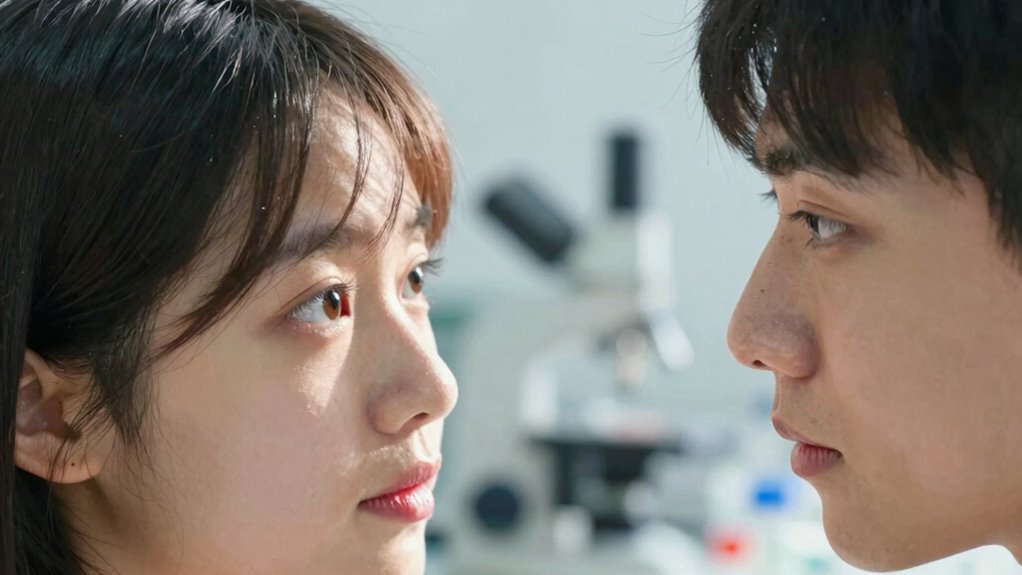

Scientists know that attraction evolves through a mix of biological, chemical, and evolutionary factors. In the beginning, chemicals like dopamine and oxytocin create feelings of infatuation and bonding, driven by subconscious cues signaling health and fertility. Over time, emotional bonds grow stronger through brain rewards and neural rewiring, allowing attraction to shift and deepen. Understanding these processes shows that attraction isn’t static but shaped by ongoing biological and psychological changes. If you want to discover more, keep exploring these fascinating insights.

Get gifts for the two of you delivered free — and shop member deals
- Fast, free delivery on millions of items
- Access to Prime Big Deal Days deals on October 6–7
- Prime Video, Amazon Music and more included
Key Takeaways
- Attraction initially driven by chemical signals like dopamine and oxytocin, creating infatuation and bonding.
- Deepening emotional bonds are reinforced by ongoing chemical exchanges and the release of bonding hormones.
- Neural plasticity allows attraction to evolve based on new experiences and perceptions.
- Long-term attraction is maintained through the brain’s reward system and subconscious cues signaling reproductive health.
- Attraction shifts over time due to psychological, emotional, and environmental factors influencing perceptions.

Throughout history, scientists have been fascinated by the concept of attraction—how and why people feel drawn to others over time. They’ve explored the biological and psychological factors that influence these feelings, aiming to understand the underlying mechanisms that make certain connections feel natural and inevitable. One key area of research centers on chemical bonding, which refers to the complex interplay of hormones and neurotransmitters that shape your attraction to someone. When you find yourself drawn to another person, it’s often because your brain releases chemicals like dopamine, oxytocin, and serotonin, creating feelings of pleasure, trust, and attachment. These biological responses aren’t random; they’re deeply rooted in evolutionary preferences designed to promote survival and reproduction. Additionally, these chemical signals work together with subconscious cues that guide us toward individuals who exhibit traits linked to reproductive success. Scientists also recognize that these chemical signals are intertwined with evolutionary preferences that have been shaped over thousands of years. For instance, traits associated with health, symmetry, and fertility tend to trigger stronger attraction because they signal good genes and reproductive viability. When you’re attracted to someone, it’s not just about the chemistry in your brain but also about subconscious cues that align with what your ancestors might have preferred for passing on their genes. This evolutionary perspective explains why certain features—like clear skin, a symmetrical face, or a confident demeanor—can seem universally attractive across different cultures and eras. Your brain is wired to notice these signs because they historically indicated a good mate, increasing the likelihood of successful reproduction. Over time, these preferences can evolve based on personal experiences, cultural influences, and changing social norms, but the fundamental biological mechanisms remain consistent. You might notice that your initial attraction is often driven by chemical bonding—those fleeting feelings of infatuation—and as you get to know someone better, deeper emotional bonds develop, influenced by the release of hormones like oxytocin. This process underscores the importance of chemical bonding in maintaining long-term relationships. Scientists have also found that the brain’s reward system plays a significant role in sustaining attraction over time, reinforcing bonds through ongoing chemical exchanges. Moreover, the brain’s ability to adapt and rewire itself in response to experience highlighting neural plasticity can influence how attraction evolves throughout a relationship. This neural flexibility allows for the potential redefinition of attraction, as emotional and psychological factors become more prominent. Interestingly, this adaptability can also lead to shifts in attraction, especially when new experiences challenge previous perceptions. Understanding attraction involves a blend of biology, chemistry, and evolution. Your feelings are shaped by a complex cocktail of chemical responses that are finely tuned by evolutionary preferences meant to maximize reproductive success. The influence of subconscious cues on attraction demonstrates how much of our mating behavior is driven by factors that operate below conscious awareness. As you build relationships, these mechanisms continue to influence your perceptions, feelings, and behaviors, making attraction a fascinating interplay between science and human experience.
dopamine and oxytocin supplements
As an affiliate, we earn on qualifying purchases.
As an affiliate, we earn on qualifying purchases.
Frequently Asked Questions
How Does Attraction Change in Long-Term Relationships?
In long-term relationships, your initial chemistry dynamics may fade, but attraction stability can grow through emotional connection and shared experiences. As time passes, physical attraction might lessen, yet deepening intimacy and trust strengthen your bond. You actively nurture attraction by communicating openly and maintaining mutual respect. This ongoing effort helps sustain your connection, transforming initial chemistry into a lasting, resilient attraction rooted in familiarity, care, and understanding.
Do Physical Attraction and Emotional Connection Evolve Differently?
You might find that physical attraction and emotional connection evolve differently—initial chemistry often fades, with studies showing that emotional depth becomes more important over time. As your relationship matures, you value shared values and trust more than just looks. While physical attraction can diminish, emotional bonds tend to deepen, creating a lasting connection. So, you’ll likely notice that emotional connection grows stronger, even if physical appeal changes.
Can Attraction Be Rekindled After Years Apart?
Yes, attraction can be rekindled after years apart through chemistry dynamics and attraction renewal efforts. When you reconnect, shared memories and emotional bonds can reignite feelings, especially if both of you are open to exploring what once drew you together. By fostering honest communication and embracing positive experiences, you enhance the chemistry dynamics, making it possible to restore and even deepen your attraction over time.
How Do Cultural Differences Influence Attraction Over Time?
You’re touched by cultural norms that shape attraction over time, influencing how you express your feelings. Different cultures have unique ways of showing interest and affection, which can deepen or sometimes diminish attraction. These varying expressions of attraction—be it through gestures, words, or actions—are woven into societal expectations. Over time, understanding and respecting these differences can strengthen your connections, making love’s journey richer and more meaningful across diverse cultural landscapes.
What Role Does Personality Play in Sustained Attraction?
Your personality plays a vital role in sustained attraction by providing stability and consistency over time. When your personality remains stable, it helps maintain mutual understanding and trust, reinforcing attraction. As you grow, if your core traits stay consistent, your partner’s attraction is more likely to endure. This stability fosters deeper connections, making the relationship resilient against external changes and ensuring ongoing mutual interest and affection.
As an affiliate, we earn on qualifying purchases.
Conclusion
So, next time you’re curious about attraction, remember that feelings can evolve—initial chemistry often deepens into genuine connection. Remarkably, studies show that about 60% of long-term couples report their attraction grew stronger over time. This suggests that attraction isn’t just about fleeting sparks but can develop into something lasting. Keep an open mind and allow your connections to grow—you might just find that what starts with chemistry can become a deep, meaningful bond.
neuroplasticity brain training games
As an affiliate, we earn on qualifying purchases.
As an affiliate, we earn on qualifying purchases.
As an affiliate, we earn on qualifying purchases.
Halloween Picks
halloween
As an affiliate, we earn on qualifying purchases.