


Couples communication tools generally fall into two camps: structured workbooks that teach skills through exercises, and conversation card decks that spark dialogue without any homework. My top pick overall is The Seven Principles for Making Marriage Work, because it pairs research-backed communication methods with practical exercises, making it the most complete option for couples who want lasting change rather than a one-time chat. For couples who prefer something lighter, the WE’RE NOT REALLY STRANGERS Couples Edition stands out for getting two people talking within minutes, and Love More, Fight Less is the best middle ground — a skills-focused workbook that is shorter and more approachable than the top pick. The main tradeoff you’ll face is depth versus ease of use: the deeper tools demand more effort but produce more durable results, while card games are fun and low-pressure but rarely resolve recurring conflict. Keep reading for the full breakdown of all fifteen options.

Get gifts for the two of you delivered free with Prime
- Fast, free delivery on millions of items
- Prime Video, Amazon Music and more included
- Member-only deals all year
Key Takeaways
- Workbooks dominated the top of this comparison because they teach transferable skills — card decks ranked lower for couples in active conflict since they prompt conversation but rarely teach how to communicate during a fight.
- The Seven Principles for Making Marriage Work earned the top spot by combining decades of research with exercises, while most competing workbooks repackage similar advice with less evidence behind it.
- Card decks separated into two distinct types: emotional-intimacy decks like WE’RE NOT REALLY STRANGERS and Let’s Get Deep, and practical conflict-resolution decks like The Fair Play Deck — mixing them up is the most common buying mistake.
- Several budget workbooks (Communication Skills for Couples, 8-Week Couples Therapy Workbook) deliver 80% of the premium content at a third of the price, making them the value picks for self-directed couples.
- No card game in this lineup can substitute for therapy, but the Couples Therapy Flip Chart is the closest bridge — it uses actual psychoeducational frameworks rather than casual prompts.
| Reconnect: A Marriage Counseling Workbook |  | Best Workbook for Long-Term Couples | Format: Paperback workbook | Primary focus: Guided conversations and exercises for long-term relationships | Covers: Communication, intimacy, relationship strengthening | VIEW LATEST PRICE | See Our Full Breakdown |
| The Couples Therapy Flip Chart: A Psychoeducational Tool to Help Couples Identify Patterns of Disconnection, Manage Relationship Conflict, and Create a Thriving Partnership |  | Best Professional-Grade Pick | Format: Spiral-bound flip chart | Primary focus: Psychoeducation on disconnection patterns and conflict | Origin: Designed as a therapist’s clinical tool | VIEW LATEST PRICE | See Our Full Breakdown |
| Love More, Fight Less: Communication Skills Every Couple Needs | 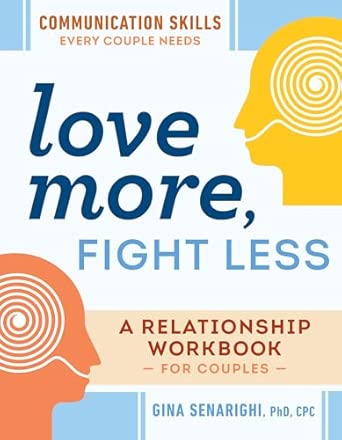 | Best for Conflict-Prone Couples | Format: Paperback workbook | Primary focus: Communication skills and conflict resolution | Covers: Conflict skills, understanding, intimacy, bonding | VIEW LATEST PRICE | See Our Full Breakdown |
| Communication Skills for Couples: Guide to Improve Communications, Resolve Conflict, Deepen Intimacy, Strengthen Marriage and Create a Healthy Relationship |  | Best Budget Overview | Format: Paperback book | Primary focus: General communication and relationship health | Covers: Communication, conflict resolution, intimacy, marriage strengthening | VIEW LATEST PRICE | See Our Full Breakdown |
| Communicate Your Feelings (Without Starting a Fight): What to Say and What Not to Say to Your Partner |  | Best for the Conflict-Avoidant Partner | Format: Paperback book | Primary focus: Expressing feelings without triggering conflict | Covers: Phrasing scripts, conflict prevention, emotional wellness | VIEW LATEST PRICE | See Our Full Breakdown |
| Rayliad Prompta 600 Conversation Cards for Couples |  | Best Value for Volume | Number of Cards: 600 | Card Size: 2.5″ x 1.75″ | Question Types: Icebreakers, likes/dislikes, memories, fears, dreams, favorites, feedback, dating questions | VIEW LATEST PRICE | See Our Full Breakdown |
| WE’RE NOT REALLY STRANGERS Couples Edition, Conversation Card Game |  | Best for Emotional Depth | Number of Cards: 150 | Structure: Three escalating question levels | Ages: 15+ | VIEW LATEST PRICE | See Our Full Breakdown |
| The Seven Principles for Making Marriage Work |  | Best for Long-Term Framework | Format: Paperback book | Author: John Gottman, leading relationship expert | Focus: Marriage strengthening and communication principles | VIEW LATEST PRICE | See Our Full Breakdown |
| Let’s Get Deep, A Question Card Game for Couples by Relatable |  | Best Date Night Pick | Ages: 17+ | Card Categories: Ice Breaker, Deep, Deeper, Activity | Content Rating: Mature content for adults | VIEW LATEST PRICE | See Our Full Breakdown |
| The Fair Play Deck: A Couple’s Conversation Deck for Prioritizing What’s Important |  | Best for Logistics and Household Balance | Format: Conversation card deck | Players: 2 (couples) | Focus: Prioritizing tasks, responsibilities, and shared values | VIEW LATEST PRICE | See Our Full Breakdown |
| Communication Cards for Couples – Relationship Rebuilding and Conflict Resolution |  | Best for Post-Argument Repair | Number of Cards: 54 | Primary Purpose: Conflict resolution and relationship rebuilding | Secondary Use: Daily emotional reconnection | VIEW LATEST PRICE | See Our Full Breakdown |
| Life Sutra Couple Reconnect Card Game |  | Best Value Deck | Number of Cards: 150 | Intended For: Married and mature couples | Purpose: Build trust, deepen bond, improve communication | VIEW LATEST PRICE | See Our Full Breakdown |
| Couples Edition – 199 Meaningful Conversation Cards for Couples |  | Most Prompts in One Deck | Number of Cards: 199 | Intended Audience: Couples only | Use Cases: Date night, travel, gifting | VIEW LATEST PRICE | See Our Full Breakdown |
| FLUYTCO Love Lingual: The Original Couples Card Game |  | Best Structured Card System | Number of Cards: 150 | Themed Categories: Couple, Intimacy, Past & Future, Individual, Family | Game Type: Conversation starter card game | VIEW LATEST PRICE | See Our Full Breakdown |
| 8-Week Couples Therapy Workbook: Essential Strategies to Connect, Improve Communication, and Strengthen Your Relationship |  | Best Structured Program | Format: Paperback workbook | Program Length: 8 weeks | Content Type: Step-by-step exercises and communication strategies | VIEW LATEST PRICE | See Our Full Breakdown |
| couples communication tool | Format |
|---|---|
| Reconnect: A Marriage Counseli | Paperback workbook |
| The Couples Therapy Flip Chart | Spiral-bound flip chart |
| Love More | Paperback workbook |
| Communication Skills for Coupl | Paperback book |
| Communicate Your Feelings | Paperback book |
| Rayliad Prompta 600 Conversati | — |
| WE’RE NOT REALLY STRANGERS Cou | Physical conversation card game |
| The Seven Principles for Makin | Paperback book |
| Let’s Get Deep | — |
| The Fair Play Deck: A Couple’s | Conversation card deck |
| Communication Cards for Couple | Physical card deck with written messages |
| Life Sutra Couple Reconnect Ca | Card game, easy to play |
| Couples Edition | Open-ended conversation cards |
| FLUYTCO Love Lingual: The Orig | — |
| 8-Week Couples Therapy Workboo | Paperback workbook |
More Details on Our Top Picks
Reconnect: A Marriage Counseling Workbook
Of the workbook-style options in this lineup, Reconnect stands out for its focus on guided conversations rather than isolated skill drills. Where Love More, Fight Less leans toward communication technique-building, this one is built around structured dialogue exercises designed to rebuild intimacy in relationships that have drifted — which makes it a better fit for couples years into a marriage rather than newly paired. The tradeoff is real, though: a guided-conversation format demands both partners actually show up and do the work together, so a motivated pair will get far more out of it than a reluctant one. Compared with card decks like WE’RE NOT REALLY STRANGERS, it offers depth over spontaneity.
Pros:- Guided conversation format goes deeper than card games
- Addresses both communication and intimacy, not just conflict
- Practical exercises translate directly into real conversations
- Well suited to long-term marriages facing drift
Cons:- Requires sustained commitment from both partners
- Less guidance on acute conflict situations than conflict-focused books
Best for: Long-married couples who feel emotionally distant and want structured, counselor-style exercises to rebuild connection
Not ideal for: Couples where one partner won’t commit to homework-style exercises — the format collapses without full participation
- Format:Paperback workbook
- Primary focus:Guided conversations and exercises for long-term relationships
- Covers:Communication, intimacy, relationship strengthening
- Best used by:Committed couples doing exercises together
- Approach:Structured workbook with practical prompts
- Time commitment:Ongoing, multi-session use
Our verdict“This pick makes the most sense for established couples willing to do weekly exercise work together in exchange for deeper intimacy.”
The Couples Therapy Flip Chart: A Psychoeducational Tool to Help Couples Identify Patterns of Disconnection, Manage Relationship Conflict, and Create a Thriving Partnership
This is the most clinical entry in the roundup, and that’s both its strength and its limitation. The Couples Therapy Flip Chart was designed as a psychoeducational tool — the kind of visual aid a therapist props up in session — so it explains disconnection patterns with a clarity that consumer workbooks like Reconnect don’t attempt. Couples who want to understand why they keep fighting the same fight will find the pattern-identification framework genuinely useful. The tradeoff: compared with casual options like the Prompta 600 Conversation Cards, this feels like work, and without a facilitator it can be hard to know how to apply each page to your own arguments. It rewards effort more than any other pick here.
Pros:- Clinically grounded framework for identifying conflict patterns
- Visual flip-chart format makes concepts easy to discuss together
- Goes deeper into the ‘why’ behind recurring fights
- Useful both in therapy sessions and at home
Cons:- Works best with a therapist or facilitator guiding use
- Dry, clinical tone compared with card games and casual workbooks
Best for: Therapists, coaches, and self-directed couples who want clinical-grade education about disconnection patterns
Not ideal for: Couples wanting a light, fun way to reconnect at date night — this is structured psychoeducation, not entertainment
- Format:Spiral-bound flip chart
- Primary focus:Psychoeducation on disconnection patterns and conflict
- Origin:Designed as a therapist’s clinical tool
- Best used by:Therapists or highly motivated couples
- Approach:Visual psychoeducational pages
- Covers:Conflict management, communication, partnership-building
- Time commitment:Session-by-session use
Our verdict“Better suited to couples who want to study their conflict patterns seriously — ideally alongside therapy — than to anyone seeking light connection exercises.”
Love More, Fight Less: Communication Skills Every Couple Needs
What separates Love More, Fight Less from the other workbooks here is its explicit skill-building agenda. This isn’t a conversation starter like the Life Sutra Couple Reconnect Card Game — it’s a communication skills curriculum aimed at couples whose default mode is arguing. The exercises walk through conflict resolution as a learnable technique, which is exactly what couples who fight repeatedly need and what softer intimacy-focused books like Reconnect touch only lightly. The honest drawback: skills books demand practice over weeks or months, and buyers expecting a quick fix will be disappointed. Compared with Communicate Your Feelings (Without Starting a Fight), it’s broader — covering repair, listening, and de-escalation rather than just how to phrase complaints.
Pros:- Teaches conflict resolution as a concrete, learnable skill
- Broader skill coverage than single-topic communication books
- Exercise-based format turns concepts into practice
- Directly targets recurring arguments
Cons:- Results depend on sustained practice over time
- Heavier tone than card decks or games for couples wanting light connection
Best for: Couples stuck in repetitive arguments who want a full communication-skills curriculum, not just conversation prompts
Not ideal for: Buyers looking for a quick read or casual date-night activity — results require repeated practice
- Format:Paperback workbook
- Primary focus:Communication skills and conflict resolution
- Covers:Conflict skills, understanding, intimacy, bonding
- Best used by:Couples in recurring conflict
- Approach:Practical exercises and skill-building guidance
- Time commitment:Multi-week practice required
Our verdict“This is the pick for couples who fight more than they’d like and want a structured program to change how they argue.”
Communication Skills for Couples: Guide to Improve Communications, Resolve Conflict, Deepen Intimacy, Strengthen Marriage and Create a Healthy Relationship
Communication Skills for Couples takes the wide-angle approach: rather than mastering one area, it touches communication, conflict, intimacy, and marriage-strengthening in a single affordable guide. That breadth is the appeal for couples who don’t know where their problems start and want a survey of the whole landscape before committing to something deeper. The tradeoff is depth. Where Love More, Fight Less drills into conflict technique and The Couples Therapy Flip Chart dissects disconnection patterns clinically, this book skims each topic — useful as a starting point, less useful if you already know your core issue is, say, chronic fighting. Compared with big-name alternatives like The Seven Principles for Making Marriage Work, it also lacks the research pedigree.
Pros:- Covers communication, conflict, intimacy, and marriage health in one volume
- Affordable entry point for couples new to relationship books
- Readable for beginners without therapy jargon
- Good starting point before choosing specialized tools
Cons:- Broad coverage sacrifices depth on any one topic
- Lacks the research backing and reviews of better-known titles
Best for: Budget-conscious couples early in their journey who want an affordable overview before investing in specialized tools
Not ideal for: Couples with a clearly identified problem — the broad coverage means less depth on any single issue
- Format:Paperback book
- Primary focus:General communication and relationship health
- Covers:Communication, conflict resolution, intimacy, marriage strengthening
- Best used by:Beginners seeking an overview
- Approach:Practical advice guide
- Time commitment:Single read-through, self-paced
Our verdict“A sensible low-cost first step for couples who aren’t sure what’s broken yet — buy it before buying the specialist books.”
Communicate Your Feelings (Without Starting a Fight): What to Say and What Not to Say to Your Partner
Most tools in this roundup work best when both partners participate — but Communicate Your Feelings (Without Starting a Fight) is different. It’s a script-based guide for the individual who bites their tongue, then explodes, or who raises issues in ways that instantly trigger defensiveness. The ‘what to say and what not to say’ framing gives concrete phrasing, which is far more actionable for one motivated reader than the paired exercises in Reconnect or Love More, Fight Less. That single-reader design is also its limitation: it can’t fix a relationship alone, and a partner who resents being ‘managed’ by scripts may push back. Compared with card decks like The Fair Play Deck, it’s less collaborative but far more useful when only one person is ready to change.
Pros:- Concrete scripts for what to say and what to avoid
- Readable and actionable by a single partner without buy-in from the other
- Directly targets blow-up-prone conversations
- Cheaper and faster than a couples workbook
Cons:- One-sided approach can’t resolve mutual relationship problems alone
- Scripted phrasing may feel inauthentic if overused or noticed by a partner
Best for: One motivated partner — especially someone conflict-avoidant or prone to poor phrasing — who wants to change how they raise issues
Not ideal for: Couples seeking a shared activity — this is a solo-read guide, not a joint workbook or game
- Format:Paperback book
- Primary focus:Expressing feelings without triggering conflict
- Covers:Phrasing scripts, conflict prevention, emotional wellness
- Best used by:Individual readers improving their own communication
- Approach:Do-say/don’t-say scripting
- Time commitment:Short read, immediate application
- Partner buy-in needed:No — designed for solo reading
Our verdict“This option stands out for the individual who keeps derailing conversations and wants better words, not a couples activity — buy it if only one of you is ready to work.”
Rayliad Prompta 600 Conversation Cards for Couples
For couples who burn through question decks quickly, 600 double-sided cards at this price makes the Prompta set the volume leader of the roundup. Compared with We’re Not Really Strangers at 150 cards, this deck will outlast months of date nights before questions repeat, and the color-coded depth levels let you calibrate a session from light icebreakers to heavier fears-and-dreams territory. The small 2.5″ x 1.75″ card size is travel-friendly, which makes it a better road-trip companion than bulkier decks like Let’s Get Deep. The tradeoff is polish: questions can occasionally feel generic or forced, and the set isn’t tailored to any relationship stage, so long-married couples may skip past a chunk of the dating-oriented prompts.
Pros:- 600 questions deliver far more variety and longevity than most competing decks
- Color-coded depth levels let couples control how heavy the conversation gets
- Compact card size is genuinely pocketable for road trips and travel
- Questions are positive and culturally sensitive, avoiding gotcha-style prompts
Cons:- Some questions feel generic or forced, especially for long-established couples
- No targeting by relationship stage means a share of cards will feel irrelevant
- Strictly two-player content with no group or party application
Best for: Budget-conscious couples, new daters, and frequent travelers who want maximum question variety per dollar
Not ideal for: Couples in a specific crisis or stage (like premarital or post-conflict) who need targeted, curated prompts rather than a broad mix
- Number of Cards:600
- Card Size:2.5″ x 1.75″
- Question Types:Icebreakers, likes/dislikes, memories, fears, dreams, favorites, feedback, dating questions
- Content Focus:Positive, healthy, culturally-sensitive questions encouraging closeness
- Design:Double-sided, no branding, color-coded for depth levels
- Best Use Occasions:Date nights, road trips, bedtime
Our verdict“This deck makes the most sense for couples who want the most questions for their money and don’t need stage-specific guidance.”
WE’RE NOT REALLY STRANGERS Couples Edition, Conversation Card Game
This deck is built around one idea: honesty escalates in stages. Its three-level structure moves from surface questions to genuinely vulnerable territory, and that deliberate pacing is what separates it from flatter decks like the Rayliad Prompta 600, where depth is color-coded but the arc is self-directed. The 15+ age rating makes it one of the more accessible picks here — Let’s Get Deep carries a 17+ rating for mature content, so this is the better choice for younger or more conservative couples. The real tradeoff: the emotional intensity can backfire. Questions routinely surface sensitive topics, so a couple mid-conflict may find a session escalates rather than soothes — workbooks like Love More, Fight Less are safer bets when tension is already high.
Pros:- Three-level progression creates a natural arc from light to deeply personal
- 15+ rating makes it suitable for younger couples and teens in relationships
- Works at any relationship stage, from new dating to long-term partnership
- Strong brand reputation for prompting genuinely honest conversation
Cons:- Questions can lead to uncomfortable or emotionally heavy moments
- Only 150 cards, so frequent players will exhaust it faster than larger decks
- Strictly a two-player format with no group flexibility
Best for: Stable couples who want guided emotional escalation and are comfortable with vulnerability exercises
Not ideal for: Couples currently in conflict or highly conflict-averse pairs — the probing questions can open wounds neither partner is ready to discuss
- Number of Cards:150
- Structure:Three escalating question levels
- Ages:15+
- Players:2
- Format:Physical conversation card game
- Focus:Honesty, reflection, deeper connection
Our verdict“Choose this deck if your goal is real vulnerability with structure, and skip it if your relationship needs de-escalation more than excavation.”
The Seven Principles for Making Marriage Work
Where every other product in this roundup is a card deck or workbook of exercises, this book offers something different: a research-backed framework for understanding why marriages succeed or fail. It’s the natural next step for couples who’ve done question decks like We’re Not Really Strangers and want underlying theory, not just prompts. The payoff is durability — principles stick with you long after a 150-card deck runs dry. The tradeoff is effort and pace: this is reading and reflection, not a fun Friday-night activity, and it’s explicitly oriented toward married or marriage-bound couples. Compared with The 8-Week Couples Therapy Workbook, it’s stronger on insight and weaker on structured weekly exercises, so self-disciplined readers will get more from it than couples who need external scaffolding.
Pros:- Authored by one of the country’s leading relationship researchers
- Teaches durable principles rather than one-off conversation prompts
- Grounded in decades of clinical research on marriage outcomes
- Practical, actionable advice rather than abstract theory
Cons:- Demands sustained reading commitment that many busy couples won’t sustain
- Marriage-centric framing can feel mismatched for newer or non-committed couples
- No interactive format — couples must design their own discussion structure
Best for: Married or engaged couples who want expert, research-based understanding of relationship mechanics, not just conversation prompts
Not ideal for: Casual daters or couples wanting a low-effort, game-style activity — this is a committed read, not a date-night deck
- Format:Paperback book
- Author:John Gottman, leading relationship expert
- Focus:Marriage strengthening and communication principles
- Approach:Research-based practical guidance
- Audience:Married or committed couples
- Use Style:Self-paced reading and reflection
Our verdict“This pick makes the most sense for committed couples who want to understand their relationship scientifically, and it’s the wrong tool for anyone seeking quick playful connection.”
Let’s Get Deep, A Question Card Game for Couples by Relatable
This deck splits the difference between party game and intimacy tool better than anything else in the lineup. Its Ice Breaker, Deep, Deeper, and Activity card tiers mean a single session can move from playful banter into real connection — something the Fair Play Deck, with its task-and-priorities focus, deliberately doesn’t attempt. The included activity cards are the differentiator: unlike purely conversational decks like We’re Not Really Strangers, this one occasionally gets you off the couch. The 17+ mature content rating cuts both ways — it makes the game feel genuinely adult and fun for established couples, but rules it out for younger pairs and makes it a riskier gift choice. It also demands real openness from both partners; a reluctant partner turns the deeper tiers into an interrogation.
Pros:- Tiered Ice Breaker, Deep, Deeper, and Activity cards create varied sessions
- Activity cards add playfulness that purely question-based decks lack
- Updated content keeps it relevant for gifting and repeat play
- Strong fit for anniversaries, date nights, and Valentine’s gifting
Cons:- Mature 17+ content limits the audience and gift scenarios
- Deeper tiers fall flat if one partner isn’t fully engaged
- Fewer cards than value leaders like the Rayliad Prompta 600
Best for: Established couples who want a fun, slightly edgy date-night activity that blends humor with intimacy
Not ideal for: Conservative couples, younger daters under 17, or pairs where one partner is uncomfortable with mature themes
- Ages:17+
- Card Categories:Ice Breaker, Deep, Deeper, Activity
- Content Rating:Mature content for adults
- Players:2 (couples)
- Purpose:Build connection and deepen intimacy
- Best Occasions:Date nights, anniversaries, gifts
Our verdict“This is the pick for couples who want date night to feel like a game night with emotional payoff, provided both partners are comfortable with adult content.”
The Fair Play Deck: A Couple’s Conversation Deck for Prioritizing What’s Important
Most decks in this roundup chase emotional intimacy; this one tackles the unglamorous source of most couple conflict — who does what. The Fair Play Deck is built for prioritizing tasks, responsibilities, and shared values, making it the practical counterpart to emotionally focused decks like Let’s Get Deep. For couples whose arguments trace back to invisible workload and mismatched expectations rather than lack of intimacy, this is the more relevant tool, and it pairs well with The Seven Principles for Making Marriage Work as a theory-plus-practice combo. The tradeoff: it’s work, not romance. There’s no playful arc or date-night energy here, and both partners must genuinely opt in — a resistant partner turns a prioritizing session into a scorekeeping fight. Content documentation is also thinner than competing decks, so buyers go in trusting the framework.
Pros:- Directly addresses household workload and priority conflicts, a gap in most decks
- Turns abstract resentment into concrete, negotiable conversations
- Simple, guided format that’s easy to start without training
- Complements research-based books like The Seven Principles for Making Marriage Work
Cons:- Feels like a working session rather than an enjoyable shared activity
- Requires genuine buy-in from both partners or it becomes a scoreboard
- Limited published detail on card content makes pre-purchase evaluation hard
Best for: Couples overwhelmed by uneven household labor, scheduling, and priority conflicts who want a structured way to negotiate
Not ideal for: Couples seeking emotional connection or fun — this is a planning tool, and it will feel like a chore if romance is the goal
- Format:Conversation card deck
- Players:2 (couples)
- Focus:Prioritizing tasks, responsibilities, and shared values
- Approach:Guided questions for negotiation and communication
- Origin:Based on the Fair Play method
- Best Use:Structured household and priority conversations
Our verdict“Buy this deck if your conflict is about logistics and fairness rather than feelings — and skip it if you’re shopping for a romantic game night.”
Communication Cards for Couples – Relationship Rebuilding and Conflict Resolution
Most decks in this roundup are built for happy-hour connection — date nights, road trips, playful questions. This one takes the opposite lane: it exists for the hard hours after a fight, when neither partner knows how to reopen the conversation. With 54 honest messages aimed at vulnerable sharing, it functions less like a game and more like a repair toolkit. Compared with the Life Sutra Reconnect deck, which spreads 150 prompts across general bonding, this smaller set stays tightly focused on conflict resolution and emotional reconnection. That narrow focus is its strength and its ceiling. The tradeoff is real: it won’t build everyday intimacy the way a broader deck does, and the lack of published material or size details makes it feel less polished than competitors like Love Lingual.
Pros:- Specifically targets post-conflict repair rather than generic conversation
- Small 54-card format keeps usage low-pressure rather than overwhelming
- Portable enough for long-distance couples or travel
- Works well as an anniversary or reconciliation gift
Cons:- Too narrow to serve as an all-purpose connection deck
- No published material or dimension details — quality is a gamble
- Not a replacement for actual therapy when conflict is chronic
Best for: Couples who repeatedly get stuck in silence after arguments and need a gentle script for reconnection
Not ideal for: Couples wanting a fun, light date-night activity — this deck is emotionally weighted by design
- Number of Cards:54
- Primary Purpose:Conflict resolution and relationship rebuilding
- Secondary Use:Daily emotional reconnection
- Format:Physical card deck with written messages
- Best Setting:After arguments, anniversaries, long-distance check-ins
- Material:Not specified
Our verdict“Buy this if recurring arguments leave you both unable to restart the conversation — skip it if you just want date-night fun.”
Life Sutra Couple Reconnect Card Game
At 150 therapy-inspired prompts, this deck delivers more conversation per dollar than nearly anything else here — the 199-card Couples Edition costs more for a marginal gain in quantity, and this one leans on a counseling-informed prompt design that feels purposeful rather than random. It sits in the middle ground between the repair-focused Communication Cards and the structured eight-week workbook: more guided healing than a party deck, far less commitment than a program. The tradeoff is that it’s purely prompt-driven — there are no exercises, frameworks, or skills being taught, just questions that only work if both partners show up willingly. Couples where one person is checked out will get nothing from it.
Pros:- Strong prompt count for the price point
- Therapy-inspired questions feel intentional, not gimmicky
- Low learning curve — playable in minutes with no rules
- Attractive enough to work as a gift
Cons:- Teaches no actual communication skills, only opens conversations
- Useless if one partner won’t participate honestly
- Prompts skew serious, which may exhaust couples wanting lighter play
Best for: Budget-conscious married or long-term couples who want a large, versatile prompt deck for regular bonding
Not ideal for: Couples in active crisis — prompts alone won’t teach conflict skills the way Love More, Fight Less or a workbook can
- Number of Cards:150
- Intended For:Married and mature couples
- Purpose:Build trust, deepen bond, improve communication
- Design Inspiration:Therapy-inspired prompts
- Format:Card game, easy to play
- Gift Suitability:High — anniversaries and special occasions
Our verdict“The smartest spend for established couples who want depth without paying premium prices — as long as both partners are genuinely willing to talk.”
Couples Edition – 199 Meaningful Conversation Cards for Couples
If your biggest fear is a deck running dry, this is the answer — 199 cards is the deepest well in this batch, edging out the Rayliad Prompta 600’s couples-focused competitors and clearly outnumbering Love Lingual’s 150. That volume translates into longevity: a couple pulling a few cards weekly won’t hit repeats for months. The tradeoff is breadth over depth. Unlike the Life Sutra deck’s therapy-informed structure or Love Lingual’s five themed categories, this deck has no organizational system, so conversations can jump from light to heavy without warning. It’s also strictly a two-person product — no group play — and it demands honest engagement, which makes it a poor fit for couples who prefer banter over vulnerability.
Pros:- Largest prompt count in this roundup — excellent long-term value
- Portable and travel-friendly for trips and getaways
- Questions consistently push past surface-level small talk
- Flexible pacing — no rules or game structure to learn
Cons:- No categories or progression system to guide conversation flow
- Strictly two-player, limiting group or party use
- Depth depends entirely on both partners’ willingness to be honest
Best for: Couples who talk regularly and want maximum variety for date nights, trips, and long weekends away
Not ideal for: Casual or new couples who want light banter — the questions skew earnest and can feel heavy early on
- Number of Cards:199
- Intended Audience:Couples only
- Use Cases:Date night, travel, gifting
- Format:Open-ended conversation cards
- Structure:Uncategorized question deck
- Players:2
Our verdict“The deck for couples who’ve already committed to real talk and simply never want to run out of questions.”
FLUYTCO Love Lingual: The Original Couples Card Game
What separates Love Lingual from the pile of lookalike prompt decks is architecture. Its 150 questions are sorted into five themed categories — Couple, Intimacy, Past & Future, Individual, and Family — which means you can actually steer the evening: light couple questions on a Tuesday, deeper family-history cards on a long drive. Compared with the uncategorized 199-card Couples Edition, this structure turns a pile of questions into something closer to a guided conversation system, and unlike WE’RE NOT REALLY STRANGERS, it skips gimmicky reveals in favor of reflective dialogue. The cost of that seriousness: some prompts cut close to the bone, and couples who wanted an actual game with competition or laughter will find this is really just structured talking. Zero setup is a genuine plus for low-effort nights.
Pros:- Five themed categories let couples match questions to mood and moment
- Works at any relationship stage, from new to decades-long
- No setup, no rules — playable in the car or over dinner
- The original in this category, with a well-refined question set
Cons:- Some intimacy and family prompts may feel too invasive for newer couples
- Purely conversational — no game mechanics to keep reluctant partners engaged
- Fewer cards than cheaper decks like the 199-card Couples Edition
Best for: Couples who want control over conversation depth and like choosing a theme to match the mood
Not ideal for: Couples seeking a party-style game with playful competition — this is dialogue, not entertainment
- Number of Cards:150
- Themed Categories:Couple, Intimacy, Past & Future, Individual, Family
- Game Type:Conversation starter card game
- Recommended Use:Date night, long drive, weekend trip, after dinner
- Relationship Stage:Any stage
- Setup Required:None
Our verdict“The best pick for couples who want intentionality — the category system makes this the most deliberate conversation deck available.”
8-Week Couples Therapy Workbook: Essential Strategies to Connect, Improve Communication, and Strengthen Your Relationship
Every card deck in this roundup opens conversations; this workbook actually tries to change behavior. Built as an eight-week sequence of exercises, it occupies the same shelf as Reconnect: A Marriage Counseling Workbook and Love More, Fight Less — and against those, its differentiator is the calendar-driven structure: a defined week-by-week arc that removes the ‘where do we start’ paralysis that sinks most self-help attempts. Compared with any card option, the tradeoff is obvious and honest: this is work. There’s no fun factor, no date-night energy, and couples who can’t carve out consistent weekly time will abandon it by week three. It also can’t diagnose or adapt the way a real therapist can, so high-conflict couples should treat it as a supplement, not a substitute.
Pros:- Structured eight-week progression replaces guesswork with a clear plan
- Teaches repeatable communication skills, not just one-off conversations
- Costs a fraction of even a single therapy session
- Practical exercises rather than abstract relationship theory
Cons:- Requires sustained eight-week commitment from both partners
- No fun or play element — it reads as homework, not a date
- Insufficient on its own for serious or chronic relationship conflict
Best for: Self-motivated couples who want a guided, week-by-week program and will actually commit the time
Not ideal for: Couples seeking a fun bonding activity, or those too busy for consistent weekly exercises — the structure becomes a chore fast
- Format:Paperback workbook
- Program Length:8 weeks
- Content Type:Step-by-step exercises and communication strategies
- Focus Areas:Communication, emotional connection, conflict resolution
- Intended Users:Couples working together
- Time Commitment:Weekly exercises over two months
Our verdict“Choose this over any card deck if your goal is lasting skill-building — but only if both partners will commit to the full eight weeks.”

How We Picked
I evaluated each tool against five criteria: evidence base (is the method grounded in real relationship research or just feel-good prompts?), ease of adoption (will a hesitant partner actually participate?), depth of skill-building (does it teach transferable communication skills or only generate one-off conversations?), value for money, and suitability for couples in conflict versus couples who simply want to grow closer. A tool that works beautifully for a happy couple on a date night can fail badly for a couple mid-argument, so I ranked each option for its intended context rather than judging everything by one standard.
The ranking logic follows from that split. Skill-building workbooks with research backing took the top positions because they change how couples communicate long-term. Structured conversation tools that go deeper than trivia-style prompts filled the middle of the list, and casual card games landed lower — not because they are poor products, but because their outcomes are shorter-lived. Where two products overlap heavily, the one with clearer instructions, better organization, or a stronger track record ranked higher.
Factors to Consider When Choosing Couples Communication Tools
Before choosing a specific product, it helps to understand what kind of communication problem you are actually trying to solve. The biggest mistake couples make is buying a fun conversation game when what they need is conflict-resolution training — or the reverse, buying a heavy workbook when a low-pressure deck would get a reluctant partner through the door.Workbook or Card Deck: Match the Format to Your Goal
Workbooks teach skills you keep — how to phrase complaints, how to listen, how to de-escalate — while card decks create moments of connection without requiring any learning. If you and your partner keep having the same fight, a deck of questions about childhood memories will not fix it; a structured workbook will address the pattern directly. On the other hand, if your relationship is stable but has gone quiet or routine, a workbook can feel like an assignment nobody asked for, and a deck gets results with far less resistance. Be honest about which problem you have before comparing products, because the two formats are not interchangeable despite being shelved together in this category. Many couples ultimately benefit from owning one of each, using the deck weekly and the workbook when specific issues arise.
Evidence Base Versus Vibes
Some tools in this category are built on decades of clinical research — the Gottman method behind The Seven Principles being the clearest example — while others are essentially prompt lists assembled by a marketing team. Research-based tools tend to explain why a technique works, which matters because you will trust the process more when it gets uncomfortable. Prompt-based products are not worthless, but their value depends entirely on whether the questions are thoughtful or filler. A quick test: flip through a few sample questions or pages before buying. If a product explains a skill, names a pattern, or cites an approach, it is teaching. If it only asks questions and offers no guidance on what to do with the answers, it is entertainment with benefits. Couples in distress should weight evidence heavily; couples who are fine should weight enjoyment.
Will Your Partner Actually Participate?
The best tool in the world fails if one partner refuses to open it, and this is where format friction becomes the deciding factor. Card games have low friction — they feel like play, take twenty minutes, and require no reading in advance. Workbooks have high friction: they demand scheduled time, homework, and emotional effort from both people. If one partner is skeptical about “relationship work,” start with a deck and graduate to a workbook later; forcing a reluctant partner into an eight-week program usually breeds resentment rather than connection. Also consider the reading level and tone — some workbooks are clinical and dense, others conversational and brief. The right choice is the one your partner will pick up without being asked twice.
Conflict Resolution Versus Emotional Intimacy
Buyers routinely conflate two different goals, and products are designed for one or the other. Conflict-resolution tools (The Fair Play Deck, the therapy flip chart, most workbooks) address household division of labor, recurring arguments, and repair after fights. Intimacy tools (Let’s Get Deep, Love Lingual, most prompt cards) build closeness, vulnerability, and knowledge of each other. Reading product descriptions carefully matters here, because packaging rarely makes the distinction clear — a deck called “reconnect” could be either. If your arguments follow predictable patterns, prioritize the first category. If you get along fine but feel more like roommates than partners, prioritize the second. Choosing the wrong type is the most common reason a well-reviewed product disappoints.
Price, Length, and Realistic Commitment
Prices in this category range from about twelve dollars for a basic deck to thirty or more for a research-backed hardcover, and the correlation between price and results is weaker than you might expect. What matters more is whether the time commitment matches your life. An eight-week workbook requires an hour a week for two months; a card deck requires twenty minutes with no preparation. Paying more makes sense when you get durable frameworks and exercises you will revisit for years, which is why the premium workbooks justify their cost. But a cheap deck used every Sunday outperforms an expensive workbook that sits on a shelf after week two. Buy for the schedule you actually have, not the schedule you wish you had.
When a Tool Is Not Enough
Self-guided products work well for motivated couples dealing with ordinary friction — communication habits, drift, uneven mental loads. They are not substitutes for professional help when there is ongoing contempt, betrayal, addiction, or abuse in the relationship. A useful rule of thumb: if you cannot complete a single workbook exercise without a blow-up, that is information worth bringing to a therapist, not a sign you bought the wrong book. Some tools, like the Couples Therapy Flip Chart, are actually designed to complement professional counseling, which makes them a reasonable bridge if you are on a waitlist. Nothing in this roundup requires a therapist to use, but knowing the limit of self-help protects both your money and your relationship.
Frequently Asked Questions
Are conversation card games actually effective, or just entertainment?
Which type of tool works best if we keep having the same fight?
Can these tools help if my partner is reluctant to do “relationship work”?
Is the Gottman-based book worth it if we are not married?
How many of these tools should a couple actually buy?
Conclusion
For most couples, The Seven Principles for Making Marriage Work is the best overall choice — it combines a proven research base with practical exercises, and its methods outlast any single conversation. The 8-Week Couples Therapy Workbook is my value pick, delivering structured skill-building at a budget price for self-directed couples. On the premium end, the Couples Therapy Flip Chart justifies its cost by bringing genuine psychoeducational frameworks into the living room, making it the strongest bridge to professional-level insight. Beginners and reluctant partners should start with WE’RE NOT REALLY STRANGERS Couples Edition, which earns participation through play rather than obligation. For specific needs: The Fair Play Deck for couples fighting about household labor, Let’s Get Deep for building intimacy in a stable relationship, and Love More, Fight Less for those who want real communication training in a shorter, friendlier format than the top pick. Whatever you choose, the tool only works if it gets opened — pick the one that fits both your goal and your partner’s willingness, and start this week rather than someday.
Fall Picks
fall essentials
As an affiliate, we earn on qualifying purchases.