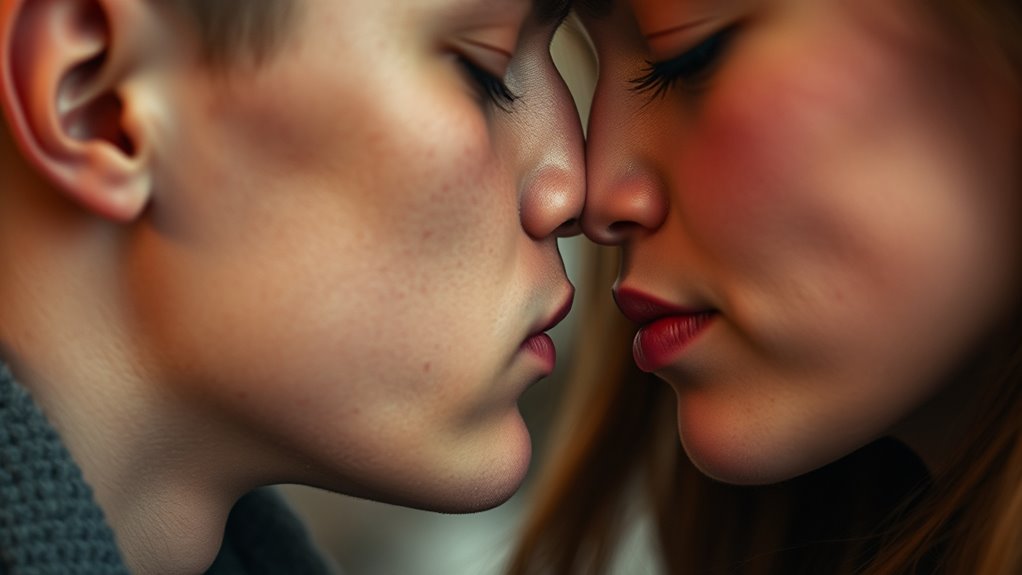

Kiss-induced blushing happens because your emotions trigger your nervous system to react involuntarily. When you feel attraction or vulnerability, your brain sends signals that dilate blood vessels in your face, turning your cheeks red. This response is part of the body’s automatic “fight or flight” reaction, influenced by your emotional state and individual sensitivities. If you want to understand how these complex body responses connect, there’s more fascinating detail ahead.
Listen free for 30 days with Audible
Thousands of audiobooks and originals — cancel anytime.
As an affiliate, we earn on qualifying purchases.
Key Takeaways
- Kiss-induced blushing results from emotional triggers activating the sympathetic nervous system, causing facial blood vessel dilation.
- Physiologists understand that emotional intimacy and anticipation trigger involuntary physiological responses linked to blushing.
- Individual variability in blood vessel sensitivity and nervous system reactivity influences blushing intensity and duration.
- The process involves complex interactions between emotional brain centers, like the limbic system, and autonomic circulatory responses.
- Blushing during kissing exemplifies the body’s automatic link between emotional states and physiological reactions.
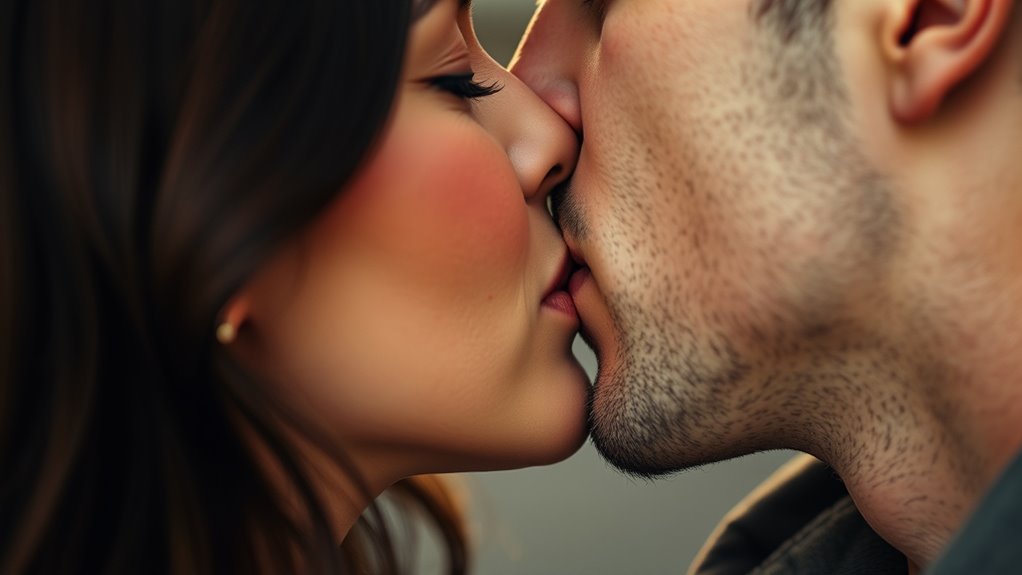
Kiss-induced blushing is a surprising yet common reaction where your face turns red after sharing a kiss. This sudden change in your appearance often catches you off guard, leaving you wondering what just happened. At its core, this reaction is tied closely to your emotional responses and the underlying physiological mechanisms that activate when you experience feelings of intimacy, excitement, or nervousness. When you share a kiss, your body doesn’t just respond emotionally; it also triggers a series of physical reactions that cause your skin to flush.
Your emotional responses during a kiss are powerful. Feelings of attraction, vulnerability, or anticipation can flood your brain with signals that activate your sympathetic nervous system—the part responsible for the “fight or flight” response. This activation prompts your body to produce adrenaline and other stress hormones, which influence blood flow and skin coloration. As your emotional state intensifies, your brain signals your blood vessels to dilate, especially those near your face, resulting in increased blood flow and that characteristic redness.
During a kiss, heightened emotions trigger your nervous system, dilating blood vessels and causing blushing.
The physiological mechanisms behind blushing are rooted in a complex interplay between your nervous system and your circulatory system. When you’re emotionally stimulated, your hypothalamus and limbic system send signals to your autonomic nervous system, which controls involuntary responses like heart rate, sweating, and blood vessel dilation. The dilation of blood vessels in your face causes a rush of blood to the surface, giving rise to the visible redness. Interestingly, this reaction can happen even if you’re not consciously aware of feeling nervous or excited; it’s often an automatic response to emotional cues.
Additionally, the duration and intensity of blushes can vary based on individual differences, such as genetic factors, which influence how reactive your blood vessels are to emotional stimuli. Your body’s response can also be influenced by individual factors, such as genetics, skin sensitivity, or even cultural norms around expressing emotion. Some people blush more easily or intensely, while others may have a more subdued reaction. This variability stems from differences in how sensitive your blood vessels are or how your nervous system reacts to emotional stimuli. In some cases, the physiological response can be triggered by subtle cues—like a lingering gaze or a shared moment of vulnerability—making the blushing feel almost involuntary.
In essence, kiss-induced blushing is a vivid example of how your emotional responses and physiological mechanisms work together in social and intimate situations. It highlights the deep connection between mind and body, where feelings of affection or nervousness manifest physically through changes in blood flow. Understanding this process reveals that blushing isn’t just a superficial reaction; it’s a genuine, involuntary sign of your emotional state, crafted by your body’s intricate systems working in harmony.
Top picks for "kiss induc blush"
As an affiliate, we earn on qualifying purchases.
Frequently Asked Questions
Can Kiss-Induced Blushing Be Prevented or Reduced?
If you want to prevent or reduce kiss-induced blushing, you can try behavior modification techniques like deep breathing or relaxation exercises to calm your nerves. Topical treatments, such as blush-reducing creams, might also help minimize redness. While results vary, consistently practicing these methods can lower your chances of blushing during kisses. Remember, understanding your triggers and staying relaxed plays a key role in managing this reaction effectively.
Is Kiss-Induced Blushing Linked to Specific Health Conditions?
Ever wonder if kiss-induced blushing links to health issues? It often involves a spike in your heart rate and emotional response, which can sometimes signal underlying conditions like anxiety or hormonal imbalances. While mild blushing is common, persistent or intense reactions may warrant medical attention. Are your emotional responses affecting your health? Monitoring your reactions can help identify if underlying health conditions contribute to your blushing episodes.
How Common Is Kiss-Induced Blushing Among Different Age Groups?
You might notice kiss-induced blushing varies across age groups, with younger people often experiencing it more frequently due to heightened emotional responses. Cultural differences also play a role, influencing how openly people react to affection. As you age, this blush response might decrease, but it’s still common in certain cultures where physical affection is more accepted. Overall, age-related prevalence and cultural factors shape how often you see kiss-induced blushing.
Are There Any Long-Term Effects of Frequent Kiss-Induced Blushing?
You might wonder if frequent kiss-induced blushing affects you long-term. While current research suggests it’s a fleeting reaction tied to emotional regulation and social anxiety, there’s no evidence of lasting effects. Still, if you notice persistent redness or discomfort, it’s wise to consult a healthcare professional. Remember, managing emotional responses can help reduce blush episodes, making social interactions more comfortable without worrying about long-term consequences.
Does Genetics Play a Role in Susceptibility to Kiss-Induced Blushing?
Genetics definitely influence your susceptibility to kiss-induced blushing. Your genetic predisposition and familial traits can make you more prone to blushing during such moments. If your family members tend to blush easily, you’re more likely to experience the same response. These inherited traits shape how your body reacts emotionally and physically, so understanding your family history can help you better grasp why you blush during kisses.
Conclusion
So, next time your cheeks flush unexpectedly after a gentle kiss, remember it’s more than just nerves—your body’s subtle way of sharing emotion. That spontaneous blush might seem coincidental, but it’s a fascinating dance between your nervous system and blood flow. Sometimes, it’s the universe’s quiet reminder that even a simple moment can trigger complex, beautiful physiological responses. Embrace those fleeting flashes of color; they’re your body’s unspoken way of saying, “I feel it too.”
College move-in / dorm season Picks
dorm essentials
As an affiliate, we earn on qualifying purchases.