
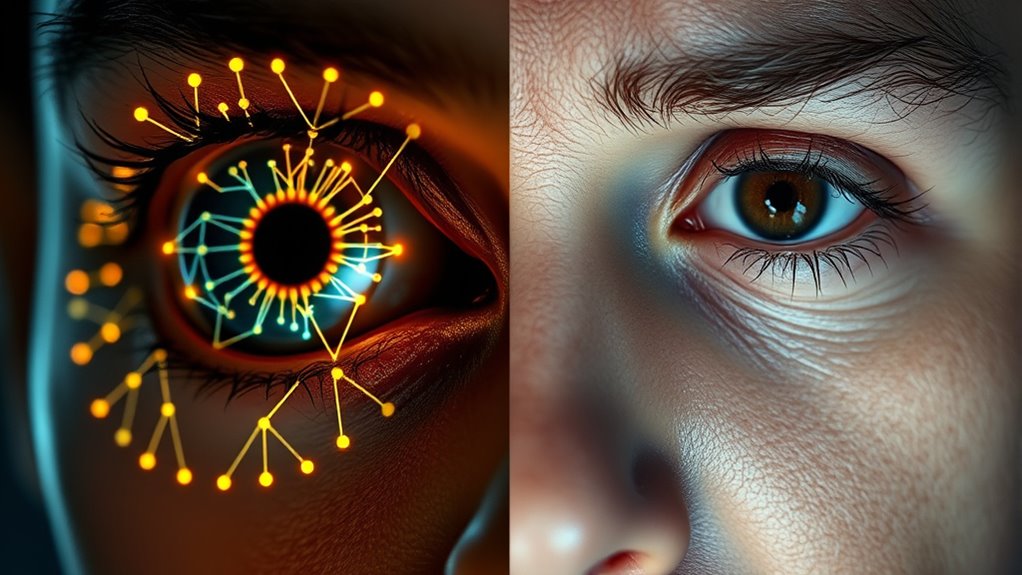

Deepfakes use advanced AI, especially deep learning techniques like GANs, to create realistic images, videos, and audio that can fool viewers. They manipulate existing footage or generate new content, making it hard to spot fakes. To recognize them, look for inconsistencies like strange blinking, unnatural eye movements, or mismatched audio. Staying aware of these signs helps you stay cautious. Keep exploring to understand more tricks for identifying these convincing digital deceptions.

Get gifts for the two of you delivered free with Prime
- Fast, free delivery on millions of items
- Prime Video, Amazon Music and more included
- Member-only deals all year
Key Takeaways
- Deepfakes are created using advanced AI techniques like GANs, which generate realistic images, videos, and audio.
- Subtle inconsistencies such as irregular blinking or unnatural facial movements can indicate deepfake content.
- Audio-visual mismatches and lip-sync errors are common signs of manipulated media.
- AI detection tools analyze digital artifacts and anomalies to help identify deepfakes.
- Staying informed and skeptical about digital content enhances the ability to recognize and question potential deepfakes.
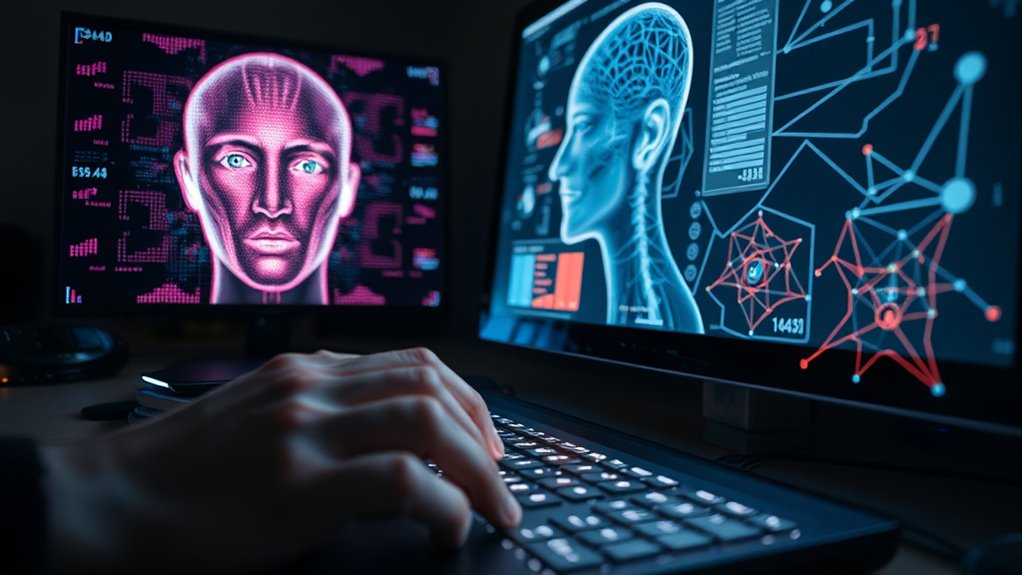
Deepfakes have emerged as a powerful tool that blurs the line between reality and fiction, raising concerns about misinformation and trust. As you encounter AI generated content more frequently, it’s essential to understand how these synthetic media are created and what ethical implications they carry. Deepfakes use advanced algorithms, particularly deep learning techniques like generative adversarial networks (GANs), to produce highly realistic images, videos, and audio that can convincingly mimic real people. This technology allows creators to manipulate existing footage or generate entirely new content, making it increasingly difficult to distinguish authentic material from fabricated ones. While some use deepfakes for entertainment, satire, or art, the potential for misuse—such as spreading false information, defamation, or political manipulation—is significant. As a consumer of media, you should be aware that not everything you see online is genuine, especially when it involves AI generated content.
The ethical implications of deepfakes are substantial. They challenge the fundamental trust in media and pose questions about consent and privacy. If someone’s face or voice is used without permission, it can cause emotional harm or damage reputations. furthermore, malicious actors can create deepfakes to deceive viewers, manipulate public opinion, or even blackmail individuals. This raises serious concerns about accountability and the need for responsible use of AI technology. Developers and platforms have a duty to implement safeguards, but regulation still lags behind the rapid pace of innovation. Staying informed about the latest developments and understanding cybersecurity vulnerabilities related to deepfakes can help you better protect yourself from malicious uses of this technology. As you navigate digital content, recognizing the ethical issues helps you critically assess the material you consume and shares responsibility for fostering integrity in media.
Spotting deepfakes requires a combination of technical awareness and skepticism. Look for subtle anomalies, such as inconsistent lighting, unnatural eye movements, or irregular blinking patterns, which often reveal synthetic content. Pay attention to audio mismatches or lip-sync issues that don’t align perfectly with speech. Many deepfakes still struggle to achieve flawless realism, so paying close attention to details can help you identify fakes. Additionally, leveraging tools and platforms that use AI detection algorithms can assist in verifying authenticity. But remember, as the technology evolves, so do the creation methods, making detection a constant challenge. Staying informed about the latest developments and maintaining a healthy skepticism when consuming media allows you to better navigate a landscape increasingly filled with AI generated content. Recognizing the ethical implications behind deepfakes also encourages responsible consumption and discourages the spread of harmful fakes, reinforcing a more trustworthy digital environment.
As an affiliate, we earn on qualifying purchases.
Frequently Asked Questions
Can Deepfakes Be Used for Positive Purposes?
Yes, deepfakes can be used for positive purposes, like in entertainment, education, or creating realistic special effects. However, you should consider the ethical implications and privacy concerns involved. When used responsibly, deepfakes can enhance storytelling or assist in training simulations. Still, you need to be cautious, ensuring consent and transparency to prevent misuse. Responsible use maximizes benefits while minimizing potential harm from ethical and privacy issues.
How Quickly Can New Deepfakes Be Produced?
You can produce new deepfakes in just a few hours or even minutes with synthetic media technology. Rapid generation is possible because advanced AI models automate much of the process, allowing creators to quickly craft realistic videos. The speed depends on the complexity of the deepfake and the available resources, but overall, synthetic media tools enable almost instant creation, making it essential to stay vigilant against potential misuse.
Are There Legal Consequences for Creating Deepfakes?
Creating deepfakes can land you in hot water, as legal liability varies by jurisdiction. If you use them maliciously or without consent, you risk fines or even criminal charges. Content regulation is tightening, aiming to curb harmful or deceptive videos. Think of it as walking a tightrope—you must balance free expression with responsibility. Ignoring these laws could lead to serious consequences, so always consider the legal landscape before crafting or sharing deepfakes.
What Industries Are Most Vulnerable to Deepfake Deception?
You’re most vulnerable to deepfake deception in industries like media, politics, and advertising. Media manipulation and political misinformation can easily sway public opinion or damage reputations when deepfakes are used maliciously. Be cautious when consuming content from these sectors, as convincing deepfakes can blur truth and falsehood, making it harder to trust what you see. Staying informed helps you recognize and question suspicious videos or images.
Can AI Improve Deepfake Detection in Real-Time?
Like a vigilant sentinel at the gates, AI can indeed improve deepfake detection through real-time analysis. By harnessing advanced AI detection techniques, you can identify manipulated content instantly, preventing false information from spreading. This proactive approach allows you to stay ahead of malicious actors, ensuring authenticity. Continuous advancements in AI make real-time deepfake detection more accurate, empowering you to protect your digital environment effectively and confidently.
As an affiliate, we earn on qualifying purchases.
Conclusion
Now that you understand the science behind deepfakes, you’re armed with superpowers to spot even the most convincing fake videos. With AI advancing faster than you can blink, falling for a deepfake could be like trusting a wolf in sheep’s clothing—dangerous and deceptive. Stay vigilant, question everything, and remember: what you see isn’t always real. The battle between truth and deception is fierce, but with your knowledge, you’ve got the ultimate weapon to protect yourself.
As an affiliate, we earn on qualifying purchases.
AI-generated media verification tool
As an affiliate, we earn on qualifying purchases.
As an affiliate, we earn on qualifying purchases.
Columbus Day / Indigenous Peoples' Day Picks
long weekend sales
As an affiliate, we earn on qualifying purchases.