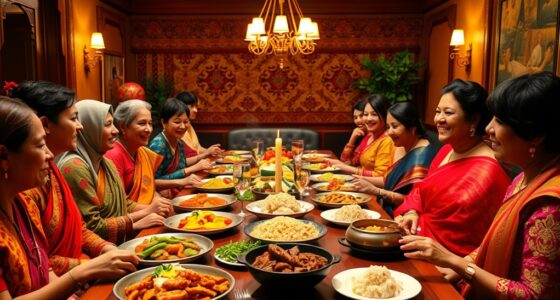


When exploring different cultures, it’s important to understand their kissing customs. In Europe, cheek kissing varies by country, with some sharing two or three kisses, while others prefer handshakes or bows. Latin America often embraces cheek kisses as a sign of warmth, whereas Asian cultures tend to reserve public affection for private moments. Middle Eastern regions are more conservative, favoring handshakes over kissing. Knowing these differences helps you show respect and avoid misunderstandings—continue to discover how these customs differ around the world.
Key Takeaways
- Kissing customs vary widely; some cultures view public displays as private, while others see them as friendly greetings.
- In Europe, cheek kissing is common but differs in number and manner across regions, requiring local observation.
- Asian countries often prefer bowing or nodding over kissing, reflecting more conservative attitudes toward public affection.
- Latin American cultures frequently use cheek kisses as friendly symbols, embracing warmth and sociability.
- Respecting local customs and observing social cues help navigate kissing etiquette and show cultural sensitivity.
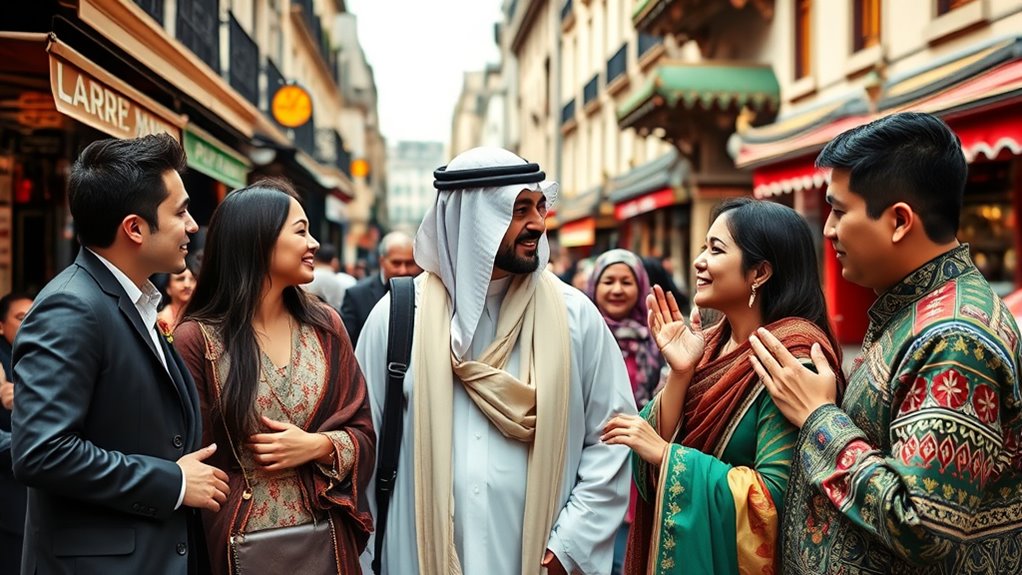
Kissing customs vary widely across continents, reflecting deep cultural beliefs, social norms, and traditions. When it comes to public displays of affection, what’s considered polite or appropriate in one country can be seen as intrusive or offensive in another. Understanding these differences is vital to respecting local etiquette and avoiding misunderstandings. In many cultures, greeting rituals are an essential part of social interactions, often involving some form of kissing or cheek touching. For example, in parts of Europe, especially France, kissing on the cheeks is a common greeting, with the number of kisses varying by region. You might find yourself leaning in for one, two, or even three quick kisses, depending on where you are. It’s important to observe local cues and follow the lead of your hosts to guarantee you’re participating appropriately.
Kissing customs differ worldwide, reflecting cultural norms; observe local cues to ensure respectful greetings.
In Mediterranean countries like Spain and Italy, these greeting rituals are quite lively, often involving multiple cheek kisses and warm embraces. You should be prepared to adapt quickly and mirror the gestures of those around you. Conversely, in Northern Europe, such as Scandinavia, a firm handshake might be more common than kissing, especially in formal settings. In some Asian countries, public displays of affection, including kissing, are generally reserved for private moments, and showing affection in public can be frowned upon or considered disrespectful. Here, bowing or a simple nod often replaces kissing as a greeting ritual.
In Latin America, kissing on the cheek is a prevalent greeting, and it’s often seen as a sign of friendliness and warmth. You might find that embracing and cheek kissing happen frequently, even among acquaintances. In the Middle East, the customs can be more conservative; physical contact is usually limited, and greeting rituals may involve handshakes or placing your hand over your heart. Public displays of affection are generally discouraged, especially between members of different genders, so you should be mindful of local sensitivities. Additionally, cultural sensitivity plays a crucial role in ensuring respectful social interactions in diverse settings.
Across the globe, understanding these variations helps you navigate social interactions with respect and confidence. Paying attention to local greeting rituals means more than just following a rule—it shows your appreciation for their culture. When in doubt, observe how others greet or ask politely about the appropriate way to show respect. Whether it’s a kiss on the cheek, a handshake, or a bow, aligning your actions with local customs will make your interactions smoother and more genuine. Remember, embracing these differences enriches your travel experience and demonstrates your respect for diverse cultural practices.

Scddboy Matching Necklace for Couples,Heart Shape Goth Friendship Couples Necklace for Him and Her
💕【Heart Necklace】Couples Necklace set features a unique anatomical heart pendant design, adding a touch of edgy charm to...
As an affiliate, we earn on qualifying purchases.
Frequently Asked Questions
Are There Specific Greeting Gestures That Replace Kissing in Certain Cultures?
Yes, in some cultures, alternative greetings replace kissing. For example, in Japan, a bow is common, while in parts of the Middle East, a handshake or cheek touch is typical. Cultural variations influence these gestures, emphasizing respect or friendship without physical contact. You should learn the preferred greeting in each culture to avoid misunderstandings and show respect, especially if you’re visiting or working internationally.
How Do Age and Gender Influence Kissing Etiquette Worldwide?
They say, “Respect knows no age or gender.” Your age influences kissing customs—older generations might prefer handshakes or cheek kisses, while younger folks often embrace more casual greetings. Gender-specific norms also shape behaviors; in some cultures, men kiss less openly, and women are more reserved. Understanding these differences helps you navigate social situations respectfully, recognizing that age-related customs and gender norms guide appropriate greetings worldwide.
What Are the Common Misunderstandings About Kissing Customs Across Cultures?
You might think all cultures view kissing the same way, but cultural misinterpretations often lead to social misunderstandings. For example, some cultures see kissing as a romantic gesture, while others consider it a sign of friendship or greeting. You could assume a kiss is always welcome, but in many places, it might be inappropriate or misunderstood. Understanding these differences helps prevent awkward moments and shows respect for diverse customs.
How Do Religious Beliefs Impact Kissing Practices in Different Regions?
In some regions, religious restrictions shape kissing practices, emphasizing modesty and spiritual significance over physical affection. You might find that in certain cultures, public displays of affection are limited or avoided altogether, respecting spiritual values. These customs reflect deep-seated beliefs, guiding personal interactions to honor religious teachings. Understanding that kissing holds different spiritual meanings across regions helps you navigate social situations with respect and sensitivity, avoiding unintended offense.
Are There Any Health Considerations or Risks Associated With Kissing Customs Globally?
You should be aware that kissing customs can pose health risks like viral transmission and dental health issues. Sharing kisses, especially on the lips, can spread colds, herpes, or other infections. To stay safe, practice good oral hygiene and avoid kissing if you’re feeling unwell. Understanding these risks helps you enjoy cultural traditions while protecting your health. Always be mindful of hygiene and personal boundaries across different regions.

UNGENT THEM Matching Couples Bracelets Stuff Promise Long Distance Relationship Sentimental Christmas I Love You Valentines Day Gifts for Him Her Boyfriend Girlfriend Women Men His Hers Bf Gf
Couples Bracelets with Matching Ring: This couples bracelet is designed for love. The puzzle heart design on the...
As an affiliate, we earn on qualifying purchases.
Conclusion
As you travel, remember that kissing customs are like a universal handshake—each culture has its own rhythm and meaning. I once watched a friend try to kiss hello in France, only to realize he’d missed the subtle cheek pecks by inches. Just as a dance requires learning the steps, understanding these customs helps you connect more authentically. Embrace these differences, and you’ll find your way smoothly through every cultural dance floor.

Matching Bracelets for Couples,Dainty Gold Love Knot Bracelet 14K Gold Plated Herringbone Chain Bracelet Relationship Jewelry Gifts for Best Friend(Gold&Silver)
For couples seeking to strengthen their bond, these matching bracelets offer a stylish way to symbolize your connection....
As an affiliate, we earn on qualifying purchases.

Desimtion Couples Bracelets Red String of Fate Matching Bracelets for Couples Gifts for Him and Her, Long Distance Relationship Gifts for Girlfriend and Boyfriend
According to legend, the woven red rope bracelet condenses your wishes. When the red rope bracelet falls off...
As an affiliate, we earn on qualifying purchases.