
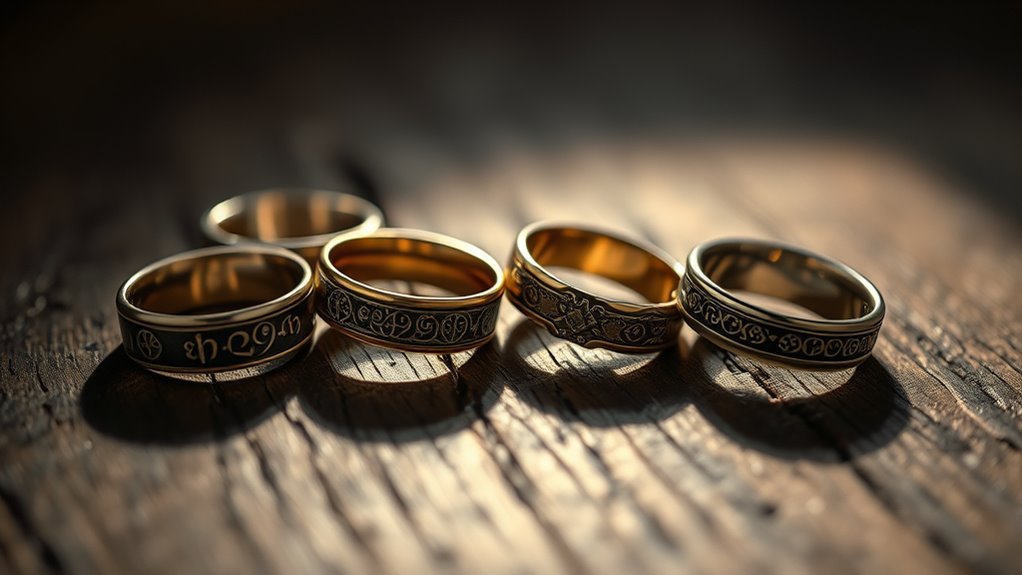

Rings symbolize love, promises, and spiritual strength through their circle shape, which stands for eternity and unbreakable bonds. In folklore, they are believed to channel protective energies, ward off evil, and influence fate. As tokens of commitment, they serve as tangible reminders of loyalty and shared future hopes. Across cultures, the circular form aligns with cosmic harmony and spiritual renewal. To discover more about the powerful symbolism behind rings, continue exploring their fascinating folklore.
Listen free for 30 days with Audible
Thousands of audiobooks and originals — cancel anytime.
As an affiliate, we earn on qualifying purchases.
Key Takeaways
- Circles in folklore symbolize eternity, continuity, and unbreakable bonds, reflecting promises that last a lifetime.
- Rings are believed to channel protective energies, ward off evil, and influence fate through mystical properties.
- Exchanging rings during ceremonies signifies trust, loyalty, and commitment, serving as tangible symbols of vows.
- Cultural traditions associate rings with love, spiritual protection, and sacredness, reinforcing their symbolic power across societies.
- The circular shape embodies cosmic harmony, uniting physical form with spiritual concepts of everlasting love and spiritual strength.
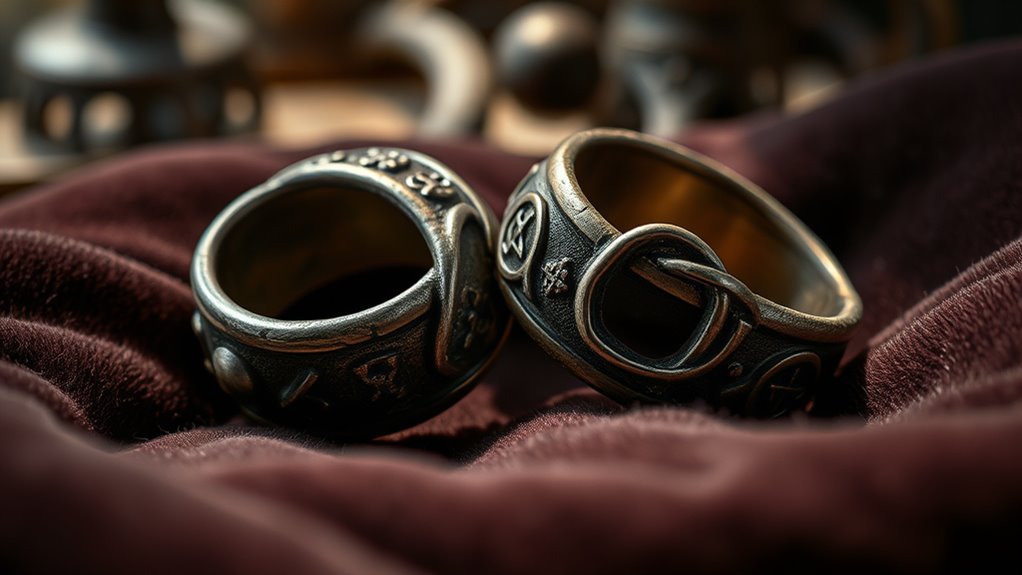
Have you ever wondered why rings hold such symbolic power across cultures? It’s because they represent more than just adornment; they symbolize deep ideas like commitment, eternity, and protection. When you look at a ring, especially a wedding band, you’re not just seeing a piece of jewelry—you’re witnessing a powerful emblem of marriage symbolism. The circular shape of the ring, with no beginning or end, embodies the unbreakable bond between two people. It’s a visual reminder that love and loyalty are ongoing, continuous forces. This simple shape has been used for centuries to signify promises that are meant to last a lifetime, making rings an enduring symbol of union and fidelity.
Beyond their symbolic meaning, many cultures have attributed magical properties to rings. People believed that wearing a ring could channel protective energies or ward off evil spirits. In ancient times, rings were thought to hold mystical powers that could influence fate or bring good luck. For example, some believed that a ring could serve as a talisman, safeguarding the wearer from harm or misfortune. This idea persists in certain traditions today, where rings are seen as more than just jewelry—they’re considered to possess a kind of magic that enhances personal well-being or spiritual strength. The belief in a ring’s magical properties makes it a potent object, capable of holding and transmitting unseen energies that influence your life.
The significance of rings also extends into their role as tokens of promises and commitments. When you exchange rings during a wedding or engagement, you’re making a visible pledge—an unbroken circle that signifies trust, loyalty, and the promise to stand by one another through life’s ups and downs. This act turns a simple piece of jewelry into a symbol of your shared intentions and hopes for the future. Over time, many cultures have woven stories and legends around rings, imbuing them with an aura of enchantment and sacredness. Whether as symbols of love or as talismans with magical properties, rings serve as tangible reminders of the promises we hold dear and the unseen forces believed to protect and empower us. Additionally, the circular form of rings aligns with principles of cosmic harmony, reinforcing their symbolic significance across different belief systems.
Top picks for "folklore ring circl"
As an affiliate, we earn on qualifying purchases.
Frequently Asked Questions
Are There Specific Cultures With Unique Ring Folklore?
Yes, many cultures have unique ring folklore rooted in their cultural traditions and mythological symbols. For example, in Scandinavian traditions, rings symbolize eternal bonds and protection, while in Indian culture, wedding rings represent divine blessings and commitment. Native American tribes often use rings as symbols of status or spiritual connection. These cultural differences highlight how rings serve as powerful symbols across societies, embodying promises, protection, and spiritual beliefs.
How Do Rings Symbolize Different Types of Promises?
You see, rings symbolize different promises by representing commitment and trust. For marriage commitments, a ring signifies lifelong devotion, often exchanged during vows. As friendship symbols, rings show loyalty and a special bond between friends. The circle shape emphasizes eternity and unbroken promises, making rings powerful tokens of loyalty, love, and friendship across cultures. When you wear or give a ring, you’re expressing a meaningful, lasting promise.
What Is the Historical Origin of Ring Symbolism?
Did you know that the earliest known rings date back over 4,000 years? You’ll find their origins in ancient Egypt and Mesopotamia, where rings symbolized eternity and divine power. Their craftsmanship evolved from simple materials to intricate designs, emphasizing their ceremonial significance. These rings weren’t just jewelry; they represented social status, spiritual beliefs, and commitments, making their symbolism deeply rooted in history and cultural traditions across civilizations.
Do Rings Have Protective or Spiritual Properties in Folklore?
Yes, rings are believed to have protective and spiritual properties in folklore. You might wear a ring as an amulet for protection against evil spirits or negative energy. Many cultures see rings as symbols of spiritual symbolism, representing eternal life, unity, or divine power. Wearing a ring can serve as a talisman, offering you a sense of safety and spiritual connection, reinforcing your inner strength and safeguarding your well-being.
How Has Ring Symbolism Evolved Over Centuries?
Over centuries, ring symbolism has evolved from simple craftsmanship to profound mythological meanings. You see, early rings represented unity and eternity, while intricate craftsmanship reflected social status. Mythological ring symbols, like Thor’s hammer or Celtic knots, added layers of protection and spiritual significance. Today, rings still symbolize commitment and power, but their deep cultural and spiritual roots continue to shape their evolving symbolism, connecting past beliefs with modern values.
Conclusion
So, next time you see a ring, remember it’s more than just jewelry. It’s a symbol of promises, power, and tradition woven through folklore. Do you realize how a simple circle can hold so much meaning? Whether it’s love, loyalty, or authority, rings remind us that some symbols are timeless. So, will you wear your ring with the awareness of its deeper story, or let its history fade away? The choice is yours.
Back to school Picks
back to school
As an affiliate, we earn on qualifying purchases.