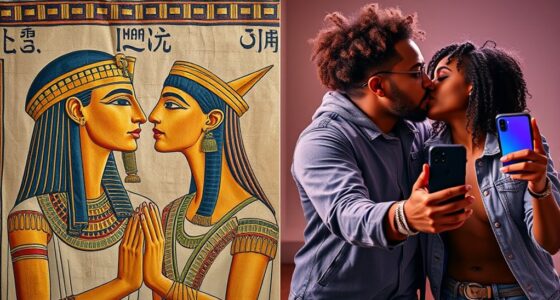
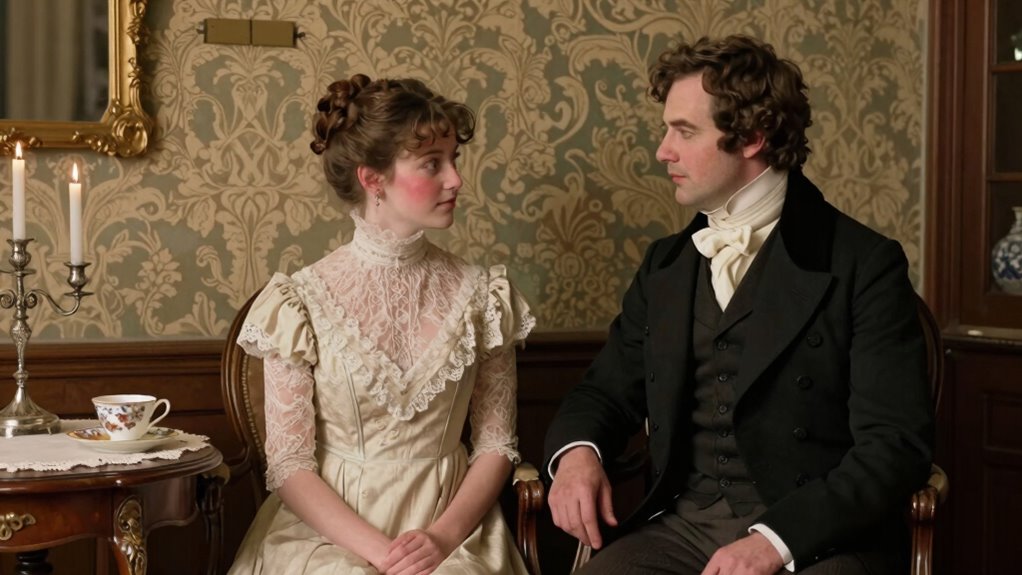

Historically, courtship was strict and guided by societal, cultural, and moral rules, often involving chaperoned visits, letter writing, and family approval, especially during the Victorian era. Over time, these strict norms softened as individualism grew, leading to more informal dating and personal choice. Today, courtship is more flexible and personalized, influenced by cultural diversity and modern values. To understand how these changes shaped modern love, keep exploring the fascinating history of courtship rules.
Key Takeaways
- Courtship traditionally involved formal, socially regulated behaviors emphasizing virtue, class distinctions, and family approval.
- Victorian-era norms codified strict dress, speech, and contact rules, prioritizing societal reputation over personal choice.
- The 20th century saw a shift toward informal dating, emphasizing individual preferences and mutual affection.
- Modern courtship practices are more fluid, blending traditional customs with personal and cultural diversity.
- Societal changes toward openness and diversity continue to influence evolving romantic norms and relationship expressions.

Throughout history, courtship rules have shaped how people approach romantic relationships, often reflecting broader social, cultural, and moral values. These rules have dictated what is considered acceptable behavior, guiding individuals on how to express interest, show respect, and build connections. You might not realize it, but social etiquette played a vital role in shaping these interactions, creating a framework that helped maintain social order and moral standards. Romantic traditions, often passed down through generations, set expectations for partners—what gestures were appropriate, who should initiate contact, and how relationships should progress.
Courtship rules have historically shaped romantic behavior, reflecting society’s values and maintaining social order through tradition and etiquette.
In earlier times, social etiquette was strict and formal. Men and women adhered to rigid codes that dictated their behavior in courtship. Women were expected to remain modest and reserved, while men had to demonstrate their seriousness through respectful gestures. Courtship often involved formal visits, chaperoned walks, and written correspondence, all designed to ensure propriety. These romantic traditions reinforced class distinctions and gender roles, emphasizing obedience, loyalty, and the importance of family approval. The idea was to protect virtue and uphold societal morals, making the process of falling in love a carefully choreographed dance rather than spontaneous emotion.
As societies evolved, so did these rules. During the Victorian era, social etiquette became even more codified, with strict rules about dress, speech, and physical contact. Courtship was less about personal choice and more about fulfilling societal expectations. Romantic traditions centered around family involvement and scripted interactions, which often delayed relationships until all societal and familial approval was secured. This period emphasized the importance of reputation and respectability, making love secondary to social standing. Additionally, the influence of social hierarchy played a significant role in shaping these evolving norms. Changes in technology, such as the advent of telegraph and telephone communication, also impacted how couples interacted, adding new layers to courtship customs. These technological advancements introduced new communication methods that altered the pace and nature of romantic exchanges.
Moving into the 20th century, these strict rules gradually loosened. The rise of individualism and changing social norms started to influence courtship practices. You saw more informal dating, less emphasis on family approval, and greater freedom for individuals to choose their partners. Social etiquette shifted to accommodate these changes, making romantic interactions more personal and less constrained by traditional expectations. The focus moved from rigid rules to mutual affection and compatibility, reflecting broader cultural shifts toward equality and personal happiness. Modern dating also introduced new ways for people to meet and communicate, further transforming traditional courtship customs. The influence of media and popular culture further reshaped how relationships are initiated and maintained.
Today, courtship rules are even more fluid. Romantic traditions have become personalized, and social etiquette varies widely based on individual values and cultural backgrounds. You now have the freedom to define your own approach to love, often blending modern values with remnants of traditional courtesies. Despite these changes, understanding the history of courtship rules helps you appreciate why certain customs exist and how they continue to influence modern relationships, even as society becomes more open and diverse. Recognizing the evolution of social norms allows for a deeper understanding of contemporary dating practices and the reasons behind their development. This ongoing evolution reflects a broader societal shift towards embracing diverse expressions of love and partnership.

Vibsion Regency Dresses for Women Double Layers Lace Empire Waist Dress Elegant Victorian Rococo Ball Gown L Light Blue
Timeless Empire Elegance: Embrace vintage charm with this high-waisted, flowing regency dress, reminiscent of 19th-century sophistication, perfect for…
As an affiliate, we earn on qualifying purchases.
As an affiliate, we earn on qualifying purchases.
Frequently Asked Questions
How Did Courtship Rules Vary Across Different Cultures?
You’ll notice that cultural norms heavily influence courtship rules across different societies. In some cultures, strict tradition variations dictate family involvement and arranged marriages, while others promote individual choice and romantic love. You might find that in certain communities, public displays of affection are taboo, whereas in others, they’re encouraged. These differences reflect each culture’s unique values, social structures, and history, shaping how people approach romantic relationships worldwide.
When Did Formal Dating Practices First Emerge?
Imagine this: formal dating practices first emerged in the 17th and 18th centuries, setting the stage for modern romance. You’d follow traditional etiquette, like calling on a date or giving romantic gestures to show your interest. These customs helped couples connect within social norms, making dating more structured. Over time, society loosened these rules, allowing more personal freedom, but the roots of dating still lean on those early formal traditions.
What Role Did Social Class Play in Courtship Rules?
Social hierarchy and economic status heavily influenced courtship rules. You’d find that people from higher social classes often followed strict protocols, with families playing a major role to maintain status. Those from lower classes had fewer restrictions, but their choices were limited by financial means. These class distinctions dictated who could court whom, shaping relationships based on wealth, privilege, and societal expectations, rather than personal connection alone.
How Have Modern Technologies Influenced Courtship Behaviors?
Modern technologies like digital communication and online dating have transformed how you approach courtship. You can now connect instantly, chat privately, and meet people worldwide, breaking traditional barriers. Online dating apps help you find compatible matches more efficiently and openly. Digital communication allows for continuous interaction, fostering intimacy early on. These innovations make courtship more accessible, flexible, and fast-paced, changing the way you build romantic relationships in today’s digital age.
Are There Any Courtship Rules Still in Practice Today?
You might think all courtship rules are ancient history, but some romantic traditions and dating etiquette still hold sway. For instance, many people believe in opening doors or paying for the first date, following old-fashioned manners. While not strict, these customs are still practiced as a sign of respect. Keep in mind, it’s all about making your partner feel valued, proving some traditions never go out of style.

Women's Gorgeous Girl Costume | Pretty Lady Dress with Jacket and Hat | Iconic Halloween Outfit X-Small
Size: X-Small
As an affiliate, we earn on qualifying purchases.
As an affiliate, we earn on qualifying purchases.
Conclusion
As you reflect on the evolving dance of courtship, you realize that the rules once guiding your steps have softly faded into a more fluid, personalized rhythm. What once seemed rigid now offers space for genuine connection, where subtle gestures and unspoken understandings take precedence. You find comfort in this gentle shift, embracing the quiet elegance of modern courtship—where the most meaningful moments bloom quietly, beyond the boundaries of tradition, inviting you to explore a richer, more authentic harmony.

KSIWRE 72 PCS Vintage Stationery Set,24 Stationery Writing Papers with 12 Matching Envelopes,Old Looking Stationary Kit for Writing Letters and Invitations
【Package Includes】: 24 sheets letter writing paper, 12 matching envelopes, 12 metal key accessories, 12 stickers and 12…
As an affiliate, we earn on qualifying purchases.
As an affiliate, we earn on qualifying purchases.
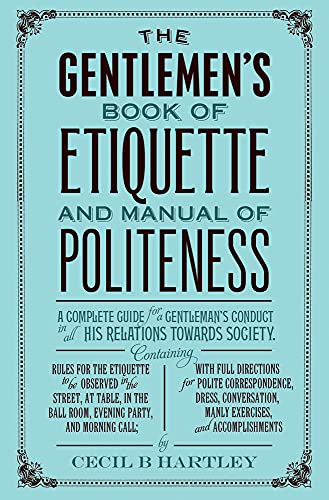
The Gentleman's Book of Etiquette and Manual of Politeness
As an affiliate, we earn on qualifying purchases.
As an affiliate, we earn on qualifying purchases.