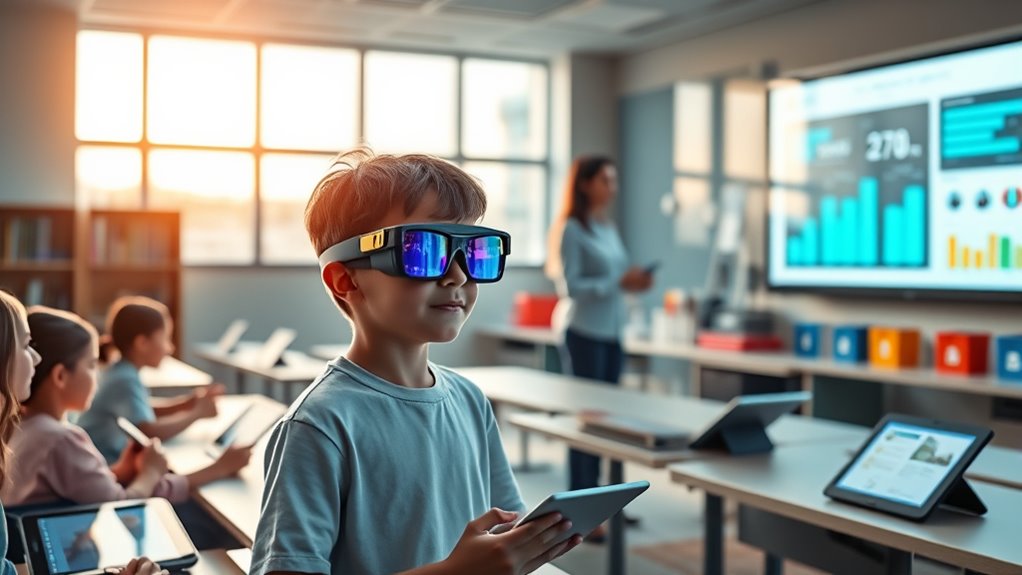

AI in education personalizes your learning experience by adapting to your individual needs and pace. It offers real-time feedback through adaptive assessments, helping you focus on skills that need improvement. Virtual tutors and AI assistants are available anytime to support your questions and explanations, making learning more flexible and engaging. As technology advances, these tools continue to improve, opening new opportunities for your success. Keep exploring to discover how AI can transform your educational journey.
Key Takeaways
- AI enables personalized learning experiences by adapting content and assessments to individual student needs and progress.
- Adaptive AI assessment tools provide real-time feedback, tracking progress and targeting areas for improvement.
- Virtual tutors and AI assistants offer 24/7 support, explanations, and tailored guidance outside traditional classrooms.
- Data collection from interactions allows AI to refine personalized learning paths and support targeted interventions.
- Continuous AI development promotes flexible, engaging, and inclusive education tailored to diverse learner styles.

Have you ever wondered how artificial intelligence is transforming the way we learn? One of the most exciting developments is the rise of personalized learning experiences, where AI tailors education to fit your unique needs. Instead of a one-size-fits-all approach, AI-powered tools like adaptive assessment systems analyze your strengths and weaknesses in real-time. These systems adjust the difficulty and focus of questions based on your responses, ensuring you’re neither bored nor overwhelmed. This constant adjustment helps you progress at your own pace, making learning more efficient and engaging. You’re no longer stuck with static tests that don’t reflect your current understanding; instead, adaptive assessment offers a dynamic way to measure and support your growth. Additionally, the integration of AI in Education reflects a broader shift toward automation that can streamline and enhance learning processes. Virtual tutors are another game-changer in this personalized landscape. These AI-driven assistants act like your personal teachers, available 24/7 to answer questions, provide explanations, and guide you through complex topics. Unlike traditional tutors, virtual tutors use sophisticated algorithms to understand your learning style and adapt their teaching methods accordingly. For example, if you struggle with a particular concept, they might offer additional examples or simplify explanations to help you grasp it better. Because they’re available anytime, you can learn at your convenience, whether early in the morning or late at night. This flexibility makes it easier to integrate learning into your busy schedule, maintaining motivation and consistency. What makes these AI tools so powerful is their ability to collect and analyze data about your interactions. Every quiz, question, and response helps refine the system’s understanding of what works best for you. Over time, this creates a highly personalized learning path that evolves with your progress. You’re not just passively receiving information; you’re actively engaging with content tailored specifically to your needs. This targeted approach boosts your confidence and helps you master topics more effectively than traditional methods could. In essence, AI-driven adaptive assessments and virtual tutors work together to create a learning environment that’s responsive and personalized. They empower you to take control of your education, making it more flexible, engaging, and effective. Instead of sticking to rigid curricula, you get a customized experience that recognizes your individual pace and style. As AI continues to develop, expect even more sophisticated tools to support your learning journey, breaking down barriers and opening new opportunities for everyone to succeed in the digital age.
Frequently Asked Questions
How Is Student Data Privacy Protected in Ai-Driven Education?
You’re protected through strict student confidentiality policies and secure data encryption methods. Educational platforms implement encryption to keep your data safe from unauthorized access, ensuring your privacy is maintained. Schools and providers also enforce confidentiality standards, limiting access to your information only to authorized personnel. These measures work together to safeguard your personal details, giving you confidence that your data remains private and secure while benefiting from personalized AI-driven learning.
What Are the Costs Associated With Implementing AI in Schools?
You’ll face costs like purchasing AI software, upgrading infrastructure, and training staff, which can add up quickly. Conducting a thorough cost analysis helps you understand these expenses. Funding challenges may arise, requiring you to seek grants or reallocating budgets. While initial investments seem high, the long-term benefits of personalized learning can justify the costs, making AI a valuable addition to your school’s educational approach.
How Do Teachers Adapt to Ai-Powered Personalized Learning Tools?
Embracing the evolving educational landscape, you adapt by engaging in targeted teacher training and embracing curriculum redesigns. You explore new pedagogical approaches, integrating AI tools seamlessly into your lessons. This process enhances your skills, allowing you to personalize learning experiences effectively. As you become more comfortable, you discover innovative ways to support diverse student needs, ultimately enriching your teaching practice and fostering a more dynamic, responsive classroom environment.
Can AI Replace Human Interaction in Educational Settings?
AI can’t replace human interaction in educational settings because emotional support and peer collaboration are crucial for student growth. While AI can personalize learning and provide instant feedback, it lacks the empathy and understanding that teachers bring to classroom interactions. Your role involves fostering a supportive environment where students feel connected and motivated, which AI cannot replicate. Human teachers remain essential for nurturing social skills and emotional well-being.
What Are the Potential Biases in AI Algorithms for Education?
You should be aware that biases in AI algorithms can impact your educational experience through issues like algorithm fairness and cultural bias. These biases may cause unfair treatment or inaccurate assessments for students from diverse backgrounds. To guarantee equitable learning, developers need to address these biases actively, promoting fairness and inclusivity. Recognizing these potential issues helps you better understand how AI influences education and emphasizes the importance of ongoing oversight.
Conclusion
Think of AI in education as a skilled lighthouse keeper guiding each student’s unique journey through the vast ocean of knowledge. With personalized learning as your steady beam, you navigate challenges and uncover new horizons. Embrace this digital lighthouse, illuminating pathways tailored just for you, ensuring you reach your destination confidently. As the light grows brighter, so does your potential—charting a future where education becomes a personalized voyage of discovery.