


Your cuisine reflects your community’s history, values, and beliefs, serving as a tangible expression of cultural identity. Traditional dishes and food rituals connect you to your heritage, embodying stories that have been passed down through generations. Food symbols often stand for unity, renewal, or spiritual beliefs, reinforcing a community’s sense of belonging. Exploring these culinary practices reveals how food shapes and preserves cultural identity—keep exploring, and you’ll discover even more about these meaningful connections.
Key Takeaways
- Food reflects cultural values, beliefs, and shared histories, serving as a symbol of community identity.
- Culinary traditions develop from geographic and historical contexts, embodying resilience and adaptation.
- Food symbols convey collective meanings like unity, renewal, or prosperity beyond their flavors.
- Traditional dishes help minority and immigrant groups preserve cultural identity across generations and borders.
- Food rituals and practices reinforce cultural memory, values, and pride, acting as expressions of cultural identity.
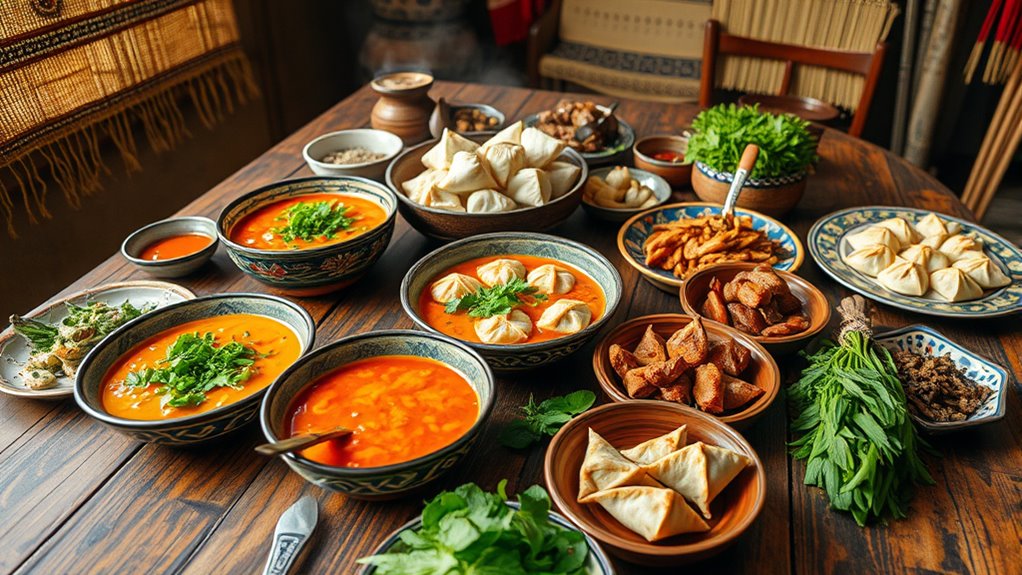
Have you ever wondered how food reflects a community’s identity and history? It’s more than just nourishment; it’s a mirror of cultural values, beliefs, and shared experiences. When you explore a region’s culinary traditions, you uncover stories passed down through generations, revealing what a community holds dear. These traditions shape the way dishes are prepared, served, and celebrated, creating a sense of continuity and pride. Food symbolism plays a significant role here, as many ingredients and dishes carry deeper meanings beyond their flavors. For instance, certain foods are associated with festivals, religious practices, or rites of passage, representing unity, renewal, or prosperity. When you partake in these culinary rituals, you’re not just eating—you’re connecting with the collective memory of the community.
Culinary traditions often evolve from historical circumstances, geographic features, and available resources. You might notice how coastal communities favor seafood, while inland regions rely on grains and meats suited to their environment. These choices tell stories of adaptation and resilience. Food emblems, whether a specific dish or an ingredient, often embody values or aspirations. For example, round foods like mooncakes or dumplings symbolize completeness and reunion in many East Asian cultures. In Latin America, corn isn’t just a staple; it’s a sacred gift representing life and sustenance, deeply woven into the spiritual fabric of the culture. When you understand these symbols, you gain insight into what matters most to that community—its history, beliefs, and hopes. Additionally, the color accuracy and symbolism of certain foods can enhance their cultural significance and emotional impact during celebrations.
Food also acts as a language of identity, especially for minority or immigrant groups maintaining their cultural roots. You might notice how traditional recipes are preserved or adapted abroad, serving as a testament to resilience and pride. Sharing these foods can foster a sense of belonging and continuity, even across generations or borders. Recognizing the culinary traditions and food symbolism of different communities allows you to appreciate the diversity of human experience. It’s a way of honoring their stories and understanding how food shapes who they are. Every dish, ingredient, and cooking method carries meaning—an expression of cultural identity that has persisted through time.
Frequently Asked Questions
How Does Food Influence Language and Communication Styles?
You find that food influences your language and communication styles through food symbolism and culinary idioms. You often use phrases like “biting off more than you can chew” or “spill the beans,” which reveal cultural values and shared experiences. These idioms create connection and understanding, shaping how you express ideas and emotions. Food symbolism also impacts your communication, reflecting cultural identity and emphasizing community bonds through everyday language.
Can Cuisine Change Over Generations Within the Same Culture?
Yes, cuisine can change over generations within the same culture. You’ll notice a culinary evolution driven by generational tastes, which influence traditional recipes and cooking methods. Younger generations often experiment with new ingredients and fusion styles, blending old traditions with modern influences. This ongoing adaptation reflects shifting preferences and cultural dynamics, ensuring that cuisine remains vibrant and relevant while still honoring its roots.
What Role Does Food Play in Religious Rituals Worldwide?
Imagine food as a gentle messenger in sacred rituals worldwide. You see, it plays a essential role by incorporating sacred ingredients during ritual feasts, symbolizing spiritual connection and reverence. These dishes often mark important religious milestones, fostering community and tradition. By partaking in these culinary ceremonies, you help preserve spiritual values, making food a delicious bridge between the earthly and divine in countless faiths.
How Do Immigrant Communities Preserve Their Culinary Traditions?
You preserve your culinary traditions through fusion cuisine and culinary adaptation, blending your native flavors with local ingredients. By sharing traditional recipes with family and community members, you keep your culture alive. Attending cultural festivals or cooking classes helps you stay connected. You also modify dishes to fit available ingredients, ensuring your unique culinary identity thrives even in new environments. This ongoing process keeps your heritage vibrant and relevant.
In What Ways Does Cuisine Reflect Social and Political History?
You see, food often tells the story of a nation’s past, reflecting social and political history. Historical conflicts shape culinary traditions, and dishes can symbolize resistance or unity. Culinary nationalism emerges when communities celebrate their heritage through specific foods, making a statement about identity. By sharing these foods, people keep history alive, proving that cuisine isn’t just sustenance but a powerful expression of collective history and values.
Conclusion
You see, food isn’t just about sustenance; it’s a powerful reflection of who you are. Many believe that cuisine shapes identity, and evidence supports this—your food choices reveal your culture, values, and history. By embracing diverse flavors, you connect with others and affirm your roots. So, next time you eat, remember: you’re not just nourishing your body—you’re expressing your culture and shaping your identity every bite.