


You see, kissing evolved from ancient social and familial gestures, symbolizing trust and social bonds before becoming associated with love. Over time, media popularized it as a sign of romance, passion, and rebellion, shaping cultural perceptions worldwide. Movies, music, and advertising amplify its emotional power, transforming it into a universal symbol of desire and connection. If you want to explore how this simple act became so iconic in pop culture, there’s more to uncover.

Get gifts for the two of you delivered free with Prime
- Fast, free delivery on millions of items
- Prime Video, Amazon Music and more included
- Member-only deals all year
Key Takeaways
- Media portrayals in films, music, and advertising amplified kissing’s association with love and passion, elevating it as a romantic symbol.
- Historical use of kissing to signify trust and social bonds laid the foundation for its romantic and cultural symbolism.
- The romanticized depiction of kissing in pop culture reinforced emotional intensity and societal ideals of love.
- Cultural variations and evolving norms allowed kissing to adapt as a versatile symbol of connection and rebellion.
- Its rich history and widespread media exposure solidified kissing’s role as a universal emblem of human emotion.
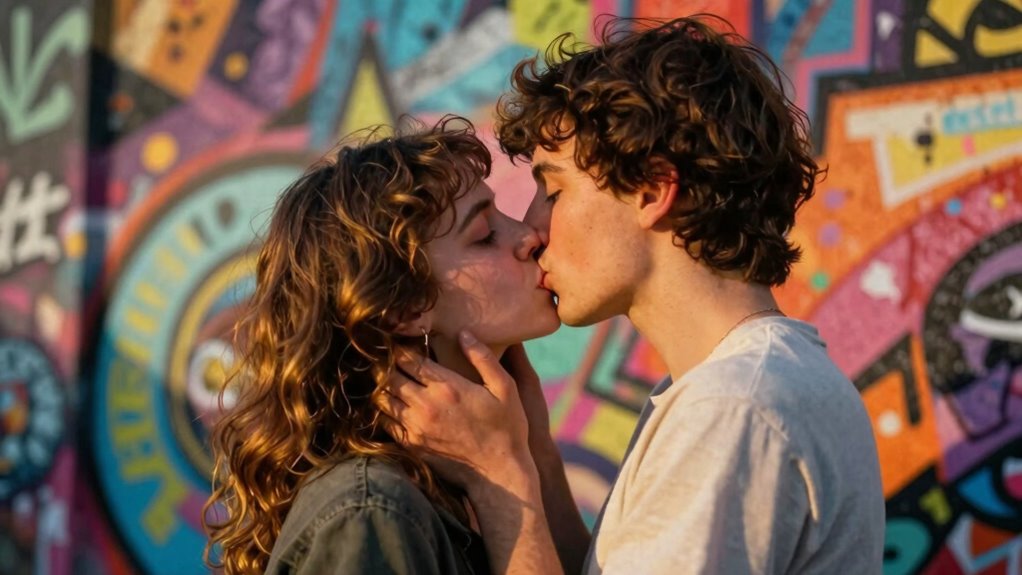
Have you ever wondered why kissing has become such a powerful symbol in popular culture? It’s a question worth exploring because, beyond the romantic gestures we see in movies or on TV, kissing has deep historical roots and varies widely across different societies. Its origins stretch back thousands of years, with evidence from ancient civilizations showing that kissing wasn’t always about romance. In some early cultures, such as those in India and parts of the Middle East, kissing was more of a social or familial gesture—an exchange of respect, greeting, or even a sign of allegiance. These historical origins reveal that, for centuries, kissing carried multiple meanings, often linked to trust, intimacy, or social bonding rather than just love.
As time progressed, the cultural significance of kissing shifted and expanded, especially in Western societies. During the Middle Ages, for instance, kissing became a way to authenticate friendships and alliances, moving beyond just family or romantic contexts. In the Victorian era, it took on a more reserved and symbolic character, often seen in literature and art as a sign of promise or moral virtue. Meanwhile, in some Asian cultures, kissing remained less common or was expressed differently, emphasizing other forms of affection or respect. These cultural variations show that the act of kissing isn’t universal in its meaning or practice; instead, it adapts to the social norms and values of each society. Additionally, modern media has played a significant role in popularizing kissing, transforming it into a staple of romantic storytelling around the world. This influence has helped to shape perceptions and reinforce the idea of kissing as a symbol of love and passion. Furthermore, the media’s portrayal of kissing often emphasizes its emotional intensity, elevating it from mere gesture to a powerful visual symbol. Interestingly, research into cultural practices demonstrates how diverse the expression and significance of kissing can be globally.
Today, in pop culture, kissing is amplified and stylized, often representing love, passion, or even rebellion. Movies, music videos, and advertising turn it into a universal symbol that resonates across borders, even if its original meanings differ. The media’s portrayal of kissing helps cement its status as an iconic gesture—one that can convey desire, connection, or even defiance in a single act. This transformation into a powerful symbol is partly because of its rich history and cultural diversity. You see, the act of kissing has been shaped by centuries of societal changes, and its significance continues to evolve, making it a potent emblem of human emotion. Whether viewed as a simple gesture or a profound statement, kissing’s deep roots and cultural variations are what give it its enduring power in popular culture.
As an affiliate, we earn on qualifying purchases.
Frequently Asked Questions
When Did Kissing First Appear in Popular Media?
You see, kissing first appeared in popular media in the early 20th century, especially through silent films and photographs. Fan interpretations and media portrayals helped cement it as a romantic gesture, making it a staple on screen. Over time, filmmakers and artists emphasized these moments, transforming kissing into a powerful symbol of love and passion that audiences enthusiastically embraced and celebrated across various forms of pop culture.
How Did Different Cultures Interpret Kissing Historically?
You might find it fascinating that in some cultures, over 80% of traditional rituals involve kissing, highlighting its deep roots in history. Historically, cultures interpret kissing differently: some see it as a sign of respect or spiritual connection, while others view it as romantic or intimate. These cultural rituals reveal diverse meanings and the evolving significance of kissing, shaping its role across societies through time.
Are There Variations in Kissing Symbolism Worldwide?
Yes, there are variations in kissing symbolism worldwide. You might encounter cultural misconceptions, where some societies see kissing as purely romantic, while others view it as a ritualistic practice or a gesture of respect. In certain cultures, kissing signifies greeting or blessing, not romance. These differences highlight how diverse traditions shape the meaning of a simple act, emphasizing its cultural context rather than a universal symbol.
How Has Technology Influenced Kissing in Pop Culture?
Technology has dramatically transformed kissing in pop culture, igniting a wave of digital intimacy and virtual romance. You now witness virtual kisses through emojis, GIFs, and video calls, blurring the line between real and digital connection. This shift creates suspense—what’s genuine? As screens replace face-to-face moments, you’re drawn into a new domain where love and longing are expressed through pixels, forever changing how kisses symbolize emotion in the digital age.
What Are the Psychological Effects of Kissing Portrayed Publicly?
Public portrayals of kissing often highlight emotional bonding and foster social acceptance. When you see characters sharing kisses, it can evoke feelings of love and connection within you. This portrayal encourages you to value intimacy and can boost your confidence in romantic situations. As a result, kissing in pop culture influences your perceptions of relationships, making emotional bonding seem essential and normalizes public displays of affection, strengthening social bonds.
As an affiliate, we earn on qualifying purchases.
Conclusion
As you’ve seen, kissing has transformed from a simple act into a powerful symbol in pop culture, like a spark that ignites emotions across the world. It’s become a universal language, whispering stories of love, rebellion, and connection. Just as a single kiss can leave a lasting imprint on your heart, its place in pop culture continues to evolve, shining brightly like a beacon guiding us through the stories we tell and share.
As an affiliate, we earn on qualifying purchases.
As an affiliate, we earn on qualifying purchases.
Halloween Picks
halloween
As an affiliate, we earn on qualifying purchases.