


When dating with disabilities, focus on adaptive communication tools like assistive devices or sign language to express yourself authentically. Choosing inclusive venues with ramps, accessible restrooms, and sensory-friendly spaces shows your commitment to comfort and acceptance. Openly discussing your needs fosters trust and deepens your connection. By combining these strategies, you create an environment where both of you can feel supported and valued. Keep exploring how embracing accessibility makes your relationship stronger and more fulfilling.
Key Takeaways
- Choose inclusive venues with physical and sensory accessibility features to create comfortable social environments.
- Use adaptive communication tools and encourage partners to learn and support your preferred methods.
- Promote honest dialogue and patience to build trust and mutual understanding in the relationship.
- Reflect on venue selection to demonstrate values of inclusivity and foster shared positive experiences.
- Turn challenges into opportunities by combining adaptive communication with accessible environments to strengthen connections.
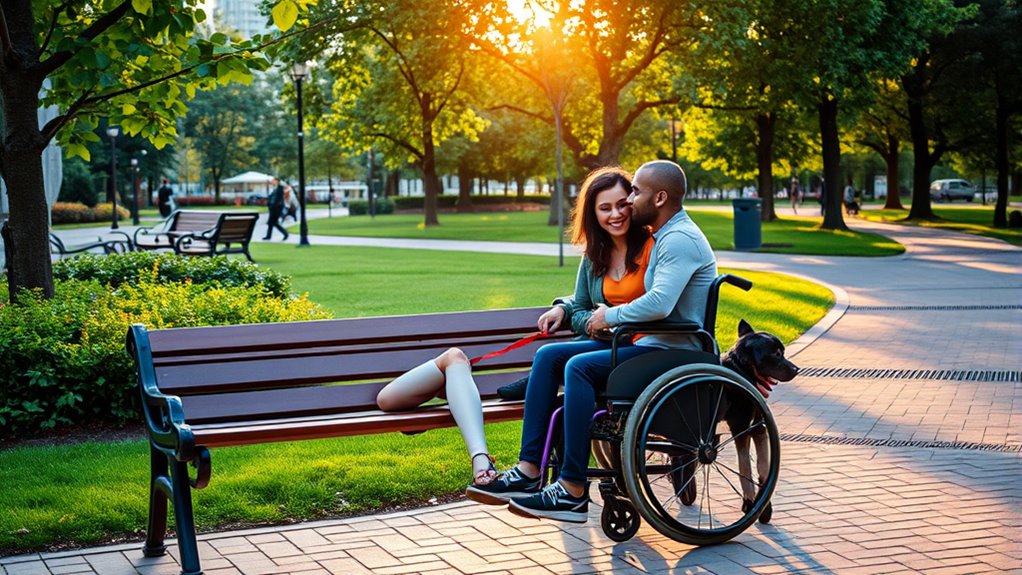
Dating with disabilities can present unique challenges, but it also offers opportunities for growth, connection, and understanding. One of the key aspects of making dating experiences more meaningful is mastering adaptive communication. This approach involves finding ways to convey your thoughts, feelings, and needs clearly, despite any barriers. Whether you use assistive devices, sign language, or other tools, adaptive communication helps you express yourself authentically and encourages your partner to do the same. It’s about creating a dialogue where both of you feel heard and respected. Building this skill often requires patience and openness, but it can considerably deepen your connection. Being upfront about your communication preferences and encouraging your partner to learn how to support you fosters mutual understanding and trust. Additionally, integrating color accuracy in visual aids or environments can enhance clarity and comfort during interactions. Choosing the right venues is equally important. Inclusive venues are designed to accommodate diverse needs, making social outings more comfortable and enjoyable for everyone. Accessibility features like ramps, wide doorways, and accessible restrooms remove physical barriers, while sensory-friendly spaces can help individuals with sensory sensitivities feel more at ease. When planning dates, look for places that prioritize inclusion—cafes with adjustable lighting, theaters with assistive listening devices, or parks with accessible paths. These venues signal that you value your comfort and that of your partner, setting the stage for a positive experience. Being proactive about selecting inclusive venues not only reduces stress but also demonstrates your commitment to creating a welcoming environment. In addition to physical accessibility, inclusive venues often foster a sense of community and shared understanding. They encourage interactions that are free from judgment or discomfort, allowing both partners to relax and be themselves. This can be especially important when maneuvering the complexities of dating with disabilities, where feeling accepted and understood is crucial. Remember, your choice of venue can say a lot about your values and openness, so choosing spaces that reflect inclusivity helps build a strong foundation for your relationship. Combining adaptive communication with the use of inclusive venues creates a supportive atmosphere where both partners can focus on connection rather than obstacles. It’s about embracing your needs, advocating for others, and finding joy in shared experiences. With awareness and intentionality, you can turn challenges into opportunities for meaningful love and companionship.
Frequently Asked Questions
How Can I Meet Disabled Singles Safely Online?
You can meet disabled singles safely online by using reputable dating platforms that prioritize accessibility and inclusivity. Look for sites that incorporate assistive technology to enhance your experience, and join communities that value emotional support. Always verify profiles, avoid sharing personal information early, and communicate openly about your needs. Staying cautious and respectful guarantees a positive connection while feeling safe and understood in your online dating journey.
What Are Best Practices for Inclusive Date Planning?
You can plan the most inclusive date ever by choosing adaptive venues that cater to various needs, making everyone feel comfortable and respected. Use clear communication strategies, like discussing accessibility beforehand and asking about preferences, to avoid misunderstandings. Think of it as creating a perfect, barrier-free experience where both of you can focus on connection, not obstacles. Your thoughtful planning transforms the date into a memorable, inclusive adventure for everyone involved.
How Do I Disclose My Disability Comfortably?
You should disclose your disability when you feel comfortable, ideally during early conversations to build confidence. Timing is key; wait until you trust the person and sense they’re receptive. Practice what you want to say to boost your confidence, and remember, honesty fosters understanding. Disclosing at the right moment helps establish genuine connection and guarantees your needs are considered from the start, making dating more comfortable for both of you.
Are There Specific Dating Apps for Disabled Individuals?
Ever wondered if there are dating apps tailored for you? Yes, many apps focus on adaptive dating and feature accessible options to make connecting easier. Platforms like Tinder, Bumble, and Hinge are increasingly incorporating accessible features, while apps like Special Bridge and Disabled Pass specifically cater to disabled individuals. These tools help you find meaningful connections comfortably, emphasizing inclusivity and understanding. Don’t hesitate to explore these options to find your perfect match.
How Can I Support My Partner’s Accessibility Needs?
You can support your partner’s accessibility needs by actively learning about assistive technology they use and ensuring their environment is accommodating. Offer emotional support by listening and validating their experiences, showing patience and understanding. You might also help them explore new tools or resources that enhance independence. Your proactive involvement demonstrates care, making them feel valued and supported in steering through daily challenges with confidence and reassurance.
Conclusion
Embracing accessibility and inclusion in dating is like planting seeds in a garden—you nurture understanding and acceptance, letting love grow beyond barriers. When you open your heart and mind, you create a world where everyone feels seen and valued. Remember, every connection blooms brightest when built on compassion. So, step forward with kindness, and watch how love, like a resilient vine, climbs higher, weaving a tapestry of genuine connection that’s as beautiful as it is enduring.