
Entertainment shapes your expectations about romance by presenting idealized ideas through movies, TV, and social media. You might think love should be effortless, passionate, and full of grand gestures, even though real relationships require effort, compromise, and patience. This can lead to disappointment when your experiences don’t match the fairy-tale images. Understanding the difference between fiction and reality helps you develop healthier views of love, and if you keep exploring, you’ll discover how to build genuine, lasting connections.

Get gifts for the two of you delivered free with Prime
- Fast, free delivery on millions of items
- Prime Video, Amazon Music and more included
- Member-only deals all year
Key Takeaways
- Media often depict romantic love as effortless, idealized, and flawless, setting unrealistic expectations for real relationships.
- Romantic clichés like grand gestures and meet-cutes create familiar but exaggerated notions of love.
- Entertainment narratives tend to omit relationship complexities, fostering misconceptions about the ease of overcoming challenges.
- Unrealistic portrayals can lead to disappointment and disillusionment when real love involves trust, communication, and routine.
- Recognizing media’s influence encourages healthier, more authentic perspectives on love and relationship dynamics.
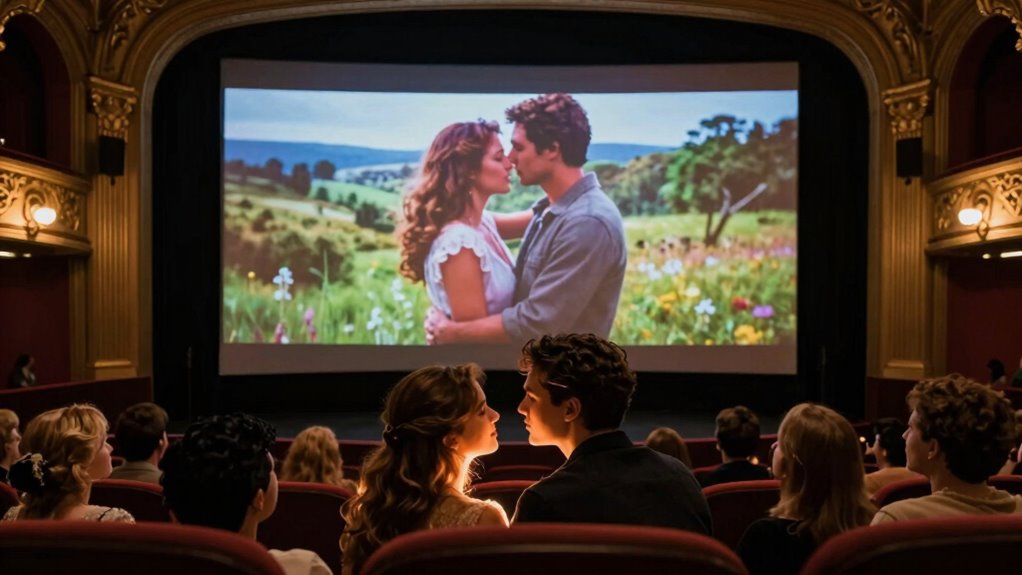
Have you ever wondered how entertainment shapes your ideas of romance? From movies and TV shows to novels and social media, the stories you consume influence what you believe love should look like. Many romantic narratives rely heavily on romantic clichés—those overused tropes that seem to appear in every love story. Think about the grand gestures, the perfect meet-cutes, or the idea of finding “the one” who completes you in an instant. These clichés can feel familiar and comforting, but they also set unrealistic standards. As a result, you might start to believe that love is always dramatic, effortless, or destined from the start, which isn’t always the case in real life.
Entertainment often presents idealized relationships—portraits of love that are flawless, passionate, and free of conflict. These portrayals can create a skewed perception of what healthy, lasting relationships look like. When you see characters who overcome every obstacle effortlessly or who seem to exist in a perpetual state of happiness, it’s easy to start thinking that real relationships should mirror that perfection. But reality is much more complex. Love involves compromise, patience, and sometimes, conflict. Yet, the stories you consume tend to gloss over these struggles, leading you to expect a kind of romantic perfection that’s rarely attainable. Recognizing how media representations shape our expectations can help us develop a more balanced view of love.
Idealized portrayals of love create unrealistic expectations, overlooking the necessity of compromise, patience, and conflict in real relationships.
This influence can make you feel disappointed or disillusioned when your own experiences don’t match up. If your relationships don’t follow the romantic clichés or mirror the idealized portrayals, you might question your worth or wonder what’s wrong. You might also chase after the kind of love that’s more fantasy than reality, prioritizing grand gestures over genuine connection. It’s important to recognize that entertainment often simplifies or romanticizes love to fit a particular narrative, but real relationships are built on trust, communication, and sometimes, mundane routines.
Understanding this disconnect can help you develop healthier expectations. Knowing that stories are crafted to entertain or evoke emotion, rather than reflect everyday life, allows you to appreciate love in its authentic form. You don’t need to chase after fairy-tale romances or expect love to be perfect all the time. Instead, you can focus on building honest relationships based on mutual respect and understanding. Remember, the real beauty of love often lies in the imperfect, everyday moments—not in the romantic clichés or idealized portrayals you see on screen.
relationship communication books
As an affiliate, we earn on qualifying purchases.
As an affiliate, we earn on qualifying purchases.
Frequently Asked Questions
How Do Different Cultures Influence Romantic Expectations in Media?
You see that different cultures influence romantic expectations through media representations, often reinforcing cultural stereotypes. Media from each culture highlight specific values, behaviors, and relationship dynamics, shaping what you might consider ideal or acceptable in romance. These portrayals can create high or skewed expectations, making you believe certain traits or stories are universal when they’re culturally specific. Understanding this helps you recognize how media influences your perceptions of romance differently across cultures.
Can Entertainment Realistically Depict Healthy Relationship Dynamics?
Can entertainment realistically depict healthy relationship dynamics? Sometimes, it blurs the line between fantasy and realism, making you wonder if those perfect romances exist. While some shows challenge relationship stereotypes, others reinforce them, creating a mesmerizing illusion. You might find yourself caught between hope and skepticism, questioning if true partnership can mirror what you see on screen. Ultimately, entertainment offers a glimpse, but real love requires more than just a good story.
How Do Age Gaps in Media Romances Affect Viewer Perceptions?
You might find that age gap stereotypes in media romances influence your perceptions, sometimes making you think such relationships are unusual or problematic. These portrayals can also affect your viewer empathy, either fostering understanding or reinforcing biases. As you watch, consider how these stereotypes shape your views and remember that real relationships often transcend age differences, emphasizing emotional connection over societal expectations.
What Role Does Social Media Play in Shaping Modern Romance Ideals?
You probably think social media is your ultimate guide to love, right? It’s actually a hilarious mix of virtual dating fantasies and celebrity romances that set unrealistic expectations. You scroll through perfect pics and dreamy captions, believing that’s how love should look. But behind the screens, real relationships need effort, not filters. Social media shapes modern romance ideals, making you chase illusions instead of genuine connection.
Are There Negative Effects of Idealized Romance Portrayals on Real Relationships?
Yes, idealized portrayals can create romantic illusions and set unrealistic standards, making you feel disappointed with real relationships. You might expect constant passion or perfect harmony, which isn’t sustainable. These illusions can lead to dissatisfaction and overlook the genuine, imperfect moments that build true connection. Recognizing that entertainment often exaggerates romance helps you appreciate authentic love, reducing pressure and fostering healthier expectations in your own relationships.
romantic relationship advice journal
As an affiliate, we earn on qualifying purchases.
As an affiliate, we earn on qualifying purchases.
Conclusion
You see, entertainment often sets the bar for what we expect from romance, shaping our hopes and dreams. Imagine watching a movie where every kiss is magical; you might start believing true love should be just as effortless. But remember, real relationships require effort and patience. Just like Sarah, who initially thought love would be perfect from the start but learned that genuine connection grows over time. Embrace reality, and let entertainment inspire, not define, your romantic journey.
books on realistic love expectations
As an affiliate, we earn on qualifying purchases.
As an affiliate, we earn on qualifying purchases.
As an affiliate, we earn on qualifying purchases.
Fall Picks
fall essentials
As an affiliate, we earn on qualifying purchases.