


Musicals are making a comeback in film because they blend stunning visuals, emotional storytelling, and catchy tunes that appeal to wide audiences. Modern filmmakers use new technology and star power to update classics and create fresh, engaging experiences. This resurgence makes theatrical stories more accessible and exciting for today’s viewers. If you want to discover how this trend is evolving and what’s driving its popularity, there’s plenty more to explore below.
Key Takeaways
- Modern filmmaking techniques and high production values enhance the visual appeal of musical adaptations.
- Star power and technology attract diverse audiences, expanding musicals’ popularity beyond traditional theater fans.
- Films like “Les Misérables” and “The Greatest Showman” demonstrate successful, emotionally resonant adaptations.
- Bridging theater and cinema makes musical stories more accessible and engaging for contemporary viewers.
- The genre’s evolving storytelling and innovative approaches ensure its lasting relevance in modern film.
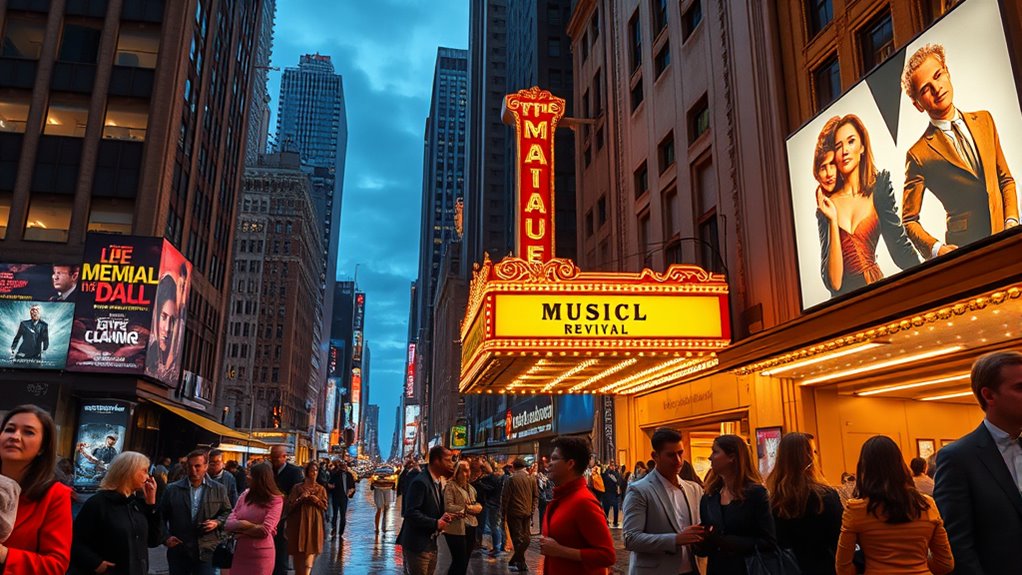
Have musicals finally regained their place on the big screen? It certainly seems so, especially with the recent surge of musical revival in Hollywood. For years, musicals struggled to find their footing in mainstream cinema, often dismissed as outdated or niche. But now, cinematic adaptations of beloved stage productions are capturing audiences worldwide, proving that the genre still has immense appeal. This resurgence isn’t just a fleeting trend; it’s a deliberate movement that reconnects classic storytelling with modern filmmaking techniques. Directors and producers are recognizing that musicals offer a unique blend of visual spectacle, emotional depth, and catchy tunes that resonate across generations. The success of recent adaptations has demonstrated that audiences crave the energy and artistry that musicals bring, especially when they’re brought to life with high production values and innovative choreography.
This musical revival is fueled by a desire to bridge the gap between theater and cinema, making these stories accessible to a broader audience. Films like “Les Misérables,” “The Greatest Showman,” and “La La Land” have shown how cinematic adaptations can elevate musical storytelling, blending the intimacy of personal narratives with grand visual spectacles. These adaptations often feature contemporary sensibilities, updated casts, and cutting-edge technology, which make the genre fresh and relevant. As a result, viewers who might not have considered themselves musical fans are drawn in by the spectacle and emotional resonance. It’s a win-win: audiences get to experience the magic of musicals in a new format, while filmmakers benefit from the genre’s proven popularity.
The renewed interest in musicals on the big screen isn’t just about nostalgia; it’s about innovation. Filmmakers are experimenting with storytelling styles, integrating musical sequences seamlessly into the narrative rather than treating them as standalone moments. This approach keeps the story engaging and dynamic, appealing to modern sensibilities. Plus, the star power involved in these projects attracts diverse audiences, from theater lovers to casual moviegoers. The musical revival also benefits from the global reach of cinema; international audiences are enthusiastic to embrace this vibrant genre, further cementing musicals’ place in contemporary film. As the industry continues to embrace cinematic adaptations of stage hits, the future looks bright for musicals. They’re no longer confined to theaters or nostalgic playlists—they’re making a powerful comeback on the big screen, enchanting new generations and reaffirming their timeless appeal. Additionally, the incorporation of active listening and empathy techniques in storytelling helps deepen audience engagement and emotional investment, further supporting the genre’s resurgence.
Frequently Asked Questions
How Do Modern Musicals Differ From Those of the Golden Age?
Modern musicals differ from those of the golden age through costume evolution and narrative complexity. You’ll notice contemporary designs are more diverse and reflect current fashion trends, enhancing authenticity. Plus, today’s musicals often feature more intricate stories with deeper character development, moving beyond simple plots. This combination keeps you engaged, blending stunning visuals with richer storytelling, making modern musicals more relatable and emotionally impactful compared to the more straightforward classics.
What Role Does Technology Play in Contemporary Musical Filmmaking?
Technology plays a pivotal role in modern musical filmmaking by enabling immersive experiences through virtual reality and enhancing visuals with digital effects. You can now enjoy stunning, seamless performances that blend live-action with CGI, creating a more engaging and dynamic spectacle. These tools allow filmmakers to push creative boundaries, making musical scenes more vibrant and realistic, which captivates audiences and elevates the overall storytelling experience.
Are There Specific Genres Within Musicals Gaining Popularity?
You might be surprised, but jazz fusion and cyberpunk musicals are gaining popularity. These genres stand out because they blend genres in innovative ways, creating fresh storytelling experiences. Jazz fusion musicals bring energetic, soulful music to the stage and screen, while cyberpunk musicals evoke a futuristic vibe with dark, tech-inspired visuals. As audiences seek diverse narratives, these unique genres are capturing attention and making waves in contemporary musical filmmaking.
How Do Musicals Influence Global Cinema Markets?
You see, musicals captivatingly influence international markets by showcasing diverse cultures and stories through vibrant performances, engaging global audiences. Their cultural impact fosters cross-cultural understanding and introduces local traditions to wider viewers. As musical films gain popularity worldwide, you notice increased box office sales and streaming views, boosting global cinema’s reach. This trend encourages filmmakers to incorporate musical elements, making international markets more receptive to these lively, emotionally resonant stories.
What Are the Challenges of Adapting Stage Musicals Into Films?
Adapting stage musicals into films presents casting challenges, as finding actors who can sing, act, and dance convincingly is tough. Staging limitations also pose issues, since what works on stage might not translate well on screen. You need to reimagine scenes and choreography to suit film’s visual style, which can be complex. Balancing authenticity with cinematic flair requires careful planning and creative problem-solving to make certain the adaptation resonates.
Conclusion
As the spotlight shifts once more to musicals, you’re witnessing a renaissance where melodies weave through the fabric of Hollywood’s tapestry. Like a phoenix rising from the ashes, these films soar, rekindling the magic that once defined an era. With every note and dance, you’re transported to a world where art and emotion collide in a dazzling spectacle. Embrace this symphonic revival—it’s a vivid reminder that music’s power can turn cinema into pure poetry.