


To spot greenwashing in fashion, look beyond buzzwords like “eco-friendly” or “sustainable” without proof. Check if brands share transparent details about their sourcing, supply chains, and ethical practices. Be cautious of vague claims and seek third-party certifications like Fair Trade or GOTS as proof of genuine standards. Consistency across all products is key—if only some are marketed as eco, it’s likely superficial. Keep digging, and you’ll uncover the truth behind their claims.
Key Takeaways
- Look for specific, transparent details about sustainable material sourcing and supply chain practices.
- Verify third-party certifications like Fair Trade, GOTS, or B Corp that confirm sustainability claims.
- Be cautious of vague language such as “eco-friendly” without concrete evidence or disclosures.
- Check if the brand’s sustainability efforts are consistent across all products, not just select lines.
- Research the company’s labor practices and ensure they prioritize fair wages and safe working conditions.
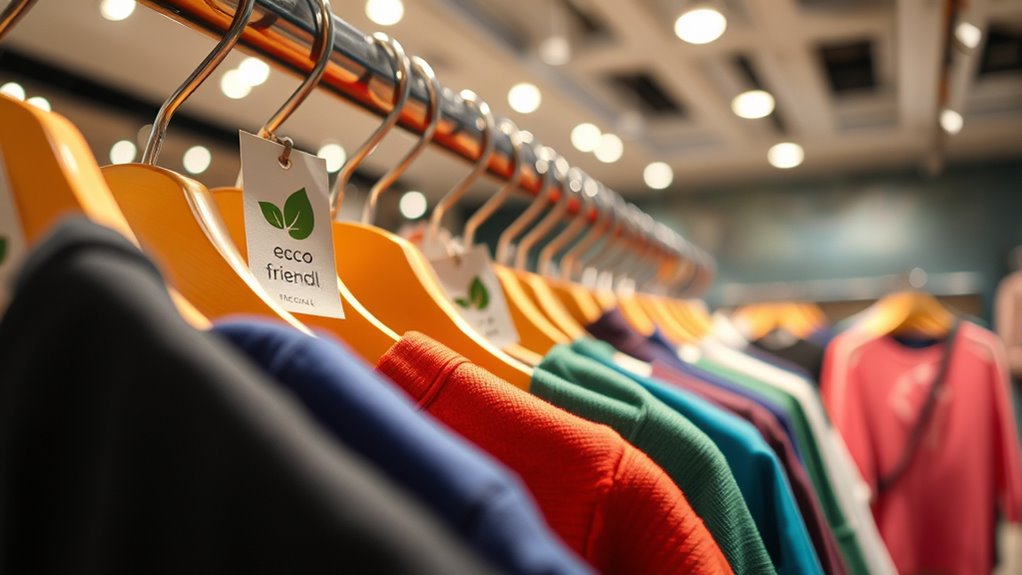
Have you ever wondered if a brand’s eco-friendly claims are genuine or just a clever marketing ploy? It’s a common question, especially as more companies tout their green credentials to appeal to conscious consumers. To really determine if a brand’s sustainability claims are authentic, you need to look beyond the buzzwords and flashy packaging. One of the most telling signs of true commitment is transparent information about sustainable material sourcing. Genuine brands openly share details about how they select their materials, whether they use organic cotton, recycled fibers, or other eco-friendly options. They also provide insight into their supply chains, ensuring that these materials are sourced responsibly without harming the environment or local communities.
Genuine brands share transparent details about sustainable sourcing and responsible supply chain practices.
Equally important is a brand’s dedication to ethical labor practices. If a company truly cares about sustainability, it should prioritize fair wages, safe working conditions, and the well-being of workers throughout its supply chain. Look for brands that openly communicate their efforts to uphold workers’ rights, conduct regular audits, and partner with certified factories. If a label only uses vague statements or avoids specifics, that’s a red flag. Authentic brands understand that ethical labor practices are integral to their sustainability story and are willing to share proof of their commitments.
Be cautious of vague or overly optimistic language, such as “green,” “eco-friendly,” or “sustainable,” without substantiation. These terms can be used as part of greenwashing tactics to make products seem more environmentally responsible than they really are. Instead, seek out details like third-party certifications or reports that verify a brand’s claims. Certifications such as Fair Trade, GOTS (Global Organic Textile Standard), or B Corp status can serve as evidence that the company adheres to strict social and environmental standards.
Another sign to watch for is consistency. Does the brand’s entire supply chain reflect its sustainability claims, or are only select products marketed as eco-friendly? True sustainability isn’t just about a single product or a limited collection; it’s a thorough approach embedded into the company’s operations. If a brand’s claims seem selective or superficial, that’s likely a sign of greenwashing.
Ultimately, being an informed consumer means asking questions and doing a little digging. Don’t be fooled by shiny packaging or lofty claims. Instead, prioritize brands that are transparent about their sustainable material sourcing and ethical labor practices, and back those claims with concrete proof. Paying attention to transparent sourcing and verified certifications can help you distinguish genuine efforts from greenwashing. That’s how you can ensure your choices support genuine sustainability, not just greenwashing.
Frequently Asked Questions
How Can Consumers Verify a Company’s Eco-Claims?
You can verify a company’s eco-claims by checking their sustainability reporting for transparency and detail. Look for reputable eco labels with credible standards, as they signal genuine eco efforts. Research the company’s practices and third-party audits to assure consistency. Don’t rely solely on marketing; scrutinize the evidence behind their claims. This way, you’ll better determine if their eco-claims are trustworthy or just greenwashing.
What Are Common Greenwashing Tactics Used by Fashion Brands?
Ever notice how some brands use marketing jargon like “eco-friendly” or “sustainable,” even when they aren’t? They often pair this with misleading imagery—like lush forests or pristine rivers—to create a green aura. These tactics aim to distract you from their actual environmental impact. Stay alert for vague claims and scrutinize labels; if it sounds too good to be true, it probably is.
Are There Certifications That Reliably Indicate Genuine Sustainability?
Yes, you can rely on sustainable labels and eco certification standards to identify genuine sustainability. Look for reputable eco certification standards like GOTS, Fair Trade, or Bluesign, which verify environmentally friendly practices. Sustainable labels that are transparent and backed by third-party audits tend to be more trustworthy. Always research the certification’s credibility, as some brands may use lesser-known labels to give a false impression of eco-friendliness.
How Does Greenwashing Impact Environmental Efforts in Fashion?
Greenwashing in fashion is like a mirage in a desert, misleading your efforts for real change. It causes environmental deception, making you believe brands are eco-friendly when they’re not. This undermines genuine sustainability initiatives and damages brand reputation, as consumers lose trust when exposed. By falling for greenwashing, you hinder progress toward environmental goals, letting superficial claims overshadow the actual impact and slowing down meaningful industry-wide change.
What Legal Actions Exist Against Greenwashing in Fashion?
Legal enforcement plays a vital role in tackling greenwashing in fashion, holding brands accountable for false environmental claims. You can pursue consumer lawsuits if you believe a brand has misled you with greenwashed marketing. These legal actions help protect your rights, encourage transparency, and push companies to be honest about their sustainability efforts. Stay informed about regulations and your legal options to combat greenwashing effectively.
Conclusion
Remember, actions speak louder than words. By staying informed and questioning vague claims, you can avoid falling for greenwashing in fashion. Look beyond the labels and do your research—your choices have the power to drive genuine change. As the saying goes, “The proof of the pudding is in the eating,” so trust in transparency and authenticity rather than empty promises. Stay vigilant and make mindful decisions that truly support sustainability.