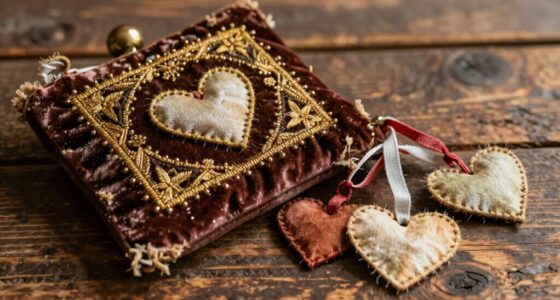
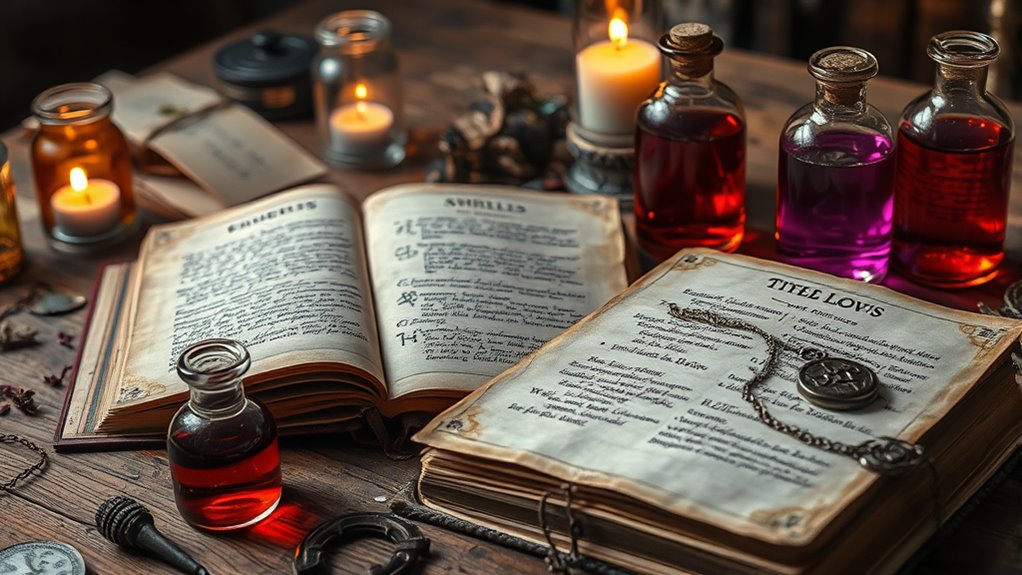

Love potions and spells in folklore have fascinated people for centuries, but their effectiveness is more about superstition than science. While these rituals—using herbs, charms, or incantations—may influence your mindset or feelings, they won’t reliably create love or lasting relationships. Many believe the true power lies in your intention and belief. To uncover more about the history and true nature of love magic, explore further insights into their origins and cultural significance.

Get gifts for the two of you delivered free — and shop member deals
- Fast, free delivery on millions of items
- Access to Prime Big Deal Days deals on October 6–7
- Prime Video, Amazon Music and more included
Key Takeaways
- Love spells and potions are rooted in folklore and ancient rituals but lack scientific evidence of effectiveness.
- Their power is often attributed to psychological effects like suggestion, belief, and placebo rather than actual magic.
- Ingredients like herbs and charms were historically believed to influence emotions but are not proven to alter love scientifically.
- Modern understanding considers love magic as symbolic, emphasizing genuine relationships over manipulation.
- The lasting impact of love depends on communication and mutual respect, not on magical practices.
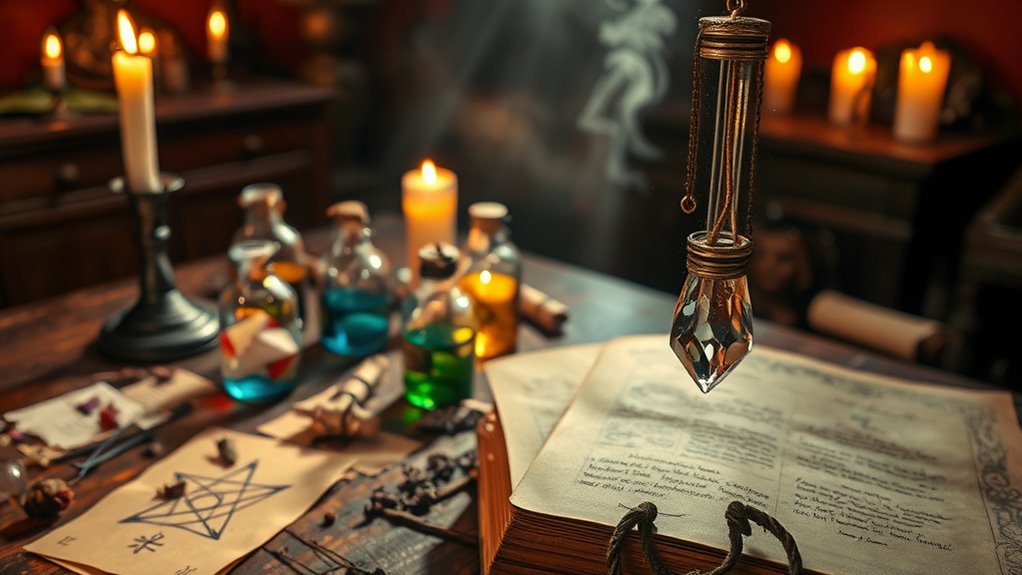
Throughout history, love potions and spells have captured people’s imaginations, blending magic with the human desire for romance. These enchanting practices often stem from ancient beliefs that unseen forces could influence emotions and relationships. In medieval times, love magic was a common part of folklore, with tales of enchanted brews and charms that could make someone fall in love. Medieval enchantments, in particular, played a significant role in shaping these stories, as people believed that specific herbs, symbols, or rituals had the power to sway hearts. These spells often appeared in folklore origins as part of a broader tradition of folk magic, used by both ordinary folks and practitioners of traditional healing. The idea was that love, being a powerful emotion, could be manipulated through carefully crafted potions or incantations. Despite their popularity, many of these love potions were based on superstition rather than scientific evidence. Folklore often described ingredients like mandrake, rosemary, or even human hair and blood, which were believed to carry magical properties. Whether used in small charms or elaborate brews, the goal was always to tap into unseen energies to influence another’s affections. These practices were deeply rooted in cultural beliefs, and their origins can be traced back to ancient civilizations, where love magic was intertwined with rituals, myths, and spiritual symbolism. As stories passed through generations, they became part of a shared cultural tapestry—an attempt to harness love’s unpredictable nature through mystical means. Interestingly, the use of herbal ingredients in love spells reflects the historical belief in natural objects holding magical powers. You might wonder if any of these love spells truly work. From a modern perspective, most of these practices lack scientific backing. Yet, their power may lie in psychological effects—suggestion, expectation, and the placebo effect can make someone believe that a spell or potion has worked. The ritual itself, with its focus and intention, can influence your own mindset and behavior, which may, in turn, impact the relationship. But trying to manipulate someone’s feelings with a potion or spell is unlikely to produce genuine love or lasting connection. It’s essential to recognize that real relationships thrive on honesty, communication, and mutual respect—not enchantments or charms. Love magic, as fascinating as it is in folklore, remains a symbol of human hopes and fears, rather than a reliable method for creating genuine romance.
As an affiliate, we earn on qualifying purchases.
Frequently Asked Questions
Are Love Potions Scientifically Proven to Work?
No, love potions aren’t scientifically proven to work. While they often contain magical ingredients believed to influence feelings, most effects are due to the placebo effect—you believe it will work, so it might seem to. Scientific studies haven’t shown any real power in these potions. Instead, genuine connections come from honest communication and shared experiences, not magical ingredients or spells.
Can Spells Influence Someone’s Free Will?
Spells can’t truly influence someone’s free will; they might manipulate thoughts temporarily, similar to mind control techniques. For example, a hypnotist could suggest feelings or behaviors, but ethical boundaries prevent full control. You should recognize that attempting to override free will crosses moral lines and often fails in the long run. Respecting personal autonomy is essential, and spells shouldn’t replace genuine consent or understanding.
What Are the Ethical Implications of Using Love Spells?
Using love spells raises serious ethical concerns around consent boundaries, as you’re influencing someone’s feelings without their permission. It can also involve cultural appropriation if you adopt practices from traditions you don’t belong to, disrespecting their origins. You might unintentionally harm relationships or infringe on personal autonomy. Before proceeding, consider these issues carefully to respect others’ boundaries and cultural significance, ensuring your actions remain ethical and mindful.
Do Love Potions Have Any Known Side Effects?
Love potions can cause some side effects, primarily due to magical ingredients that might be unpredictable or harmful. While many believe in their power, the placebo effects often play a significant role, making you think you’ve experienced a change. You should be cautious, as relying on these potions may lead to emotional dependence or unintended consequences, emphasizing the importance of ethical and safe love practices instead of mysterious mixtures.
How Have Love Spells Evolved Over Different Cultures?
You’ll find that love spells have evolved considerably across cultures, reflecting diverse cultural variations and historical practices. In some societies, rituals involve specific herbs, chants, or symbols, while others focus on emotional or spiritual connections. Over time, these practices shifted from secretive, mystical acts to more symbolic gestures. Your understanding shows how love spells adapt, blending tradition with modern beliefs, yet their core aim remains to influence love and attraction.
As an affiliate, we earn on qualifying purchases.
Conclusion
While love potions and spells in folklore are like whispers of ancient magic, there’s no solid proof they truly work. You might feel drawn to believe in their power, just as a moth is to a flickering flame. But remember, genuine love grows from connection, trust, and understanding—things no potion can conjure. So, whether you’re enchanted or skeptical, cherish real moments over mystical tricks, because true love’s magic is found in honest hearts.
As an affiliate, we earn on qualifying purchases.
As an affiliate, we earn on qualifying purchases.
Fall Picks
fall essentials
As an affiliate, we earn on qualifying purchases.