


To boost your mood and focus, focus on eating nutrient-rich foods like fatty fish high in omega-3s, whole grains, leafy greens, berries, and nuts. These support brain cell health, stabilize blood sugar, and reduce stress. Staying hydrated also keeps your mind sharp and your emotions steady. If you’re curious about more strategies to enhance brain function naturally, there’s plenty more to discover below.
Key Takeaways
- Omega-3 fatty acids in fatty fish support neuron communication, enhancing focus and mental clarity.
- Complex carbohydrates like oats and sweet potatoes provide steady glucose, stabilizing mood and preventing fatigue.
- B vitamins from leafy greens and beans boost neurotransmitter production, improving mood and cognitive function.
- Antioxidant-rich berries protect brain cells from oxidative stress, supporting alertness and mental stability.
- Proper hydration maintains neural efficiency, preventing foggy thinking and promoting emotional balance.
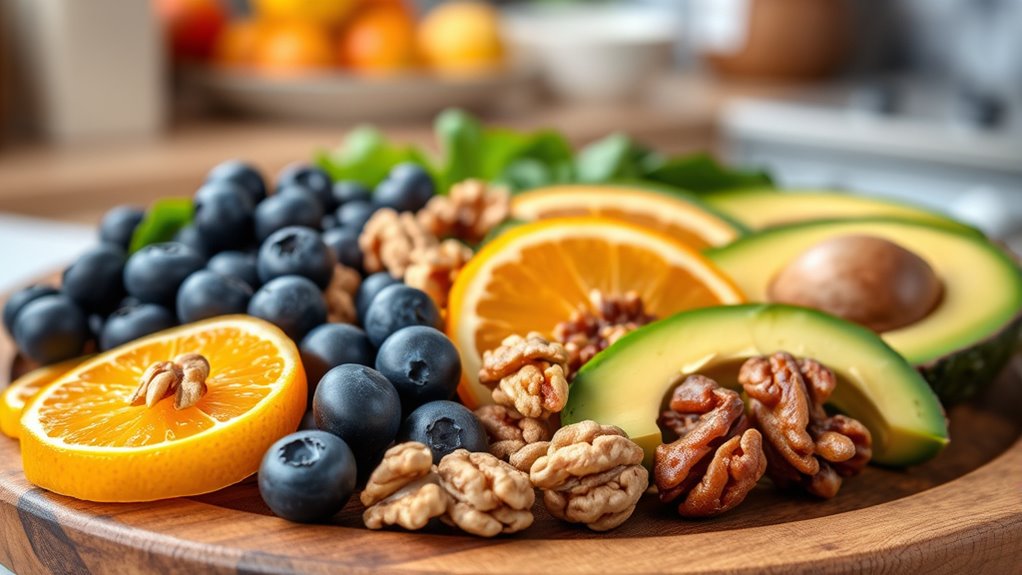
Have you ever wondered how your diet affects your mood and focus? The foods you choose can have a profound impact on your mental clarity and emotional stability, influencing how you think, feel, and handle stress. When you eat nutrient-rich foods, you’re giving your brain the building blocks it needs to operate efficiently. For example, omega-3 fatty acids, found in fatty fish like salmon and mackerel, are essential for maintaining ideal brain function. They support cell membrane integrity, which enhances communication between neurons, leading to sharper focus and a clearer mind.
Carbohydrates also play a key role in regulating mood and mental performance. Complex carbs like whole grains, oats, and sweet potatoes release glucose steadily into your bloodstream, providing a consistent energy source for your brain. This steady supply helps prevent mood swings and mental fatigue, allowing you to stay calm and centered throughout the day. On the flip side, refined carbs, such as sugary snacks and white bread, can cause spikes and crashes in blood sugar levels, leading to irritability and difficulty concentrating.
Complex carbs provide steady energy, preventing mood swings and mental fatigue for better focus and emotional balance.
Vitamins and minerals are equally essential for mental clarity and emotional stability. B vitamins, especially B6, B12, and folate, support neurotransmitter production, which influences your mood and cognitive function. Leafy greens, beans, and fortified cereals are excellent sources of these nutrients. Magnesium, often called the relaxation mineral, helps reduce anxiety and improve sleep quality, both of which contribute to better focus and emotional balance. You can find magnesium in nuts, seeds, dark chocolate, and leafy vegetables.
Antioxidants are another key group of nutrients that protect your brain from oxidative stress, which can impair mental clarity over time. Berries, such as blueberries and strawberries, are packed with antioxidants that support neural health. Including these in your diet can help you stay alert and positive, especially during demanding mental tasks. Conversely, excessive processed foods and trans fats, common in fast food and snacks, may promote inflammation and hinder mental stability, making it harder to stay focused and composed.
Finally, staying well-hydrated is fundamental. Dehydration can lead to foggy thinking and mood swings. Drinking enough water throughout the day ensures your brain functions smoothly, maintaining both your mental clarity and emotional stability. To conclude, your diet is a powerful tool in shaping your mental state. By choosing nutrient-dense foods rich in omega-3s, complex carbs, vitamins, minerals, and antioxidants, you support your brain’s health, helping you stay focused, calm, and emotionally balanced.
Frequently Asked Questions
Can Specific Foods Instantly Improve Mood or Focus?
Specific foods can boost your mood or focus shortly after eating, especially if they contain mood-enhancing nutrients like omega-3s or antioxidants. However, food allergies or intolerances might cause adverse effects, impacting your mental state. Choosing healthy cooking methods, like steaming or grilling, preserves nutrients that support focus. Remember, consistent healthy eating habits are more helpful for mood and focus than instant fixes.
Are Supplements Necessary if I Eat a Balanced Diet?
If you eat a balanced diet, supplements often aren’t necessary, since your body gets essential nutrients naturally. Did you know over 70% of adults don’t meet recommended intakes for key vitamins? Dietary restrictions like veganism or allergies might require supplements to fill gaps. Remember, supplement timing matters; taking them with meals can maximize absorption. Focus on whole foods first, and use supplements to complement, not replace, your healthy eating habits.
How Much Brain-Boosting Nutrients Should I Consume Daily?
You should aim for portion sizes that meet the daily recommendations for key brain-boosting nutrients like omega-3s, B vitamins, and antioxidants. Generally, adults need about 250-500 mg of combined EPA and DHA daily, while B vitamin needs vary. Focus on balanced intake through food, but if you’re unsure, consult a healthcare professional to guarantee you’re consuming the right amounts to support mood and focus.
Do Age or Genetics Influence Nutrient Effectiveness?
Think of your body as a garden; age and genetics are the weather and soil quality that influence how well nutrients flourish. Genetic variability can make some nutrients more or less effective for you, while age-related absorption might slow down how your body takes in these nutrients. So, yes, both age and genetics shape how nutrients impact your mood and focus, requiring personalized attention to your diet.
Can Brain Foods Prevent Mental Health Disorders?
While brain foods can’t prevent mental health disorders entirely, they can support your overall mental well-being. Neuroplasticity research shows that nutrient-rich diets enhance brain flexibility, helping you adapt better to stress. Dietary restriction effects, when balanced, may boost cognitive function and mood stability. Eating a variety of nutrient-dense foods promotes brain health, potentially reducing the risk of developing some mental health issues, but they’re not a guaranteed prevention.
Conclusion
By including nutrient-rich foods like fatty fish, nuts, and leafy greens in your diet, you can boost your mood and sharpen your focus. Did you know that studies show people who consume omega-3s regularly report 20% fewer mood-related issues? Incorporating these brain-boosting nutrients is a simple step toward better mental clarity and emotional well-being. Start making smarter food choices today—you’ll notice the difference in your mood and concentration.