
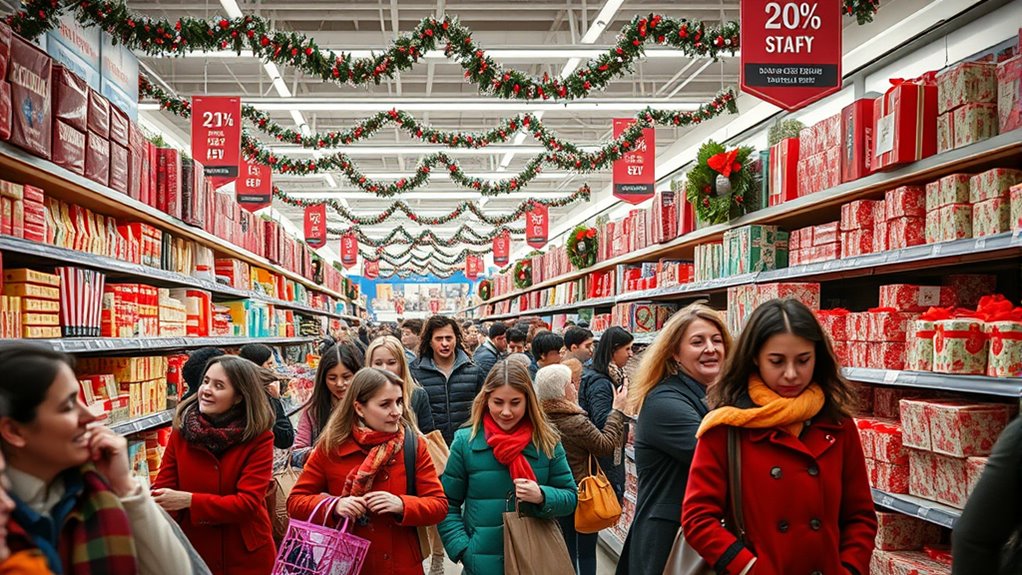

Boxing Day, celebrated on December 26th, originally started as a day when employers gave gifts in boxes to servants and workers, reflecting a spirit of charity and kindness. Today, it has shifted into a huge shopping event, with stores offering big sales and discounts, turning the holiday into a mix of tradition and consumer excitement. If you want to discover how this holiday evolved and what it means today, there’s more to explore.
Key Takeaways
- Boxing Day originated on December 26th as a day for charitable giving and sharing leftover gifts with servants and workers.
- Over time, it evolved into a major shopping holiday with significant sales and discounts across various stores.
- Modern celebrations include both festive shopping crowds and charitable activities, blending tradition and consumerism.
- The holiday’s core values of kindness and community still influence charitable donations and acts of generosity today.
- People participate in Boxing Day through retail therapy or acts of charity, reflecting its historical roots and contemporary practices.
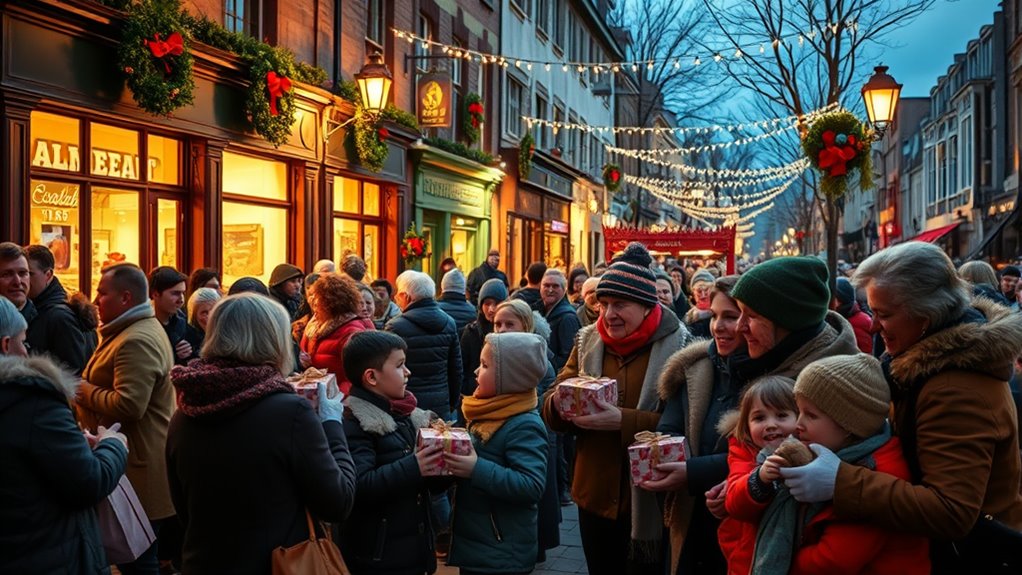
Boxing Day, celebrated on December 26th, has origins rooted in charitable giving and social tradition. You might be surprised to learn that this holiday was originally about showing kindness to those in need. Historically, it was common for employers to give their servants and workers gifts in boxes, a gesture of appreciation for their service throughout the year. These boxes, filled with leftover food, money, or small presents, embodied the spirit of charitable traditions. Today, that spirit still lingers, even as the holiday has evolved into a major shopping festivity. Many people now see Boxing Day as an opportunity to score big deals, making it one of the busiest shopping days of the year. Stores often kick off their biggest sales, enticing you with discounts on everything from electronics to fashion. The focus has shifted from giving to the thrill of shopping, but the underlying sense of generosity remains. You might find yourself joining the crowds, hunting for bargains and enjoying the festive buzz that surrounds the day. This transformation from a day of giving to one of consumer activity reflects broader societal changes, but the core idea of sharing and community still influences how people celebrate. For some, participating in shopping festivities is a way to spread holiday cheer, whether through gifting loved ones or simply treating yourself. While the original charitable traditions emphasized humility and kindness, modern shopping on Boxing Day emphasizes excitement and consumerism. Yet, despite the shift, many shops and charities still use this time to give back. Some organize special sales to support local causes or donate a portion of their profits to charity. This blend of old and new keeps the holiday relevant and meaningful for different generations. Whether you’re out hunting for deals or reflecting on the holiday’s roots, Boxing Day invites you to participate in a tradition rooted in generosity and community. You get to choose how you observe it—whether through acts of charity, enjoying shopping festivities, or simply spending time with loved ones. This mix of history and modernity makes Boxing Day unique, blending the spirit of giving with the exhilaration of holiday sales. So, as you step into the crowds or relax at home, remember that the day’s origins remind us to be generous, to share, and to enjoy the season’s joy, in whatever way feels right for you.
Frequently Asked Questions
How Do Different Countries Celebrate Boxing Day Today?
You’ll find that countries celebrate Boxing Day through various cultural traditions and regional customs. In the UK, people enjoy shopping sales and watching sports, while in Canada, many participate in charity events and outdoor activities. Australia hosts sporting events and beach outings, and in parts of Europe, it’s a day for family gatherings and giving gifts. Each country’s unique customs make Boxing Day a diverse and festive occasion.
What Are the Traditional Foods Associated With Boxing Day?
Think of Boxing Day as a tasty puzzle, where traditional dishes fit perfectly. You’ll often find holiday feasts featuring roast meats like turkey or ham, hearty pies, and rich gravy. In some countries, seafood takes center stage, while desserts like mince pies or Christmas pudding add sweet notes. These traditional dishes bring people together, turning the day into a feast of warmth, flavor, and festive cheer.
Are There Any Charitable Activities Linked to Boxing Day?
Yes, Boxing Day is closely linked to charitable activities. You can participate by making charitable donations or volunteering in your community. Many people take this day as an opportunity to give back, helping those in need through donations or community service. Your involvement not only supports important causes but also fosters a sense of unity and kindness, making Boxing Day a meaningful day for generosity and helping others.
How Has Boxing Day Impacted Retail Sales Historically?
Boxing Day has critically boosted retail sales historically, as you notice a surge in consumer behavior on this day. Shoppers enthusiastically take advantage of post-Christmas sales, leading to increased spending across stores. This pattern influences retail strategies, with businesses offering discounts to attract more customers. Overall, Boxing Day remains an essential period for retailers, shaping consumer behavior and driving substantial retail sales during the holiday season.
What Are Some Common Misconceptions About Boxing Day?
You might think Boxing Day is just about shopping, but that’s a myth busting misconception. Many believe it’s a holiday for boxing gifts, yet it’s rooted in charitable giving and tradition. Cultural misunderstandings often lead people to overlook its historical significance. In reality, Boxing Day is about community, generosity, and reflection, not just sales. Embracing this perspective helps you appreciate its true spirit beyond commercialized myths.
Conclusion
Now that you know the origins and modern meanings of Boxing Day, you can see it like a bridge between the past and present, connecting traditions with current celebrations. Whether you spend it shopping, giving gifts, or relaxing with loved ones, it’s a day that brings people together like a warm hug. Understanding its history adds depth to your celebrations, making the holiday feel even more special and meaningful.