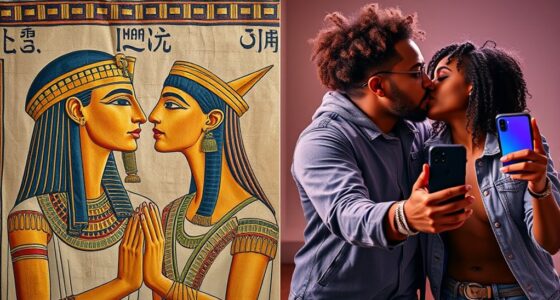

You keep wedding traditions alive because their symbolic meanings of love, unity, and hope speak to something deeply personal and timeless. These customs connect generations and remind you of shared values, no matter how styles change. Rituals like exchanging rings or carrying flowers still carry powerful messages that remain relevant today. If you want to explore how these traditions continue to adapt yet stay meaningful, there’s lots more to discover.

Get gifts for the two of you delivered free — and shop member deals
- Fast, free delivery on millions of items
- Access to Prime Big Deal Days deals on October 6–7
- Prime Video, Amazon Music and more included
Key Takeaways
- They symbolize universal values like love, commitment, and eternity that resonate across cultures and generations.
- Their deep cultural and historical significance reinforces their relevance and emotional importance.
- The core meanings remain consistent, allowing traditions to adapt while preserving their original symbolism.
- Shared rituals create a sense of continuity and connection between past, present, and future generations.
- The symbolic acts serve as powerful representations of hope, unity, and new beginnings that endure over time.
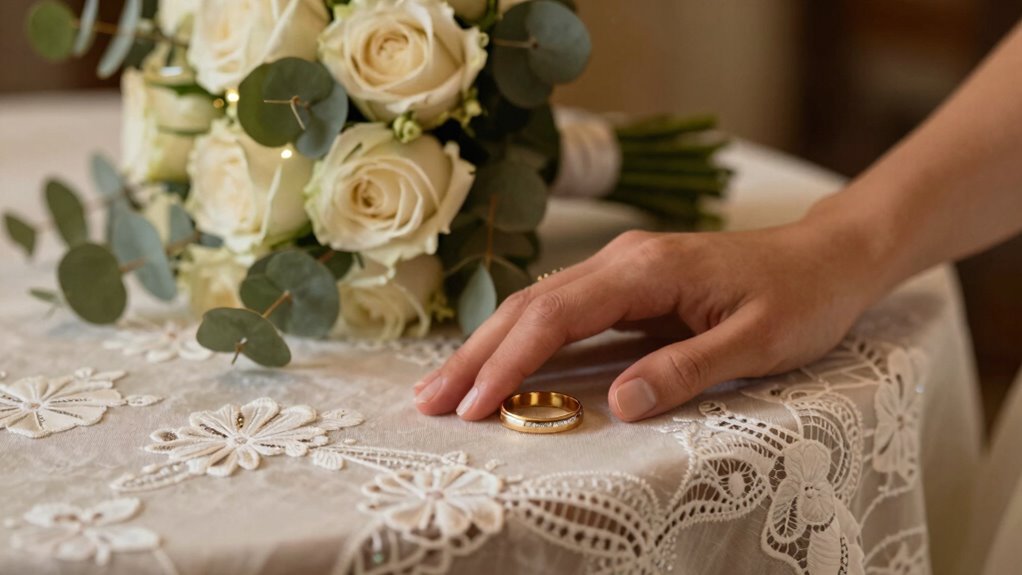
Throughout history, certain wedding traditions have endured across cultures and generations, symbolizing unity, love, and commitment. These rituals aren’t just remnants of the past; they’ve evolved with time, blending cultural evolution with modern adaptations that keep them relevant today. You might notice that many traditions, even when they appear to be rooted in ancient customs, have been tweaked to fit contemporary tastes and values. That’s because they serve a deeper purpose—connecting people through shared symbols of love, regardless of societal changes.
Take, for example, the act of exchanging rings. Its origins date back thousands of years, with ancient Egyptians and Romans using rings to symbolize eternity and commitment. Today, the ring exchange remains a central part of wedding ceremonies worldwide. While the materials and styles have changed—think personalized bands or intricate designs—the core symbolism persists. You’re part of a tradition that has successfully adapted over centuries, maintaining its meaning while embracing modern aesthetics. This is a perfect example of how cultural evolution and modern adaptations work together to keep a tradition alive.
Another tradition that never goes out of style is the bridal bouquet. Historically, bouquets were believed to ward off evil spirits or bring good luck. Over time, the reason for carrying flowers shifted toward aesthetic appeal and personal expression. Today, the choice of bouquet can reflect your personality, favorite blooms, or even seasonal trends. Yet, the act of carrying flowers remains a time-honored symbol of fertility and new beginnings. The tradition has evolved from superstition to a beautiful fashion statement, but its symbolic significance remains unchanged. This continuity demonstrates how traditions can adapt while maintaining their core meaning.
Similarly, the concept of the wedding cake has deep roots, originally symbolizing prosperity and fertility. Modern versions might feature elaborate decorations or personalized toppers, but the cake continues to represent abundance and celebration. You might even see couples incorporating unique flavors or designs as a nod to their personalities, demonstrating how traditions adapt while keeping their core intent intact. This continuity is supported by the enduring symbolism behind wedding customs, which helps them stay meaningful over time. As wedding trends evolve, they often incorporate traditional elements to honor their heritage, keeping the traditions relevant and respectful. Additionally, many of these traditions are reinforced by cultural significance, ensuring they remain meaningful across generations. Interestingly, modern wedding celebrations often blend these enduring customs with contemporary influences, creating a unique experience that honors tradition while embracing innovation.
In all these cases, the reasons behind these customs—symbolizing love, unity, and hope—remain steadfast. What changes are the styles, materials, and sometimes the meanings, which are adapted to fit current times. These traditions endure because they resonate on a fundamental level, bridging generations through shared symbols that continue to celebrate life’s most meaningful moments. Despite cultural shifts and modern influences, the essence of these wedding customs remains timeless, anchoring your special day in a rich tapestry of history and meaning.
engagement ring with personalized design
As an affiliate, we earn on qualifying purchases.
As an affiliate, we earn on qualifying purchases.
Frequently Asked Questions
How Do Wedding Traditions Vary Across Different Cultures?
You’ll notice wedding traditions vary across cultures through distinct cultural symbolism and ritual significance. For example, in some cultures, exchanging rings symbolizes eternal love, while in others, lighting candles or breaking glasses carries specific meanings. These customs reflect deep-rooted beliefs and values, reinforcing bonds and cultural identity. By participating in these traditions, you honor heritage, preserve history, and connect with the significance behind each ritual, making your wedding uniquely meaningful.
Are Modern Weddings Still Influenced by Ancient Customs?
Are modern weddings still influenced by ancient customs? Absolutely. Cultural evolution keeps traditions alive by adapting rituals to contemporary settings, while their ritual significance endures, symbolizing love, commitment, and unity. You might see traditional elements like veils or rings, which carry deep historical meaning. These customs persist because they connect you to your heritage, providing a sense of continuity amid modern celebrations. Isn’t it beautiful how history shapes today’s wedding ceremonies?
Why Do Some Traditions Become More Popular Over Time?
Some traditions become more popular over time because people see their symbolic gestures as meaningful, helping couples connect with their cultural roots. These customs often symbolize love, unity, or prosperity, making them resonate deeply. As societies value cultural preservation, more couples embrace these traditions to honor their heritage. Their enduring significance and emotional impact keep them alive, ensuring they remain popular choices for wedding celebrations.
How Do Couples Choose Which Traditions to Include?
You choose wedding traditions by envisioning your special day, imagining cultural symbolism woven into every detail. You consider the meaningfulness of each custom and how it reflects your values. Family involvement guides your decisions, as you seek traditions that honor your heritage and loved ones. With each choice, you create a unique tapestry of shared history and personal meaning, making your wedding truly yours.
What Is the History Behind Popular Wedding Rituals?
You see, the history behind popular wedding rituals often traces back to vintage symbolism and ritual evolution. For example, the white wedding dress symbolizes purity, rooted in Victorian ideals, while the wedding ring’s circular shape represents eternity. Over centuries, rituals adapt but retain core meanings, blending old customs with modern touches. This ongoing ritual evolution keeps traditions alive, allowing couples to connect with history while personalizing their celebration.
bridal bouquet with seasonal flowers
As an affiliate, we earn on qualifying purchases.
As an affiliate, we earn on qualifying purchases.
Conclusion
Wedding traditions are like roots that hold a tree steady through storms—they ground us in history and culture. No matter how much times change, these customs continue to bloom, reminding us of shared values and stories. They’re the thread weaving generations together, a timeless tapestry that keeps our heritage alive. So, as you step into your own wedding, remember: these traditions are the enduring melody in the song of love, never fading into silence.
As an affiliate, we earn on qualifying purchases.
As an affiliate, we earn on qualifying purchases.
Halloween Picks
halloween
As an affiliate, we earn on qualifying purchases.