


To understand the legal basics of digital wills and password heirs, you should know that digital wills specify how your online assets are handled after death and may need to meet legal standards depending on your jurisdiction. Assigning password heirs and using secure management tools help loved ones access your digital estate. It’s important to follow laws, create clear instructions, and work with legal professionals. Continue exploring to learn how to protect and transfer your digital assets effectively.
Key Takeaways
- Digital wills specify handling of online assets and may require legal recognition, which varies by jurisdiction.
- Clearly identify and document digital assets, passwords, and access instructions within the digital will.
- Designate trusted individuals as password heirs to ensure access to digital assets after death.
- Consult an attorney knowledgeable in digital estate laws to ensure validity and compliance.
- Regularly review and update digital estate plans to reflect changes in assets, passwords, and legal requirements.
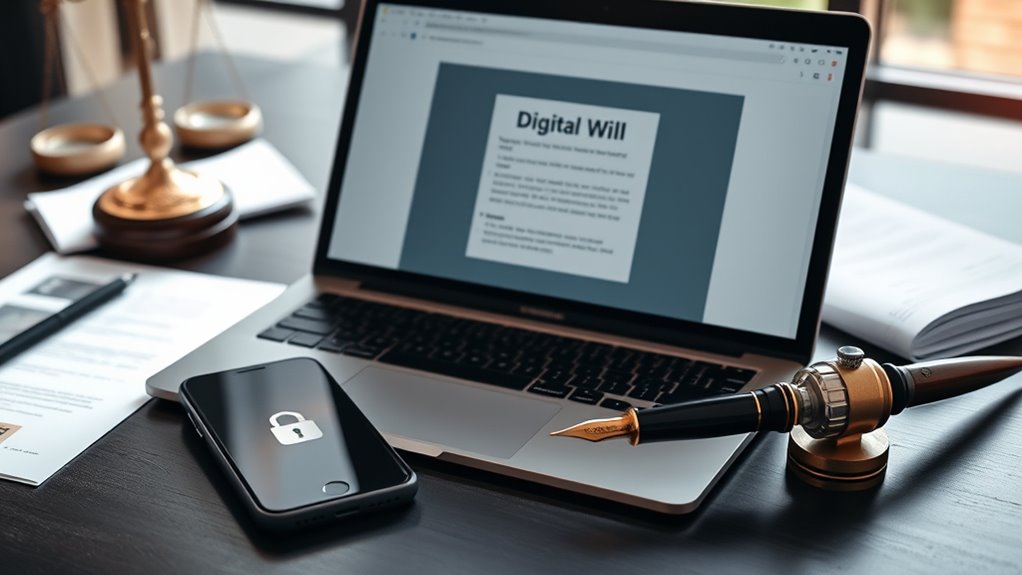
As our lives become increasingly digital, understanding the legal basics of digital wills and password heirs is more important than ever. Digital estate planning is a vital part of managing your online presence and guaranteeing your digital assets are handled according to your wishes after you’re gone. It involves organizing and documenting your online accounts, digital files, cryptocurrencies, social media profiles, and other digital property. Without a clear plan, loved ones might struggle to access these assets, or they could be lost altogether. That’s where online asset management comes into play — it’s about taking control now so that, in the future, your digital estate is transferred smoothly and legally.
Creating a digital will isn’t much different from a traditional one, but it requires specific considerations for online assets. You need to identify what digital assets you own, such as email accounts, cloud storage, digital currencies, or online businesses, and specify how they should be handled. Some jurisdictions now recognize digital wills, but laws vary widely, so it’s smart to consult an attorney familiar with digital estate planning. Including clear instructions about passwords, access methods, and the location of digital assets helps loved ones avoid confusion or legal hurdles. Remember, digital assets often require passwords or two-factor authentication, which complicates access without proper planning.
Designating password heirs is an effective way to guarantee your loved ones can access your digital estate. You might choose trusted individuals to receive encrypted password lists or use password management tools that allow secure sharing. These tools help keep your passwords protected while providing access when needed. Be sure to update these arrangements regularly, especially if you change passwords or add new accounts. Keep in mind that some online services have policies about sharing login credentials, so understanding the terms of service is essential to avoid violations or account suspensions. Additionally, understanding Digital Asset Management can help you implement more effective strategies for safeguarding and sharing your online information.
Legal considerations around digital estate planning are evolving, and laws are becoming more accommodating. However, not all states or countries have specific statutes recognizing digital wills or password-sharing agreements. Drafting a legal document that clearly states your intentions, along with instructions for accessing your digital estate, can prevent disputes later. It’s also wise to inform your executor or trusted contacts about your digital estate plan and where to find relevant information. Proper planning ensures your digital legacy is preserved and distributed according to your wishes, avoiding the chaos and confusion that can follow an unprepared digital death.
Frequently Asked Questions
How Can I Ensure Digital Assets Are Properly Transferred to Heirs?
To guarantee your digital assets transfer smoothly to heirs, you should implement effective digital asset management and password security strategies. Store your passwords securely in a digital vault or a trusted password manager, and update access details regularly. Clearly document your digital assets and their locations, and include instructions in your digital will. Communicating your plans with a trusted person helps your heirs access and manage your online accounts easily.
What Legal Challenges Exist for Digital Will Enforcement Across Jurisdictions?
Steering digital wills across borders is like sailing uncharted waters—you face jurisdictional conflicts and enforcement challenges that can sink your plans. Different countries have varied laws on digital assets, making it tricky to guarantee your wishes are honored everywhere. You might find yourself in a legal maze, where your digital legacy gets tangled in jurisdictional knots, leaving heirs stranded without access or clarity. Planning ahead can be your compass through this complex terrain.
Are Digital Wills Recognized in All States or Countries?
Digital wills and online inheritance are not recognized in all states or countries. Laws vary widely, so you need to verify your jurisdiction’s rules regarding digital estate planning. Some places have specific statutes, while others do not. You should guarantee your digital estate plan complies with local laws to avoid complications. Proper planning helps your heirs access your digital assets and ensures your online inheritance wishes are honored after your passing.
How Do Privacy Laws Affect Sharing Digital Passwords With Heirs?
Think of sharing your digital passwords like passing secret keys through a guarded gate. Privacy regulations and data protection laws act as security guards, ensuring your secrets stay safe. When you share passwords with heirs, you must follow these laws to protect your privacy and prevent unauthorized access. Staying informed about current privacy laws helps you balance sharing access while respecting legal boundaries, keeping your digital estate secure and compliant.
What Technology Tools Assist in Managing Digital Estate Plans?
You can use digital estate tools and password management apps to organize your digital estate plan. These tools help you securely store and share passwords with trusted heirs, guaranteeing access to accounts after your passing. Password management apps like LastPass or Dashlane allow you to create a digital estate plan that keeps your digital assets protected and accessible. By leveraging these technologies, you simplify estate management and ensure your digital legacy is preserved.
Conclusion
Understanding digital wills and password heirs helps you stay in control of your digital legacy. By planning ahead, you ensure your online assets are protected and accessible to your loved ones when needed. Remember, “a stitch in time saves nine”—it’s better to prepare now than face complications later. Take the necessary steps today to safeguard your digital life, and peace of mind will follow knowing your wishes are plainly set.