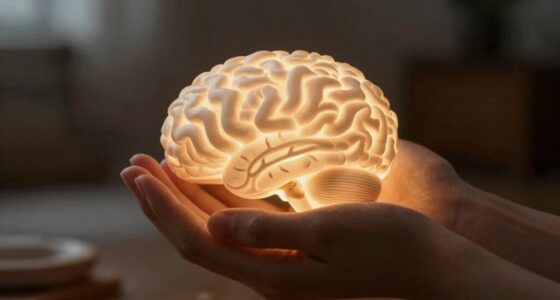

Some people fall in love faster because their brains are wired for heightened emotional sensitivity and quicker neurochemical responses, like dopamine and oxytocin, which deepen connections rapidly. Traits like openness, trust, and emotional awareness also boost how quickly they develop bonds. External factors, such as receptiveness to emotional cues, further accelerate the process. If you keep exploring, you’ll discover more about the fascinating ways your unique mind influences love’s rapid ascent.

Get gifts for the two of you delivered free with Prime
- Fast, free delivery on millions of items
- Prime Video, Amazon Music and more included
- Member-only deals all year
Key Takeaways
- Brain wiring and neurochemical responses, like dopamine and oxytocin release, speed up emotional attachment in some individuals.
- Personality traits such as openness and extroversion facilitate quicker bond formation.
- High emotional sensitivity and awareness enable individuals to perceive emotional cues faster.
- Biological factors influence how rapidly the brain reacts to shared experiences and intimacy.
- External receptiveness and willingness to share feelings accelerate the development of love.

Some people fall in love faster than others because their brains are wired to respond more intensely to emotional and physical closeness. This heightened sensitivity can lead you to develop emotional attachments more quickly, making romantic feelings surface sooner than you might expect. When your brain releases chemicals like dopamine and oxytocin in response to shared experiences or intimacy, you’re more likely to feel connected sooner. This biological reaction creates a sense of warmth and attachment that accelerates the falling-in-love process. Additionally, your brain’s wiring can influence how quickly you experience these emotional responses, further affecting the speed of falling in love. Your personality traits play a significant role in how quickly you develop emotional attachment. If you’re naturally more open, extroverted, or trusting, you tend to form bonds faster because you’re more willing to share personal feelings and seek connection. Conversely, if you’re cautious or reserved, it might take longer for you to feel that deep attachment. Your openness to vulnerability influences how quickly you allow yourself to become emotionally involved. People with high levels of empathy or emotional awareness also tend to fall in love faster because they pick up on subtle cues and emotional signals, creating a stronger sense of intimacy early on. Factors like emotional sensitivity can further amplify this process by making individuals more receptive to emotional stimuli, thereby speeding up the connection. Furthermore, neurochemical responses can vary among individuals, impacting how quickly they experience these feelings of love. A deeper understanding of neurochemical reactions can help explain why some people develop emotional bonds more rapidly than others.
dopamine and oxytocin supplements
As an affiliate, we earn on qualifying purchases.
As an affiliate, we earn on qualifying purchases.
Frequently Asked Questions
Can Personality Traits Influence How Quickly Someone Falls in Love?
Yes, your personality traits can influence how quickly you fall in love. If you’re emotionally open, you tend to connect faster because you’re more willing to share feelings and build intimacy. Additionally, personality compatibility plays a role—when your traits align with someone else’s, the bond forms more naturally and swiftly. Being outgoing or trusting can accelerate emotional connections, making you more prone to falling in love sooner.
Do Cultural Backgrounds Affect the Speed of Falling in Love?
Did you know that studies show people from collectivist cultures tend to fall in love faster due to cultural norms emphasizing family and community? You might notice love stereotypes, like quick courtships in certain societies, influence how quickly you feel connected. Cultural backgrounds shape your view of love, making you more open or cautious. By understanding these influences, you can better appreciate your own love journey and those around you.
Is Past Relationship Experience a Factor in Falling in Love Faster?
Your past relationship experience can influence how quickly you fall in love. If you carry emotional baggage or have insecure attachment styles, you might either rush into love to fill a void or hesitate out of fear. Conversely, positive past experiences can boost your confidence and openness. Understanding your attachment style helps you recognize these patterns, so you can navigate new relationships more intentionally and avoid rushing or holding back.
How Does Physical Attraction Impact the Rate of Developing Love?
Physical attraction profoundly impacts how quickly love develops because chemistry dynamics and attraction intensity influence your emotional response. When you’re strongly attracted to someone, your brain releases chemicals like dopamine, making you feel euphoric and more connected. This heightened attraction can accelerate feelings of love, as your desire to bond grows faster. So, the more intense your physical attraction, the more likely you are to fall in love sooner.
Can Life Stress Levels Delay Falling in Love?
Life’s stress can act like storm clouds, delaying your journey to love. When stress levels spike, your emotional resilience weakens, making it harder to open your heart. If you manage stress effectively and nurture emotional resilience, you clear the skies, allowing love’s sunshine to reach you sooner. Prioritizing self-care and stress management helps you stay grounded, so love can bloom naturally, even amidst life’s turbulence.
emotional sensitivity training tools
As an affiliate, we earn on qualifying purchases.
As an affiliate, we earn on qualifying purchases.
Conclusion
Understanding why some fall in love faster highlights how individual experiences and biology shape us. Did you know that about 60% of people report feeling love within the first few weeks? This shows how powerful initial attraction and emotional openness can be. So, next time you wonder why your feelings develop differently, remember that your unique personality and circumstances play a big role. Love isn’t a race—it’s a deeply personal journey.
As an affiliate, we earn on qualifying purchases.
couples communication and trust books
As an affiliate, we earn on qualifying purchases.
As an affiliate, we earn on qualifying purchases.
Halloween Picks
halloween
As an affiliate, we earn on qualifying purchases.