

Not all relationship advice books for couples are built for the same problem. Some target daily communication breakdowns, others focus on rebuilding trust after a rupture, and a few dig into attachment styles that drive repeated conflict. After comparing 14 popular titles, The Seven Principles for Making Marriage Work stands out as the best overall pick because it pairs decades of research with exercises couples can actually use. The 5 Love Languages remains the most accessible starting point for couples new to self-help, while Anxious and Avoidant in Love is the standout choice for couples stuck in a push-pull dynamic. The main tradeoff in this category is between research-backed depth and simple, quick-to-apply frameworks — the best choice depends on how much effort you and your partner are willing to invest. Keep reading for the full breakdown, including who each book is for and who should skip it.

Get gifts for the two of you delivered free with Prime
- Fast, free delivery on millions of items
- Prime Video, Amazon Music and more included
- Member-only deals all year
Key Takeaways
- Research-backed books (Seven Principles, Fight Right, Hold Me Tight Workbook) consistently offered more actionable conflict tools than generic communication guides, which tended to repeat the same listening and validation advice.
- Structured workbooks like Reconnect and the Relationship Workbook for Couples demand more effort but deliver better results for couples in active crisis than passive-reading titles.
- The 5 Love Languages is the easiest entry point but has limited depth — couples with recurring conflict will outgrow it quickly and should pair it with a conflict-specific title like Fight Right.
- Attachment-focused books (Anxious and Avoidant in Love, Getting the Love You Want) explain WHY conflicts repeat, making them better for long-term patterns than for immediate arguments.
- Trust-rebuilding is its own category: Rebuilding Trust and the 8-week Relationship Workbook address infidelity and betrayal recovery, a job most general communication books do poorly.
| Love More, Fight Less: Communication Skills Every Couple Needs | 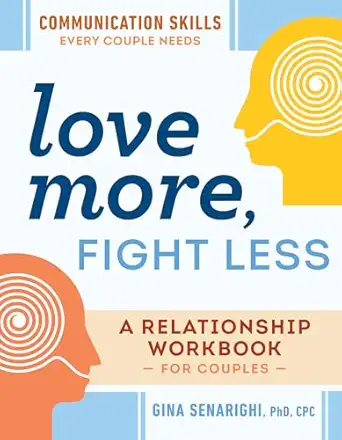 | Best Workbook for Communication Practice | Format: Paperback workbook | Primary focus: Communication skills and conflict resolution | Structure: Guided exercises and prompts | VIEW LATEST PRICE | See Our Full Breakdown |
| Fight Right: How Successful Couples Turn Conflict Into Connection |  | Best for Conflict-Prone Couples | Format: Hardcover / paperback / ebook | Primary focus: Conflict transformation and repair | Basis: Clinical couples research | VIEW LATEST PRICE | See Our Full Breakdown |
| Getting the Love You Want: A Guide for Couples, Third Edition |  | Best Deep-Dive Classic | Format: Paperback / ebook / audiobook | Edition: Third edition, revised and updated | Primary focus: Imago relationship therapy principles | VIEW LATEST PRICE | See Our Full Breakdown |
| His Needs, Her Needs: Making Romantic Love Last |  | Best for Long-Married Couples | Format: Paperback / ebook / audiobook | Primary focus: Ten emotional needs framework | Intended audience: Married and long-term committed couples | VIEW LATEST PRICE | See Our Full Breakdown |
| Communication Skills for Couples: Guide to Improve Communications, Resolve Conflict, Deepen Intimacy, Strengthen Marriage and Create a Healthy Relationship |  | Best Budget Starter Pick | Format: Paperback / ebook | Primary focus: General communication and conflict skills | Intended audience: Couples new to relationship self-help | VIEW LATEST PRICE | See Our Full Breakdown |
| Couple Skills: Making Your Relationship Work |  | Best Skills-Based Reference | Format: Paperback | Primary Focus: Communication, trust, conflict skills | Approach: Practical strategies and tools | VIEW LATEST PRICE | See Our Full Breakdown |
| The 5 Love Languages®: The Secret to Love That Lasts |  | Best Classic Starting Point | Format: Paperback | Primary Focus: Understanding how partners give and receive love | Approach: Five-category framework | VIEW LATEST PRICE | See Our Full Breakdown |
| Reconnect: A Marriage Counseling Workbook: Guided Conversations & Exercises for a Long-Lasting Relationship |  | Best Guided Conversation Workbook | Format: Paperback workbook | Primary Focus: Reconnection and communication in marriage | Approach: Guided conversations and exercises | VIEW LATEST PRICE | See Our Full Breakdown |
| Relationship Workbook for Couples: 8-Week Program and Proven Strategies to Rebuild Trust, Resolve Conflict, Improve Communication, and Rekindle Intimacy |  | Best Structured Program | Format: Paperback workbook | Primary Focus: Trust rebuilding, conflict resolution, intimacy | Approach: Structured 8-week program | VIEW LATEST PRICE | See Our Full Breakdown |
| Anxious and Avoidant in Love: How to Stop the Push-Pull Dynamic, Understand Your Attachment Style, and Create a Secure, Lasting Relationship |  | Best for Attachment-Style Insight | Format: Paperback | Primary Focus: Attachment styles and the push-pull dynamic | Approach: Attachment-theory based self-help | VIEW LATEST PRICE | See Our Full Breakdown |
| The Couples Therapy Flip Chart: A Psychoeducational Tool to Help Couples Identify Patterns of Disconnection, Manage Relationship Conflict, and Create a Thriving Partnership |  | Best Visual Learning Tool | Format: Spiral-bound flip chart | Primary Focus: Identifying disconnection patterns and conflict management | Approach: Psychoeducational, therapist-oriented | VIEW LATEST PRICE | See Our Full Breakdown |
| The Seven Principles for Making Marriage Work: A Practical Guide from the Country’s Foremost Relationship Expert |  | Best Evidence-Based Pick | Author Credibility: John Gottman, leading marriage researcher | Basis: Longitudinal observational research | Primary Focus: Marriage strengthening and conflict management | VIEW LATEST PRICE | See Our Full Breakdown |
| The Hold Me Tight Workbook: A Couple’s Guide for a Lifetime of Love |  | Best for Deep Emotional Work | Theoretical Basis: Emotionally Focused Therapy / attachment theory | Author: Dr. Sue Johnson | Format: Guided couple’s workbook | VIEW LATEST PRICE | See Our Full Breakdown |
| Rebuilding Trust: Guided Therapy Techniques and Activities to Restore Love, Trust, and Intimacy in Your Relationship |  | Best for Trust Recovery | Format: Guided activity book | Primary Focus: Trust repair and intimacy restoration | Approach: Therapy-based techniques and exercises | VIEW LATEST PRICE | See Our Full Breakdown |
| relationship advice books for couple | Format | Primary focus | Structure | Approach |
|---|---|---|---|---|
| Love More | Paperback workbook | Communication skills and conflict resolution | Guided exercises and prompts | — |
| Fight Right: How Successful Co | Hardcover / paperback / ebook | Conflict transformation and repair | — | — |
| Getting the Love You Want: A G | Paperback / ebook / audiobook | Imago relationship therapy principles | Theory chapters plus couples exercises | — |
| His Needs | Paperback / ebook / audiobook | Ten emotional needs framework | — | — |
| Communication Skills for Coupl | Paperback / ebook | General communication and conflict skills | Short chapters across multiple topics | — |
| Couple Skills: Making Your Rel | Paperback | Communication, trust, conflict skills | Skills-based reference | Practical strategies and tools |
| The 5 Love Languages®: The Sec | Paperback | Understanding how partners give and receive love | Narrative with examples | Five-category framework |
| Reconnect: A Marriage Counseli | Paperback workbook | Reconnection and communication in marriage | Exercise-driven workbook | Guided conversations and exercises |
| Relationship Workbook for Coup | Paperback workbook | Trust rebuilding, conflict resolution, intimacy | Week-by-week exercises and strategies | Structured 8-week program |
| Anxious and Avoidant in Love: | Paperback | Attachment styles and the push-pull dynamic | Explanatory with reflective strategies | Attachment-theory based self-help |
| The Couples Therapy Flip Chart | Spiral-bound flip chart | Identifying disconnection patterns and conflict management | — | Psychoeducational, therapist-oriented |
| The Seven Principles for Makin | Trade paperback with couple exercises | Marriage strengthening and conflict management | — | — |
| The Hold Me Tight Workbook: A | Guided couple’s workbook | Emotional bonding and breaking negative cycles | — | — |
| Rebuilding Trust: Guided Thera | Guided activity book | Trust repair and intimacy restoration | — | Therapy-based techniques and exercises |
More Details on Our Top Picks
Love More, Fight Less: Communication Skills Every Couple Needs
This pick stands out for turning communication theory into something couples actually do together rather than just read about. Where Fight Right leans on narrative explanation of why conflict happens, this workbook is built around structured exercises that walk partners through listening drills, conflict scripts, and reflection prompts. That hands-on format makes it a natural fit for couples who finish a chapter and want a concrete next step. The tradeoff is real, though: a workbook only pays off if both partners commit. If one half of the couple won’t pick up a pen, the exercises stall and the book becomes a solo journal. Compared with Communication Skills for Couples, which covers similar ground in a lighter read, this one demands more effort but delivers deeper behavioral change for those who follow through.
Pros:- Exercise-driven format converts reading into actual practice
- Covers conflict resolution and day-to-day communication skills in one place
- Accessible language that doesn’t require a therapy background
- Well suited for couples who want to work together, not just read separately
Cons:- Requires sustained commitment from both partners to see results
- Lighter on the underlying psychology than research-heavy alternatives like The Seven Principles for Making Marriage Work
Best for: Motivated couples who want guided exercises and are both willing to actively participate week by week
Not ideal for: Couples where one partner refuses homework-style exercises — the workbook format collapses without buy-in from both sides
- Format:Paperback workbook
- Primary focus:Communication skills and conflict resolution
- Structure:Guided exercises and prompts
- Intended audience:Couples at any relationship stage
- Reading style:Interactive, practice-based
- Time commitment:Ongoing exercises over weeks
- Author background:Relationship educator and coach
Our verdict“Buy this if you and your partner want a do-it-together workbook rather than another book you read alone and hope sticks.”
Fight Right: How Successful Couples Turn Conflict Into Connection
Most relationship books treat conflict as a problem to minimize. This one flips that premise and argues that fights, handled correctly, become the doorway to closeness — a sharper thesis than the broader, needs-based framework in His Needs, Her Needs. Built on decades of couples research, it identifies the specific fight patterns that predict trouble and teaches partners to recognize their own destructive loops. That research grounding is what separates it from more generic guides like Communication Skills for Couples, which offers similar advice without the evidentiary weight. The compromise: some readers will find later chapters repetitive, restating the core conflict-cycle idea in variations, and couples in genuinely calm relationships may wonder what all the fuss is about. But if arguments are the main source of tension in your relationship, this is the most targeted diagnosis on this list.
Pros:- Grounded in longitudinal couples research, not just anecdote
- Names specific destructive conflict patterns so couples can spot their own
- Reframes conflict as connection rather than failure
- Clear, actionable scripts for de-escalating mid-argument
Cons:- Later chapters repeat the core conflict-cycle concepts
- Techniques take deliberate practice to apply during heated moments
Best for: Couples who argue often and want a research-backed framework for turning recurring fights into productive conversations
Not ideal for: Low-conflict couples or readers who want broad intimacy advice — the narrow conflict focus will feel like overkill
- Format:Hardcover / paperback / ebook
- Primary focus:Conflict transformation and repair
- Basis:Clinical couples research
- Intended audience:Couples with recurring conflict patterns
- Reading style:Narrative nonfiction with examples
- Supplementary material:Downloadable discussion questions
- Edition:Recent release
Our verdict“The right choice when fighting — not general communication — is the issue you’re actually trying to fix.”
Getting the Love You Want: A Guide for Couples, Third Edition
This is the heavyweight of the batch — a decades-old classic built on Imago therapy, updated for a third edition with modernized language around gender and same-sex couples. Its central idea, that partners unconsciously choose people who trigger old wounds so they can heal together, goes deeper than anything in Love More, Fight Less or Fight Right, both of which stay at the level of behavior and technique. That depth is the appeal and the drawback. Readers wanting a quick communication tune-up will find the early chapters slow and theoretical, and the structured couples exercises in the back half require genuine emotional openness. Compared with His Needs, Her Needs, which offers a simpler checklist of needs, this book asks harder questions and delivers a more transformative framework — for couples willing to do the work.
Pros:- Decades of clinical practice and reader validation behind the method
- Third edition updates language and examples for modern couples
- Includes structured couples exercises, not just theory
- Addresses root emotional patterns, not just surface behaviors
Cons:- Front-loaded with theory that delays practical takeaways
- Longer and denser than lighter guides like Communication Skills for Couples
Best for: Couples who feel stuck in old patterns and want a psychologically deep, time-tested approach rather than quick tips
Not ideal for: Readers seeking fast, practical fixes — the theoretical grounding makes this a slower burn than workbook-style guides
- Format:Paperback / ebook / audiobook
- Edition:Third edition, revised and updated
- Primary focus:Imago relationship therapy principles
- Structure:Theory chapters plus couples exercises
- Intended audience:Committed couples exploring deep-seated patterns
- Reading style:Psychological deep-dive
- Page count:Roughly 350+ pages
Our verdict“Choose this if you want to understand why you and your partner clash, not just how to argue more politely.”
His Needs, Her Needs: Making Romantic Love Last
Where Getting the Love You Want digs into childhood wounds, this book takes a simpler, more practical inventory approach: identify the ten most common emotional needs, rank yours, and learn to meet your partner’s top ones. That clarity is why it has endured with married and long-term couples — it gives busy partners a diagnostic shorthand instead of a therapy curriculum. The tradeoff is baked into the title: the framework is built on fairly traditional, gendered assumptions about what husbands and wives want, which lands as dated or limiting for many modern readers. Compared with Fight Right, it addresses the slow erosion of affection in stable marriages rather than active conflict, making it the better fit for couples who don’t fight much but have quietly drifted. The companion concept of the Policy of Undivided Attention alone justifies the read for neglected marriages.
Pros:- Simple, memorable framework of ten emotional needs
- Highly actionable — couples can rank needs and act immediately
- Specifically addresses romantic drift in long-term marriages
- Encourages structured quality time, not just conversation
Cons:- Heteronormative, gendered framing feels dated to many readers
- Little guidance for couples in crisis or high-conflict situations
Best for: Long-married couples in stable but passionless relationships who want a straightforward needs-audit framework
Not ideal for: Couples who bristle at traditional gender roles, or those dealing with active conflict who need a book like Fight Right instead
- Format:Paperback / ebook / audiobook
- Primary focus:Ten emotional needs framework
- Intended audience:Married and long-term committed couples
- Perspective:Traditional marriage counseling background
- Reading style:Advice-driven with self-assessment
- Time commitment:Moderate; needs-ranking exercises
- Editions:Multiple revised editions available
Our verdict“A solid pick for quietly drifting spouses who want a checklist, not a psychology course — as long as the gendered framing doesn’t bother you.”
Communication Skills for Couples: Guide to Improve Communications, Resolve Conflict, Deepen Intimacy, Strengthen Marriage and Create a Healthy Relationship
Think of this as the entry-level sampler of relationship communication advice. It covers conflict resolution, intimacy, and healthy-relationship habits in a compact, inexpensive package — useful for couples testing whether self-help books work for them at all before committing to something heavier like Getting the Love You Want or the structured program in Relationship Workbook for Couples. The strengths are its low price and low barrier to entry; there’s no theoretical mountain to climb and no homework schedule to keep. The flip side is genericness. Unlike Love More, Fight Less, which drills into communication with real exercises, this stays at the level of broadly applicable advice, so couples with specific problems — trust breaches, attachment clashes, chronic fighting — will outgrow it fast. It’s a reasonable first purchase, not a lasting reference.
Pros:- Inexpensive and widely accessible in multiple formats
- Broad coverage of communication, conflict, and intimacy in one short read
- Beginner-friendly tone with no jargon or therapy background needed
- Quick read that’s easy to finish and discuss together
Cons:- Generic advice lacks the depth and exercises of workbook-style competitors
- Offers little for couples with serious or specific issues like betrayal or attachment conflict
Best for: Budget-conscious couples or new partners buying their first relationship book and wanting an easy, broad introduction
Not ideal for: Couples facing a specific entrenched problem — the generic advice won’t go deep enough to help
- Format:Paperback / ebook
- Primary focus:General communication and conflict skills
- Intended audience:Couples new to relationship self-help
- Reading style:Light, broad overview
- Structure:Short chapters across multiple topics
- Price tier:Budget
- Time commitment:Low; readable in a few sittings
Our verdict“A fine, cheap toe-dip into couples self-help — just plan to graduate to a more specialized book if it sparks real conversation.”
Couple Skills: Making Your Relationship Work
Couple Skills takes a workbook-adjacent approach, treating a relationship like a set of learnable behaviors rather than a mystery to decode. Compared with The 5 Love Languages, which organizes advice around a single framework, this book spreads its attention across communication, trust-building, and conflict strategies, making it feel more like a toolkit than a philosophy. That breadth is its strength and its weakness: couples dealing with one specific issue may find the coverage thinner than a dedicated workbook like Reconnect. This pick makes the most sense for couples who want a general-purpose reference they can return to over years, not a program to complete in eight weeks.
Pros:- Covers a wide range of practical relationship skills
- Strong emphasis on communication and trust-building
- Works as a long-term reference, not a one-time read
- Suitable for couples at any stage
Cons:- Lacks detailed guidance on any single technique
- Sparse customer feedback makes quality hard to gauge
- Less structured than guided programs like the Relationship Workbook for Couples
Best for: Couples who want a broad, reusable reference covering multiple relationship skills rather than a single framework
Not ideal for: Couples facing one acute problem like broken trust, who need targeted depth like Rebuilding Trust instead
- Format:Paperback
- Primary Focus:Communication, trust, conflict skills
- Approach:Practical strategies and tools
- Structure:Skills-based reference
- Audience:Couples at any relationship stage
- Program Length:Self-paced, non-linear
Our verdict“A solid all-purpose skills manual for couples who want breadth over depth and plan to revisit it over time.”
The 5 Love Languages®: The Secret to Love That Lasts
Decades after publication, The 5 Love Languages remains the most recognized entry point in this category, and for good reason: its single memorable framework gives couples a shared vocabulary fast. Where Couple Skills spreads itself across many topics, this book does one thing extremely well — helping partners understand how the other receives affection. The tradeoff is that the concept can feel repetitive for long-term couples who have already absorbed the ideas through cultural osmosis. Compared with workbooks like Reconnect, it demands less effort but also delivers less structured change. This pick makes the most sense for couples just starting to work on their relationship.
Pros:- Simple, memorable framework couples can apply immediately
- Creates a shared vocabulary for expressing affection
- Widely recommended and easy to gift
- Low effort — readable in a weekend
Cons:- Concepts feel repetitive, especially in later chapters
- Offers little for couples with deeper conflict or trust issues
Best for: Newer couples or first-time relationship-book buyers who want one simple, actionable framework
Not ideal for: Long-term couples already familiar with the love languages concept who will find little new material
- Format:Paperback
- Primary Focus:Understanding how partners give and receive love
- Approach:Five-category framework
- Structure:Narrative with examples
- Effort Level:Low — read and apply
- Audience:New couples and first-time readers
Our verdict“The default first book for couples new to relationship self-help, though veterans should look elsewhere.”
Reconnect: A Marriage Counseling Workbook: Guided Conversations & Exercises for a Long-Lasting Relationship
Where The 5 Love Languages gives you a concept, Reconnect gives you a conversation — literally. Its core value is the guided dialogue format, which walks couples through exercises designed to surface issues that everyday talk tends to avoid. Compared with Couple Skills, it is far more interactive and better suited to marriages that feel emotionally distant rather than broken. The tradeoff is commitment: unlike a passive read, this workbook only pays off if both partners actually do the exercises, and its lack of published detail on length or structure makes it harder to evaluate against the more clearly defined 8-week Relationship Workbook for Couples. This option stands out for couples who want a counseling-style experience at home.
Pros:- Guided conversations surface topics couples avoid on their own
- Interactive exercises rather than passive reading
- Specifically designed for long-term marriages
- Mimics counseling techniques at a fraction of the cost
Cons:- Requires sustained commitment from both partners
- Limited published detail on page count and structure
- Less prescriptive than a dated program like the 8-week workbook
Best for: Married couples who feel disconnected and want a counseling-style, exercise-driven format they work through together
Not ideal for: Couples where one partner won’t participate, since the guided format collapses without full buy-in
- Format:Paperback workbook
- Primary Focus:Reconnection and communication in marriage
- Approach:Guided conversations and exercises
- Structure:Exercise-driven workbook
- Effort Level:High — requires joint participation
- Audience:Long-married couples feeling distant
Our verdict“The closest thing to at-home marriage counseling for couples willing to do the work together.”
Relationship Workbook for Couples: 8-Week Program and Proven Strategies to Rebuild Trust, Resolve Conflict, Improve Communication, and Rekindle Intimacy
This is the most prescriptive option in this batch: an eight-week program with a defined arc from trust repair to renewed intimacy. Compared with Reconnect, which offers flexible guided conversations, this book imposes a schedule — and that rigidity is exactly the point. Couples recovering from a breach of trust often flounder without structure, and a week-by-week plan removes the guesswork that derails self-directed efforts. The tradeoff is real: eight weeks of committed effort from both partners is a high bar, and the listing provides little detail about included materials, making it harder to vet than established titles like The Hold Me Tight Workbook. This pick makes the most sense for couples in crisis who need a roadmap, not inspiration.
Pros:- Clear 8-week timeline creates accountability
- Addresses trust repair, conflict, and intimacy in one arc
- Best-suited for couples in active crisis
- Removes decision fatigue with a fixed program
Cons:- Demands weeks of sustained joint effort
- Sparse product details make quality hard to verify
- Less flexibility than conversational workbooks like Reconnect
Best for: Couples rebuilding after a specific rupture — broken trust or repeated conflict — who want a dated, step-by-step roadmap
Not ideal for: Casual readers or couples wanting light enrichment, since an 8-week commitment will feel like homework
- Format:Paperback workbook
- Primary Focus:Trust rebuilding, conflict resolution, intimacy
- Approach:Structured 8-week program
- Structure:Week-by-week exercises and strategies
- Effort Level:High — multi-week commitment
- Audience:Couples recovering from conflict or trust breaches
Our verdict“The choice for couples in serious repair mode who need structure more than insight.”
Anxious and Avoidant in Love: How to Stop the Push-Pull Dynamic, Understand Your Attachment Style, and Create a Secure, Lasting Relationship
Every other book in this lineup addresses what couples do; Anxious and Avoidant in Love addresses who they are. Grounded in attachment theory, it targets the exhausting pursue-withdraw cycle that communication tips alone can’t fix — a sharper diagnostic lens than The 5 Love Languages offers. Compared with the 8-week Relationship Workbook, it trades exercises for explanation, which suits couples whose real problem is understanding their own patterns. The tradeoffs: it leans psychological and self-reflective, so partners seeking quick practical fixes may lose patience, and with no reviews or ratings available, it carries more purchase risk than established titles like Getting the Love You Want. This option stands out for couples stuck in a repeating dynamic.
Pros:- Explains the root psychology behind recurring conflicts
- Directly targets the anxious-avoidant push-pull dynamic
- Helpful for both individual reflection and couple discussion
- Gives couples a diagnostic framework, not just tips
Cons:- Heavier psychological content may not suit action-oriented readers
- No reviews or ratings to validate quality
- Fewer structured exercises than workbook options like Reconnect
Best for: Couples trapped in a pursue-withdraw pattern who want to understand the psychology driving their conflicts
Not ideal for: Practical-minded readers who want exercises and scripts rather than attachment theory and self-analysis
- Format:Paperback
- Primary Focus:Attachment styles and the push-pull dynamic
- Approach:Attachment-theory based self-help
- Structure:Explanatory with reflective strategies
- Effort Level:Moderate — reading plus self-reflection
- Audience:Psychology-minded couples in repeating conflict cycles
Our verdict“The pick for couples who keep having the same fight and finally want to understand why.”
The Couples Therapy Flip Chart: A Psychoeducational Tool to Help Couples Identify Patterns of Disconnection, Manage Relationship Conflict, and Create a Thriving Partnership
Most relationship books on this list, like The Seven Principles for Making Marriage Work, are meant to be read cover to cover, but this flip chart takes a completely different approach: it puts psychoeducational concepts on display so couples can literally point at the pattern they recognize in themselves. This format makes the most sense for visual learners and therapists who want a shared reference during difficult conversations rather than another chapter to digest. Compared with workbooks like The Hold Me Tight Workbook, it offers less depth on any single topic, and couples expecting step-by-step exercises will find it thin without supplementary material. The tradeoff is real: you gain clarity and accessibility, but you sacrifice the guided structure that drives actual behavior change.
Pros:- Unique visual format that makes abstract relationship patterns easy to discuss
- Helps couples identify and name disconnection cycles quickly
- Practical conflict-management prompts built into the layout
- Useful as a supplement to therapy or other books in this roundup
Cons:- Limited depth compared with full-length books on this list
- Thin consumer feedback makes it harder to gauge real-world results
Best for: Visual learners and couples (or therapists) who want a shared, at-a-glance reference to spark conversations about disconnection patterns
Not ideal for: Couples who want a structured, self-guided program — this works best alongside other resources, not as a standalone fix
- Format:Spiral-bound flip chart
- Primary Focus:Identifying disconnection patterns and conflict management
- Approach:Psychoeducational, therapist-oriented
- Audience:Couples and counseling professionals
- Interactivity:Visual prompts for guided discussion
- Best Used As:Supplement to therapy or a workbook program
Our verdict“Choose this if you and your partner learn better by seeing and discussing than by reading chapters and filling out worksheets.”
The Seven Principles for Making Marriage Work: A Practical Guide from the Country’s Foremost Relationship Expert
Where titles like The 5 Love Languages lean on a single memorable framework, this guide is built on decades of observational research from the Gottman Institute, and that foundation is what separates it from the crowd. This pick makes the most sense for couples who want advice grounded in data rather than anecdote, with concrete strategies for communication, intimacy, and conflict repair. Compared with Rebuilding Trust, it is broader — a preventive and strengthening resource rather than a repair manual — which is a strength for stable couples but a limitation for those in crisis. The tradeoff is density: this is closer to a marriage manual in scope, and readers wanting quick wins may find the pacing slower than slimmer communication guides.
Pros:- Evidence-based advice from one of the most cited relationship researchers
- Actionable strategies for communication and conflict resolution
- Broad coverage of marriage fundamentals, not just one issue
- Exercises couples can work through together
Cons:- Denser and longer than quick-read communication guides
- Preventive orientation means limited guidance for severely damaged relationships
Best for: Married or long-term couples who want research-backed principles to strengthen an already functioning relationship
Not ideal for: Couples in acute crisis or recovering from betrayal — the preventive framing won’t address urgent repair work
- Author Credibility:John Gottman, leading marriage researcher
- Basis:Longitudinal observational research
- Primary Focus:Marriage strengthening and conflict management
- Format:Trade paperback with couple exercises
- Depth:Comprehensive marriage guide
- Best Used As:Core relationship reference book
Our verdict“If you want the most scientifically credible foundation for a lasting marriage, this is the anchor pick — just don’t expect it to double as crisis intervention.”
The Hold Me Tight Workbook: A Couple’s Guide for a Lifetime of Love
While Anxious and Avoidant in Love helps individuals understand their attachment style, this workbook pushes couples to work through attachment wounds together, using Dr. Sue Johnson’s Emotionally Focused Therapy as its backbone. This option stands out for turning abstract theory into structured conversations and exercises that target the emotional bond itself rather than surface-level communication tactics. Compared with The Seven Principles for Making Marriage Work, it goes deeper into why disconnection happens, which makes it better for couples who keep having the same fight. The tradeoff is commitment: this is not passive reading, and it requires both partners to engage honestly — a couple where one partner checks out will get little from it.
Pros:- Grounded in Emotionally Focused Therapy, a well-supported clinical model
- Concrete exercises that convert attachment theory into practice
- Targets root emotional patterns, not just communication symptoms
- Structured progression that guides couples step by step
Cons:- Demands genuine participation from both partners to work
- Heavier emotional investment than lighter communication guides
Best for: Committed couples stuck in repeating conflict cycles who are both willing to do structured emotional work together
Not ideal for: Couples where one partner is disengaged, or relationships with active betrayal that need trust repair before emotional bonding
- Theoretical Basis:Emotionally Focused Therapy / attachment theory
- Author:Dr. Sue Johnson
- Format:Guided couple’s workbook
- Primary Focus:Emotional bonding and breaking negative cycles
- Time Commitment:High — requires joint exercise completion
- Best Used As:Deep-work program for recurring conflict patterns
Our verdict“This is the pick for couples ready to dig into the emotional undercurrent of their conflicts — provided both partners will actually do the exercises.”
Rebuilding Trust: Guided Therapy Techniques and Activities to Restore Love, Trust, and Intimacy in Your Relationship
Most entries in this roundup aim to strengthen decent relationships; this one addresses the harder problem of repairing a relationship after trust has broken. Its guided therapy techniques fill a gap that broader titles like The Seven Principles for Making Marriage Work deliberately leave open, and compared with general workbooks such as Relationship Workbook for Couples, its single-minded focus on betrayal and recovery is the differentiator. This pick makes the most sense for couples who have experienced infidelity, secrecy, or broken promises and need a structured path back to intimacy. The tradeoff: its narrow scope makes it a poor general-purpose guide, and its limited track record of reader feedback means couples are trusting a relatively unproven title in a space where the Gottman and Johnson books have decades of validation behind them.
Pros:- Focused specifically on the trust-repair niche most books avoid
- Therapy-inspired techniques translated into at-home activities
- Addresses love and intimacy restoration, not just damage control
- Activity-based format keeps healing concrete rather than abstract
Cons:- Narrow scope makes it ineffective as a general relationship guide
- Few reader reviews to verify real-world effectiveness
Best for: Couples actively healing from betrayal, infidelity, or broken trust who want a focused, activity-driven repair process
Not ideal for: Couples simply looking to improve communication or deepen an already stable relationship — the betrayal-recovery focus would feel mismatched
- Format:Guided activity book
- Primary Focus:Trust repair and intimacy restoration
- Approach:Therapy-based techniques and exercises
- Target Situation:Post-betrayal relationship recovery
- Depth:Single-issue deep focus
- Best Used As:Structured healing program for damaged trust
Our verdict“If betrayal is the central problem in your relationship, this focused repair guide earns its spot — pair it with a broader title once trust begins to stabilize.”

How We Picked
I evaluated each book against four buyer-relevant criteria: evidence base (whether the advice is grounded in clinical research or therapy practice), actionability (exercises, scripts, and conversation prompts versus abstract theory), accessibility (how easily a couple with no therapy background can apply it), and fit for the specific problem a couple is facing. A book can be excellent for attachment patterns and useless for infidelity recovery, so I treated category fit as heavily as quality. I also weighed author credentials, with licensed therapists and researchers ranking above general life coaches.
The ranking logic favors books that combine proven frameworks with practical structure, because couples abandon purely theoretical books quickly. Titles that solve a narrow problem extremely well — like Rebuilding Trust or The Couples Therapy Flip Chart — ranked within their niche rather than overall, since most buyers need communication help first. Price and format (workbook versus narrative) factored into value placements, and I penalized books that recycle surface-level advice available free online.
Factors to Consider When Choosing Relationship Advice Books For Couples
Before choosing a relationship book, it helps to understand what actually separates a book you’ll finish from one that sits on the nightstand. These are the factors I’d weigh before buying.Match the Book to Your Actual Problem
The most common mistake couples make is buying a general communication book when their real issue is betrayal recovery, mismatched attachment styles, or chronic contempt. General-purpose titles help with everyday friction — miscommunication, scheduling stress, drifting apart — but they underperform for couples dealing with infidelity or repeated explosive conflict. If your relationship recently suffered a rupture, look for books explicitly built around trust and repair. If you keep having the same argument on a loop, an attachment or conflict-pattern book will explain the machinery behind it, not just the surface disagreement. Buyers who diagnose their situation before purchasing are far less likely to abandon a book halfway through, because the exercises feel relevant from chapter one.
Workbook or Narrative — Know Your Commitment Level
There is a real tradeoff between structured workbooks and readable narrative books. Workbooks with guided prompts, fill-in exercises, and weekly programs produce more change because they force reflection and conversation, but they require both partners to participate — a hard sell if one partner is reluctant. Narrative books can be read alone and still shift your behavior, which makes them the smarter buy when only one partner is motivated. A practical compromise many couples use: start with a narrative title to build buy-in, then graduate to a workbook once both partners see value. If you buy a workbook knowing your partner won’t touch it, you’ve bought a paperweight.
Evidence Base Matters More Than Popularity
Bestseller lists reward memorable frameworks, not clinical effectiveness. Some of the most-shared concepts in this category — love languages, needs lists — come from counselors whose frameworks were popularized before being rigorously tested, while books grounded in decades of observational research (like those based on the Gottman Institute’s lab studies) have stronger support behind their claims. That doesn’t mean popular frameworks are useless; it means they work best as vocabulary starters rather than complete solutions. Check the author’s credentials: licensed marriage and family therapists, psychologists, and researchers tend to offer advice that holds up under real conflict. Books citing studies usually outperform books citing anecdotes when things get hard.
Consider Format and Usability as a Couple
Practical format details determine whether a book gets used. Large workbooks with writing space work well at a table but poorly on a Kindle; conversely, audiobooks suit narrative titles but make exercises frustrating. Flip-chart and card-deck formats encourage short, repeatable sessions, which suits couples with limited time or short attention spans. Consider who is doing the reading: if one partner reads and shares, a dense professional-style tool like a psychoeducational flip chart can still work, but it will feel clinical to a skeptical partner. Physical copies generally beat digital for couples’ books because both partners can see and annotate them, and passively shared books signal commitment.
When to Pay More — and When Not To
Most relationship books sit between ten and twenty-five dollars, so price rarely signals quality in this category. What justifies a premium is structured programs, professional-grade tools, and updated editions — a third edition revised with current research beats a cheap reprint of thirty-year-old advice. Don’t pay extra for celebrity authorship or padded page counts; a 180-page focused guide usually beats a 350-page one padded with anecdotes. Where money is better spent is on complementary titles: a communication book plus a workbook often costs the same as one premium hardcover and covers two problems instead of one. Treat a book purchase as a low-cost experiment — the real investment is the hours you put in.
Watch for Red Flags in the Advice Itself
Not all popular relationship advice is good advice, and some bestsellers promote ideas modern research has questioned — rigid gender-role assumptions being the most common offender. Older titles can still be valuable, but scan the framework for one-size-fits-all rules presented as scientific law. Books that blame one partner, promise quick fixes, or frame conflict as always bad tend to age poorly; the strongest titles normalize disagreement and teach repair instead. If a book makes you or your partner feel attacked rather than understood within the first chapters, that’s a signal to switch titles, not to push through. The right book should feel like it’s describing your dynamic with compassion, not handing down verdicts.
Frequently Asked Questions
Can a relationship book actually help, or do we need a therapist?
For many couples, a well-matched book is enough to break negative patterns — especially for everyday communication friction, drifting intimacy, or recurring minor conflict. Research-based titles with structured exercises approach what early therapy sessions deliver, at a fraction of the cost. The limit appears when a book requires both partners to engage and one refuses, or when the relationship involves abuse, active addiction, or repeated betrayal the couple cannot discuss without escalation. In those cases a book becomes a supplement, not a substitute. A reasonable approach: work through one structured title together for six to eight weeks, and if patterns don’t budge, bring the book’s insights to a licensed couples therapist — it will make sessions more productive anyway.
Which book should we start with if we’ve never read a relationship book together?
Start with something short, warm, and low-effort rather than the most rigorous title. The 5 Love Languages works well as an icebreaker because its framework is simple enough to discuss over dinner and gives couples a shared vocabulary fast. A gentle communication guide like Love More, Fight Less is another low-pressure entry, since its skills apply immediately without demanding vulnerable excavation of the relationship’s history. Avoid beginning with intensive workbooks or attachment-focused titles — they pay off later but can feel like homework before a couple has buy-in. Once the easy book creates momentum, move to a research-backed conflict or attachment title for depth.
What if my partner won’t read the book with me?
This is more common than not, and it doesn’t doom the effort. Narrative titles can be read solo, and one partner changing their communication patterns often shifts the couple’s dynamic on its own — validation and de-escalation skills work even when only one person uses them. Choose books built around individual behavior change rather than paired exercises; Couple Skills and attachment titles like Anxious and Avoidant in Love work reasonably well for solo readers. Avoid workbooks with fill-in-the-blank partner exercises, which become frustrating alone. A useful tactic is sharing one short, striking chapter rather than asking your partner to commit to the whole book — curiosity converts reluctant partners better than assignments do.
Are workbooks really better than regular advice books?
Workbooks produce more measurable change for couples who complete them, because writing and guided conversation force engagement that passive reading doesn’t. The catch is completion rates: an unfinished workbook delivers nothing, while a narrative book half-read still transfers ideas. Workbooks shine for couples in crisis or those who thrive on structure — the 8-week program format gives clear milestones. Narrative books suit busy couples, skeptical partners, and people who process by reading rather than writing. The honest answer is that the best format is the one you’ll both actually finish, so pick based on your habits, not on the assumption that more structure always means better results.
Which book is best for rebuilding trust after cheating?
For betrayal recovery specifically, Rebuilding Trust is the most targeted title in this lineup, with guided techniques aimed at the rupture itself rather than general communication. The Relationship Workbook for Couples with its 8-week trust-focused program is a strong alternative for couples who want a schedule and milestones. What I’d avoid is starting with general communication books — they assume a baseline of trust that infidelity has removed, so the exercises can feel hollow or even insulting. Books like The 5 Love Languages are better saved for the later rebuilding phase, once honest conversation is possible again. If emotions are still raw and conversations immediately escalate, pairing one of these books with a therapist is the realistic path.
Conclusion
The right pick comes down to where your relationship is right now. For best overall, The Seven Principles for Making Marriage Work earns the top spot because it combines credible research with practical exercises that address the conflict patterns most couples face. For best value, The 5 Love Languages delivers more relationship-changing conversation per dollar than anything else on this list. For best premium pick, the Hold Me Tight Workbook offers the deepest emotionally focused work for couples ready to invest real time. For beginners, Love More, Fight Less is the gentlest on-ramp, and for specific needs: Anxious and Avoidant in Love for attachment conflicts, Rebuilding Trust for betrayal recovery, The Couples Therapy Flip Chart for structured session-style work, and Reconnect for couples who want a counseling-style workbook without the therapist. Whatever you choose, the book only works if you both open it — so pick the one you’re most likely to actually finish together.
Halloween Picks
halloween
As an affiliate, we earn on qualifying purchases.