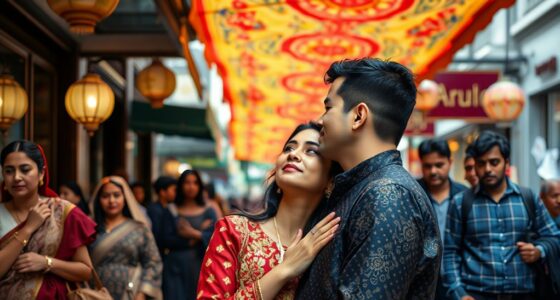
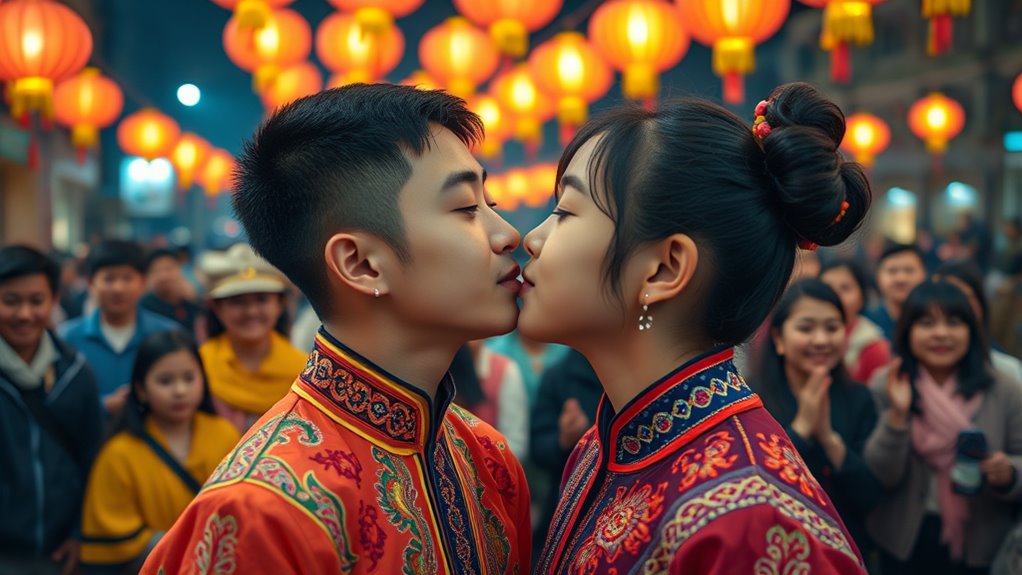

Kissing traditions in coming-of-age ceremonies worldwide symbolize respect, maturity, and cultural identity as individuals evolve into adulthood. You’ll see them in rituals like Latin American quinceañeras, African tribal rites, and Asian ceremonies, where kisses or forehead touches mark social status and community acceptance. These acts reinforce cultural values and spiritual connections, helping young people earn their place in society. To explore how these customs deepen cultural bonds, keep exploring the rich significance behind each tradition.
Key Takeaways
- Kissing in coming-of-age rituals symbolizes respect, maturity, and societal acceptance across diverse cultures worldwide.
- Many traditions incorporate ceremonial kisses to mark transitions from childhood to adulthood, reinforcing social bonds.
- In Latin America, a cheek kiss during quinceañeras signifies crossing into womanhood; in African tribes, forehead touches honor elders.
- Kissing often complements larger rituals like debutante balls or graduation ceremonies, emphasizing cultural values and responsibilities.
- These customs reflect spiritual and ancestral connections, highlighting land, heritage, and community identity in rites of passage.
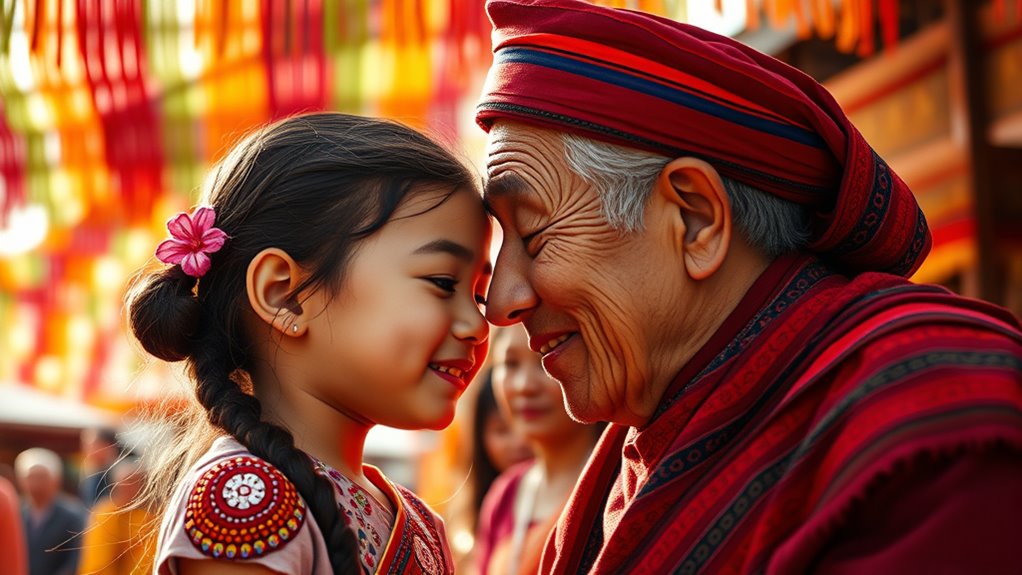
Across cultures worldwide, coming-of-age ceremonies often incorporate unique kissing traditions that symbolize progression, maturity, and social acceptance. These rituals serve as powerful markers, transforming a young person’s status within their community and signaling their readiness to assume new responsibilities. When you observe these customs, you see how deeply cultural symbolism weaves into age rituals, emphasizing the significance of this transitional phase. Kissing, in these contexts, isn’t just an affectionate gesture; it’s a meaningful act that communicates respect, acknowledgment, and the completion of a rite of passage.
Kissing in age rituals symbolizes respect, maturity, and community acceptance during life’s key transitions.
In many societies, a simple kiss on the cheek or lips acts as a rite of passage, signifying that you’ve stepped into a new stage of life. For example, in some Latin American cultures, a kiss on the cheek during a quinceañera marks a girl’s transition from childhood to womanhood. It’s a gesture laden with cultural symbolism that reinforces her new social role and the community’s acceptance. Similarly, in certain African tribes, a ceremonial kiss or a symbolic touch of foreheads during age rituals signifies respect for elders and acknowledgment of maturity. These acts may seem small, but they carry immense weight in conveying cultural values and expectations.
In other traditions, the act of kissing is part of a larger sequence of age rituals designed to reinforce social bonds. During some Asian coming-of-age celebrations, a kiss exchanged between the young person and an elder symbolizes respect, gratitude, and acknowledgment of their new responsibilities. These ceremonies often involve elaborate rituals, with kissing serving as a tangible gesture that seals the transition. Such customs highlight how essential cultural symbolism is in emphasizing maturity, responsibility, and community integration. Additionally, understanding the spiritual connection to land and ancestral practices can deepen appreciation for these rituals’ significance within their cultural contexts.
You’ll also find that in many Western cultures, the first romantic kiss often coincides with coming-of-age milestones—like a debutante ball or a graduation celebration—marking the individual’s entry into adult social life. Though these might seem more personal than communal, they still function as age rituals emphasizing independence and social acceptance. The act of sharing a meaningful kiss during these moments underscores the individual’s growth and readiness to face new challenges.
In essence, kissing traditions during coming-of-age ceremonies encapsulate profound cultural symbolism. They serve as tangible representations of the transition from childhood to adulthood, reinforcing societal values and expectations. Whether as a formalized ritual or a heartfelt gesture, these customs highlight the universal importance of marking life’s pivotal moments with symbols that foster connection, respect, and recognition. As you witness or partake in these traditions, you see how deeply intertwined they are with the cultural fabric that defines a community’s understanding of maturity and social cohesion.
Frequently Asked Questions
How Do Kissing Traditions Vary Among Different Cultural Groups?
You see, kissing traditions vary widely among cultural groups, reflecting different cultural symbolism and ritual significance. In some cultures, a simple kiss signifies respect or greeting, while in others, it marks important milestones like coming-of-age. You might find that the way people kiss, where, and when, all carry unique meanings tied to their traditions. These differences highlight how deeply rituals and symbolism shape social interactions across the world.
What Are the Origins of Kissing in Coming-Of-Age Ceremonies?
Kissing in coming-of-age ceremonies might seem like a small act, but it’s rooted in powerful history. You should know that it symbolizes more than affection; it represents a rite of passage, marking the ritual progression from childhood to adulthood. Historically, it’s linked to symbols of unity and trust, making it a significant gesture in many cultures’ coming-of-age traditions, emphasizing social bonds and personal growth.
Are There Any Modern Adaptations to Traditional Kissing Rituals?
You’ll find that modern modifications to traditional kissing rituals often incorporate new forms of cultural symbolism, reflecting changing social values. For example, some communities replace actual kisses with symbolic gestures like handshakes or virtual celebrations, emphasizing respect and unity. These adaptations maintain the essence of the coming-of-age ceremony while embracing contemporary attitudes, allowing participants to honor tradition in a way that resonates with today’s diverse and evolving cultural landscape.
How Do These Traditions Influence Social Relationships Post-Ceremony?
Did you know that over 60% of people say that post-ceremony, kissing traditions strengthen social bonding? These rituals shape your romantic expectations and help establish trust and closeness in new relationships. By participating in such customs, you often feel more connected and accepted within your community, fostering lasting social ties. Ultimately, these traditions act as a foundation for deeper relationships and shared cultural understanding after the ceremony’s conclusion.
What Are Some Controversies Surrounding Kissing in Coming-Of-Age Events?
You might wonder about controversies around kissing at coming-of-age events. Consent issues often arise, especially when participants feel pressured or uncomfortable. Cultural sensitivity also plays a role, as some traditions may clash with personal beliefs or modern values. You should recognize that these concerns highlight the importance of respecting individual boundaries and cultural differences, ensuring everyone feels safe and respected during such meaningful ceremonies.
Conclusion
As you imagine these rituals, you can almost feel the gentle press of lips across different cultures—each kiss a tender bridge into adulthood. Whether it’s a shy peck under a blossoming tree or a passionate embrace beneath vibrant lanterns, these traditions paint a vivid picture of growth and connection. They remind you that, across the world, a simple kiss symbolizes more than love—it marks a journey into a new chapter of life.