

AI-generated deepfakes and voice clones can convincingly mimic real people, raising serious concerns about consent, privacy, and ethical boundaries. When these technologies are used without permission, they can cause emotional distress, damage reputations, and violate personal rights. Laws are still catching up, but it’s vital to verify content and obtain explicit consent before using or sharing such media. Staying aware of these issues helps you protect yourself and others from potential misuse—explore further to understand how to set clearer boundaries.
Key Takeaways
- Obtaining explicit consent is essential before creating or sharing AI-generated content involving an individual’s likeness or voice.
- Unauthorized use of deepfakes or voice clones violates privacy rights and can lead to legal and emotional repercussions.
- Clear transparency about AI content creation helps uphold ethical boundaries and respect personal boundaries.
- Existing laws are evolving to address AI misuse, emphasizing the importance of consent and proper attribution.
- Awareness of technical capabilities and limitations aids in recognizing manipulated content and enforcing consent boundaries.
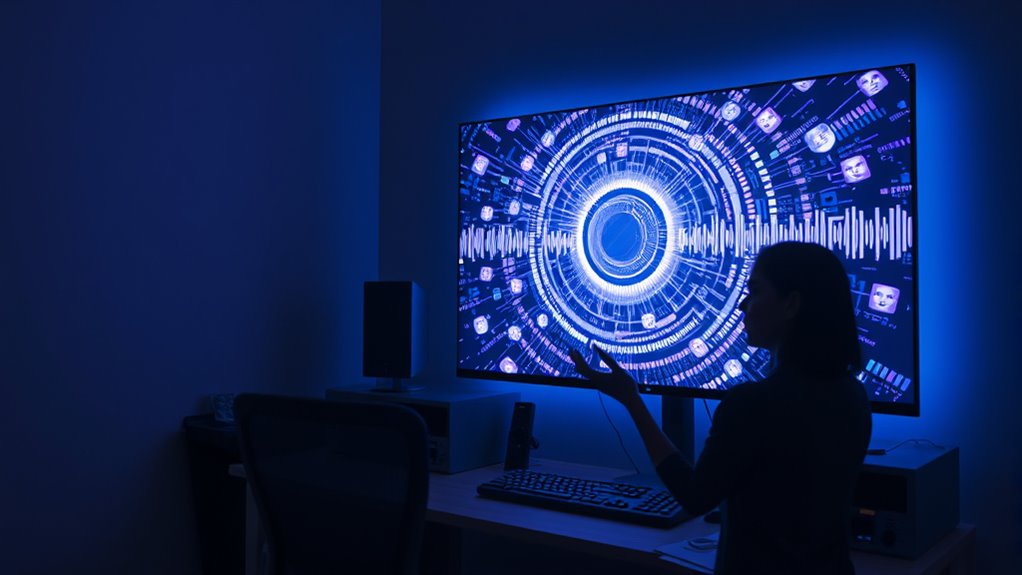
As artificial intelligence becomes more integrated into daily life, questions about consent are increasingly urgent. You might encounter AI-generated content like deepfakes or voice clones that can manipulate images, videos, or audio in convincing ways. These innovations raise significant privacy concerns because individuals may find their likeness or voice used without permission, often in contexts they wouldn’t endorse. When someone’s face is inserted into a fake video or their voice mimicked to say things they never uttered, it’s not just a breach of privacy—it’s a violation of personal boundaries. This can lead to emotional distress, damage to reputation, or even legal consequences for those creating or distributing such content. The legal implications are complex and still evolving; existing laws may not fully address the nuances of AI-generated misuse. Laws around consent, privacy rights, and intellectual property often lag behind technological advancements, leaving victims vulnerable and without clear recourse. For example, using someone’s image in a deepfake for malicious purposes could be considered harassment or defamation, but establishing accountability can be tricky. As AI tools become more accessible, the potential for abuse multiplies, making it essential to develop stronger legal protections and clearer guidelines. You need to be aware of how these issues affect you personally, especially if your likeness or voice is used without your consent. It’s important to understand your rights and the limits of AI technology, and to advocate for policies that safeguard privacy and enforce penalties for misuse. The challenge lies in balancing innovation with protection—ensuring AI can be used ethically without infringing on individual rights. While some jurisdictions are beginning to update laws to address AI-related privacy concerns, many still lack extensive regulations, leaving gray areas that give rise to legal disputes. As a user or creator of AI technology, you must also consider ethical boundaries and respect for consent. If you’re involved in content creation or digital media, verifying the origin of materials and obtaining explicit permissions becomes essential. Without clear consent, the risk of legal repercussions and damage to reputation rises sharply. Additionally, understanding the role of color accuracy and other technical factors in AI-generated media can help identify manipulated content more effectively. In this rapidly evolving landscape, staying informed about your rights and the legal frameworks surrounding AI use is critical. Protecting privacy and respecting boundaries isn’t just a legal matter—it’s about fostering trust and integrity in an era where AI’s influence touches every aspect of life. Ultimately, establishing transparent standards for consent in AI applications will help prevent misuse, ensuring technology serves humanity positively rather than becoming a tool for harm.
Frequently Asked Questions
How Can Individuals Protect Their Likeness From Unauthorized AI Use?
You can protect your likeness by actively controlling your personal data and setting clear privacy safeguards. Limit sharing photos and videos online, especially on public platforms, and use privacy settings to restrict access. Consider registering your likeness with rights organizations or using digital watermarking. Stay informed about AI developments, and regularly review and update your privacy measures to prevent unauthorized AI use. Vigilance is key to maintaining control over your personal image.
What Legal Actions Exist Against Ai-Generated Deepfake Abuse?
Did you know that over 90% of deepfake victims report emotional distress? Legally, you can pursue recourse through laws like the DMCA or state-specific statutes against malicious AI misuse. Policy frameworks are evolving to combat deepfake abuse, but they’re still limited. You should consult a lawyer to explore legal actions such as lawsuits for defamation or invasion of privacy, and advocate for stronger regulations to protect yourself.
How Does AI Consent Differ Across Cultural and Legal Boundaries?
Cultural perceptions heavily influence how AI consent is regarded, with some societies emphasizing individual rights, while others prioritize community boundaries. Legal variations also shape these standards, meaning what’s acceptable in one country might be illegal elsewhere. You need to stay informed about local laws and cultural norms, especially if you’re creating or sharing AI-generated content, to make certain you respect boundaries and avoid potential legal or ethical issues.
Can Ai-Generated Voice Clones Be Ethically Licensed for Commercial Use?
Think of AI-generated voice clones as talented performers in a play. You can ethically license them for commercial use if you guarantee authenticity verification and set clear licensing standards. Just like actors need proper contracts, voice clones require transparent agreements to respect their origins. By doing so, you protect creators’ rights and maintain trust, making the performance not just compelling but ethically sound.
What Future Technologies Might Help Detect and Prevent AI Misuse?
You can expect future technologies like advanced biometric authentication and digital watermarking to help detect and prevent AI misuse. Biometric methods, such as fingerprint or facial recognition, can verify genuine identities, while digital watermarking embeds invisible markers into content to trace authenticity. Together, these tools will strengthen security, making it harder for malicious actors to manipulate media, and empower you to identify real versus AI-generated content effectively.
Conclusion
As you navigate this digital landscape, remember that consent is the anchor in stormy seas of AI innovation. Without clear boundaries, AI can easily become a wolf in sheep’s clothing, disguising harm behind shiny pixels and convincing voices. Protecting your rights isn’t just about avoiding misuse; it’s about ensuring your voice remains yours alone. Stay vigilant, set boundaries, and don’t let AI’s rapid tide wash away the importance of personal consent.