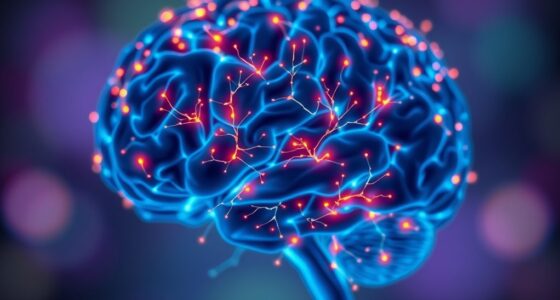

Loneliness triggers changes in your brain, affecting how you process social cues and regulate emotions. It activates stress hormones and disrupts reward pathways, making social interactions less satisfying and increasing cravings for connection. Over time, neural circuits weaken, leading to feelings of alienation. However, your brain can rewire through positive social experiences like connecting with others or volunteering. Exploring how to respond can help you break the cycle and rebuild your social bonds.

Get gifts for the two of you delivered free — and shop member deals
- Fast, free delivery on millions of items
- Access to Prime Big Deal Days deals on October 6–7
- Prime Video, Amazon Music and more included
Key Takeaways
- Loneliness alters brain structures and increases stress hormones, making social disconnection feel life-threatening.
- It disrupts reward pathways, heightening craving for social contact and intensifying feelings of frustration.
- Neural changes impair emotional regulation, leading to anxiety, depression, and social withdrawal.
- Positive social interactions can rewire the brain, restoring healthy circuits involved in bonding and mood.
- Engaging in meaningful social activities supports neural plasticity and helps mitigate loneliness effects.

Loneliness isn’t just an emotional experience; it also triggers specific changes in your brain’s structure and function. When you feel isolated, your brain responds by altering the way it processes social information and regulates emotions. At the core of these changes is your brain chemistry, which is heavily influenced by social bonding. Humans are wired for connection, and when social bonds weaken or disappear, your brain reacts as if there’s a threat to your survival. This response increases stress hormones like cortisol, which can further impact your brain’s health over time.
Your brain’s reward system, primarily driven by the neurotransmitter dopamine, also shifts during loneliness. Normally, social interactions activate this system, giving you feelings of pleasure and reward. But when you’re lonely, these interactions become less satisfying, and your brain starts to crave social contact more intensely. This craving is tied to the activity of brain regions such as the ventral striatum, which plays a role in motivation and reward. As a result, loneliness can create a cycle: the less you connect, the more your brain seeks social bonding, which can heighten feelings of frustration or despair when those needs go unmet.
Furthermore, loneliness impacts the functioning of your prefrontal cortex, the area responsible for decision-making and emotional regulation. When your brain perceives social disconnection as a threat, it amplifies negative emotions and reduces your ability to regulate them effectively. This can lead to feelings of anxiety, depression, and a sense of alienation, making it even harder to seek out social interactions. Over time, these neural changes can diminish your capacity for social bonding, creating a feedback loop that deepens loneliness.
The good news is that your brain remains adaptable, capable of rewiring itself through positive social experiences. Engaging in meaningful interactions helps restore healthy brain chemistry, boosting dopamine and other neurochemicals that reinforce social bonds. Activities like volunteering, joining groups, or simply reaching out to loved ones can stimulate the neural pathways involved in social bonding, reducing feelings of loneliness. Consistent social engagement not only improves your mood but also strengthens the neural circuits that support connection, helping you break free from the cycle of loneliness.
In essence, loneliness is far more than a fleeting emotion; it’s a biological signal that your brain needs social bonding to thrive. By understanding how your brain reacts and adapting your behavior accordingly, you can foster stronger social connections and improve your mental health. Recognizing these neural mechanisms empowers you to take deliberate steps toward reconnecting, making loneliness a temporary state rather than a permanent condition. Additionally, nurturing positive social bonds can promote brain plasticity, allowing your neural circuits to adapt and recover from the effects of loneliness.
Frequently Asked Questions
How Does Loneliness Impact Brain Structure Over Time?
Loneliness can lead to changes in your brain structure over time by affecting neural plasticity and reducing brain volume, especially in areas linked to social cognition and emotional regulation. When you’re lonely, your brain adapts to these social deficits, which may weaken neural connections. This can make you more prone to depression and anxiety. To counteract this, engaging in social activities can promote neural plasticity and help preserve healthy brain volume.
Can Loneliness Affect Mental Health Differently Across Age Groups?
Did you know that loneliness affects mental health differently across age groups? In developmental stages, it can impair emotional resilience, making teens more vulnerable to anxiety, while older adults may experience increased depression risk. These differences highlight how loneliness impacts each life phase uniquely, requiring tailored responses. Recognizing these variations helps you address your emotional needs more effectively, fostering resilience regardless of age.
What Neurological Differences Exist Between Social Loneliness and Emotional Loneliness?
Social loneliness activates your dopamine pathways, making you crave new interactions and stimulating reward centers. In contrast, emotional loneliness increases amygdala activity, heightening feelings of fear and threat. You might feel more anxious or insecure with emotional loneliness, while social loneliness drives you to seek connection. Recognizing these differences helps you understand your emotional responses and guides you to address each type effectively.
Are There Specific Brain Regions Involved in Loneliness-Induced Stress?
Imagine your brain’s neural pathways as a busy city’s road network. When loneliness strikes, the amygdala activates, triggering stress responses, while the prefrontal cortex struggles to regulate this stress. These regions work together to manage loneliness-induced stress, but if pathways become overwhelmed, stress regulation falters, leading to heightened anxiety. Recognizing this, strengthening social bonds can help reroute these neural pathways toward better stress management.
How Does Chronic Loneliness Influence Cognitive Decline and Memory?
Chronic loneliness negatively impacts your brain by causing neuroplasticity changes and neurotransmitter imbalances, which can accelerate cognitive decline and impair memory. When you’re lonely, your brain’s ability to adapt and form new connections weakens, making it harder to learn and remember. These neural changes increase your risk of developing dementia and other cognitive issues, emphasizing the importance of social connections to maintain brain health and cognitive resilience.
Conclusion
Think of loneliness as a silent forest, where your mind’s neurons are like lost explorers wandering in the dark. When you reach out and connect, it’s like turning on a guiding lantern, illuminating the path back to warmth and belonging. Remember, you hold the key to lighting that lantern—every conversation, every touch, brings you closer to clearing the shadows. By nurturing connections, you transform the wilderness into a vibrant, thriving haven for your mind and heart.
Fall Picks
fall essentials
As an affiliate, we earn on qualifying purchases.