
TL;DR
A Bolde article describes nine everyday phrases it says may reflect how some people raised in the 1960s and 1970s learned to manage emotion. The supplied source includes only five of the nine entries, and its research references and broad generational claims cannot be independently verified from the material provided.
Bolde’s article links familiar phrases such as “I’m fine” and “don’t make a scene” to emotional habits that some people may have learned growing up in the 1960s and 1970s. The piece offers a cultural interpretation, not evidence that everyone raised in those decades speaks or feels the same way; the material provided for this report includes only five of the nine phrases named in its headline.

Get gifts for the two of you delivered free with Prime
- Fast, free delivery on millions of items
- Prime Video, Amazon Music and more included
- Member-only deals all year
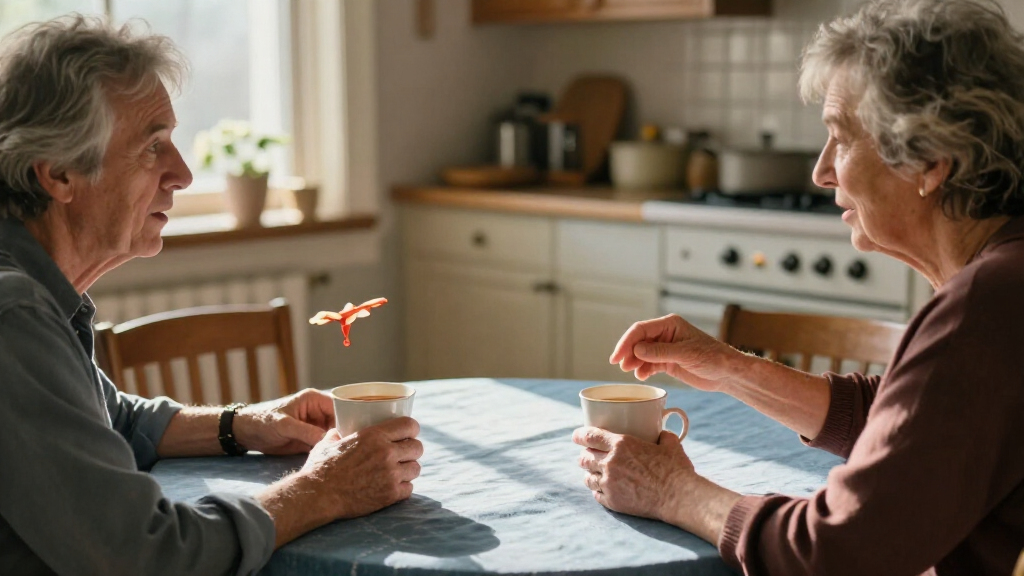
The article argues that, in some households, children were taught to keep difficult feelings private, avoid crying in front of others and preserve family composure. It says those expectations could persist after childhood in phrases that close down conversations. That interpretation is presented by Bolde; the supplied material does not establish how common those household rules were across the generation.
The five phrases included in the source are “I’m fine,” “There’s no sense dwelling on it,” “No use crying over it,” “We don’t air our dirty laundry,” and “Don’t make a scene.” Bolde interprets them respectively as ways to hide distress, move quickly past painful events, discourage visible sadness, keep family problems private and avoid showing emotion in public.
The article refers to research on emotional expression, labeling feelings, parental responses to children’s emotions and mental-health treatment. It says studies have found that hiding visible emotion does not necessarily reduce distress, and that naming a feeling may help regulate it. The material supplied does not include study titles, dates, authors or links for most of these claims, so their methods and scope cannot be checked here.
How Everyday Phrases Shape Emotional Talk
The piece matters as a prompt to notice how ordinary language can affect a conversation. A phrase meant to comfort or protect privacy may also signal that a person does not want to discuss a painful experience. Recognizing that possibility can help readers distinguish good intentions from the effect a remark may have on someone who needs support.
At the same time, phrases alone cannot establish a person’s upbringing, emotional health or willingness to talk. People use them for many reasons, including personal preference and circumstances unrelated to age. Bolde’s account is most useful as a cultural observation, not as a diagnosis of a generation or an individual.
Products Worth Considering

Philips Sonicare ProtectiveClean 5300 Rechargeable Electric Toothbrush with 3 Brush Heads, Black

Therabody WaveDuo Contoured Vibrating Back and Neck Roller

Coway Airmega AP-1512HHS Smart Air Purifier, Black
As an affiliate, we earn on qualifying purchases.
The Article’s Generational Frame
Bolde places its argument within a longer history of advice about child-rearing. It opens by referring to a popular 1928 parenting book that discouraged physical affection, then says later advice became warmer while some expectations of self-control remained. The material provided does not name the book or provide a citation, and the article itself acknowledges that parents differed and that Dr. Spock’s influence softened earlier approaches.
The source also cites a 2023 YouGov analysis, saying 8 percent of baby boomers had sought mental-health treatment in the previous year and describing that as less than half the rate among Gen Z. That figure is attributed to YouGov by Bolde, but the supplied excerpt does not give the analysis link, sample details or definitions. It should not be treated as proof that emotional privacy caused a treatment gap.
““I’m fine.””
— Bolde article
Five Phrases Missing From the Source
The headline promises nine phrases, but the supplied article excerpt stops during its fifth entry. The other four phrases and the rest of the article’s discussion are not available in the source material provided, so they cannot be reported here.
It is also unclear how Bolde selected the phrases, whether they are based on interviews or a survey, and how broadly they apply. The excerpt’s research references lack enough bibliographic detail to assess the cited findings, and it does not establish that a person’s age caused a particular communication style.
Further Sources Needed for Verification
No follow-up study or next publication is identified in the supplied material. To assess the article’s research claims, readers would need the original links and full citations for the studies and YouGov analysis, along with the complete article containing all nine entries. Until then, the phrases should be read as Bolde’s interpretation rather than a measured account of an entire generation.
Key Questions
What is the report about?
Bolde connects everyday phrases to lessons about emotional restraint and privacy that it says some people raised in the 1960s and 1970s may have learned. It is commentary, not a representative study of the generation.
Which phrases appear in the supplied material?
The excerpt includes “I’m fine,” “There’s no sense dwelling on it,” “No use crying over it,” “We don’t air our dirty laundry,” and “Don’t make a scene.” The other four phrases promised in the headline are not included in the provided source.
Does the article prove these phrases are unique to older people?
No. The source offers an interpretation of the phrases but does not show that they are exclusive to people raised in those decades or that all members of that generation use them.
What evidence does Bolde cite?
The article refers to research on concealed emotional reactions, labeling feelings and parental responses to children’s emotions, and cites a 2023 YouGov analysis of mental-health treatment. The supplied excerpt lacks full citations for independent assessment.
Source: rss