


The line between cultural appreciation and appropriation lies in your intentions and understanding. If you genuinely respect and educate yourself about a culture’s meaning and context, you’re likely engaging kindly. But if you use symbols or practices just for trendiness or without awareness, it can offend or erase important meanings. Respect and sensitivity are key. Keep exploring—there’s much to learn about maneuvering these boundaries thoughtfully.
Key Takeaways
- Appreciation involves respectful understanding and acknowledgment of a culture’s significance, while appropriation often exploits symbols without context.
- The line is crossed when cultural elements are used superficially for trends or profit, disregarding their meaning.
- Genuine appreciation seeks education and listening, whereas appropriation may ignore the cultural origins and sensitivities.
- Intentions matter, but impact—such as reinforcing stereotypes or offending communities—is the key factor in distinguishing the two.
- Respectful engagement involves humility, proper research, and avoiding actions that erode or misrepresent the culture.
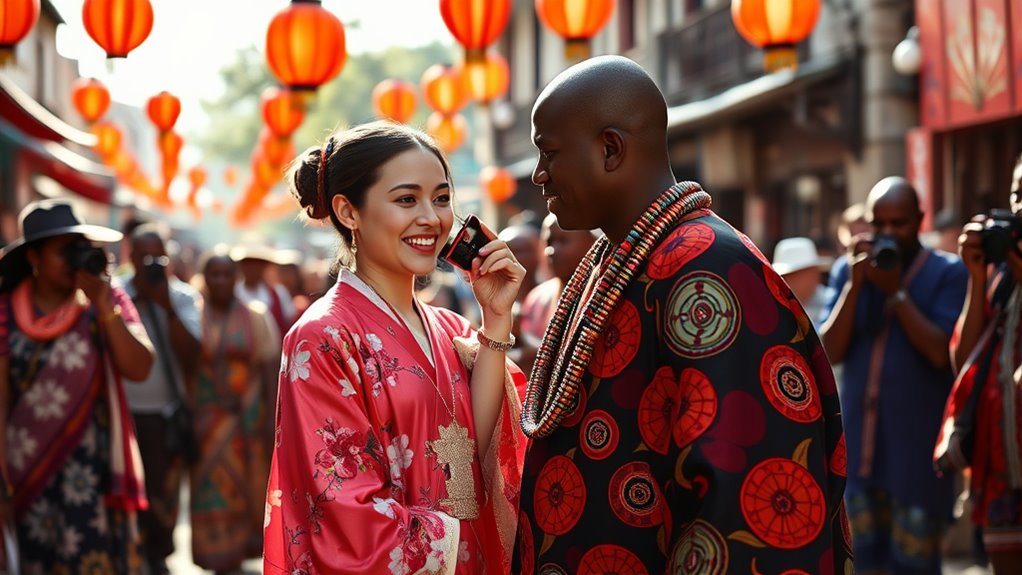
Cultural exchange is a natural part of human interaction, but sometimes it crosses the line into appropriation, which can cause offense or harm. When you engage with cultures different from your own, it’s easy to unintentionally create a cultural misunderstanding—one where your intentions don’t align with the impact of your actions. You might think you’re celebrating or honoring a culture, but if you’re not careful, what feels like appreciation can come across as disrespect or insensitivity. Recognizing the difference between intent and impact is vital; you may mean well, but if your actions reinforce stereotypes or erase meaningful context, you risk perpetuating harm.
Understanding this distinction helps you navigate cultural boundaries more thoughtfully. For instance, you might wear a traditional costume for fun, believing it’s harmless, but if that costume simplifies or trivializes a cultural symbol, it can be deeply offensive. Your intention might be to admire or show interest, but the impact could be the alienation of community members or the perpetuation of misconceptions. This is why it’s important not to assume that good intentions automatically negate negative effects. Instead, you should consider how your actions might be perceived and whether they honor the cultural significance involved.
You can avoid cultural misunderstanding by actively educating yourself about the origins and meanings of cultural elements before adopting them. Ask questions, listen to voices from within that culture, and seek out authentic sources of information. Respect is key: if you’re unsure whether something is appropriate, it’s better to refrain from using it or to seek guidance. Remember, appreciation involves acknowledgment and respect, not just superficial admiration. When you genuinely understand and honor the context, your actions are less likely to cause harm.
It’s also helpful to reflect on your motives. Are you engaging with a culture out of genuine curiosity, or are you doing it for personal gain or trendiness? The line between appreciation and appropriation becomes clearer when your focus is on learning and respecting, rather than appropriating symbols or practices for fashion or social media clout. Additionally, understanding the self-watering system can be a metaphor for how cultural exchange should function—providing ongoing nourishment and respect rather than superficial or one-sided interactions. Ultimately, being mindful of the impact your actions have on others, rather than just your intentions, helps make certain that your cultural exchanges are respectful and meaningful. Recognize that cultural boundaries exist for a reason, and approaching them with humility and openness can help you foster genuine cross-cultural understanding rather than inadvertently causing offense.
Frequently Asked Questions
How Can I Respectfully Engage With Cultures Different From My Own?
To respectfully engage with cultures different from your own, focus on authentic representation and learning. You can start by listening to members of that culture, asking questions, and showing genuine interest. Avoid stereotypes or superficial use of cultural symbols. Support authentic creators and educate yourself about the history and significance behind cultural practices. By approaching with respect and curiosity, you foster respectful engagement while honoring the culture’s depth and meaning.
What Are Examples of Cultural Appreciation in Everyday Life?
Did you know that over 60% of people enjoy incorporating diverse cultural elements into their daily lives? You can show appreciation by wearing fashion statements inspired by different cultures with respect and understanding, not stereotypes. Enjoy culinary traditions by trying authentic recipes and learning their significance. Supporting artisans from those cultures or attending cultural festivals also demonstrates genuine appreciation, helping you connect and honor traditions without crossing boundaries.
How Does Cultural Context Influence Whether Something Is Appropriation or Appreciation?
You should consider cultural sensitivity and historical significance when determining if something is appropriation or appreciation. If you respect the origins and understand the meaning behind cultural symbols, you’re more likely to appreciate genuinely. However, ignoring context or trivializing traditions can lead to appropriation. By learning about the history and significance, you show respect, ensuring your actions honor the culture rather than misusing or disrespecting it.
Can Cultural Exchange Ever Be Harmful or Offensive?
Yes, cultural exchange can be harmful or offensive when it crosses boundaries, even unintentionally. You must consider cultural boundaries, where intent alone isn’t enough—impact matters too. If your actions disrespect traditions or perpetuate stereotypes, they can cause real harm. Be mindful that your good intentions don’t overshadow the importance of respecting others’ cultures. Sometimes, what feels like appreciation can inadvertently offend, so always approach with respect and awareness.
What Role Does Power Dynamics Play in Cultural Appropriation Discussions?
Power dynamics greatly influence cultural appropriation discussions because colonial influence and social hierarchies shape who benefits and who is marginalized. When you take cultural elements without understanding or respecting their origins, it often reflects underlying inequalities. You might unintentionally perpetuate stereotypes or erase significance, especially when dominant groups profit or gain prestige. Recognizing these power imbalances helps you approach cultural exchange with sensitivity, fostering genuine appreciation instead of exploitation.
Conclusion
Understanding where to draw the line between appreciation and appropriation isn’t always easy. It’s about respecting origins, honoring traditions, and recognizing your influence. It’s about listening, learning, and acknowledging your role. It’s about celebrating diversity without commodifying or misrepresenting. When you approach other cultures with humility, with curiosity, with respect, you foster genuine connection. Because in the end, true appreciation lifts up, empowers, and unites—while appropriation tears down, exploits, and divides.