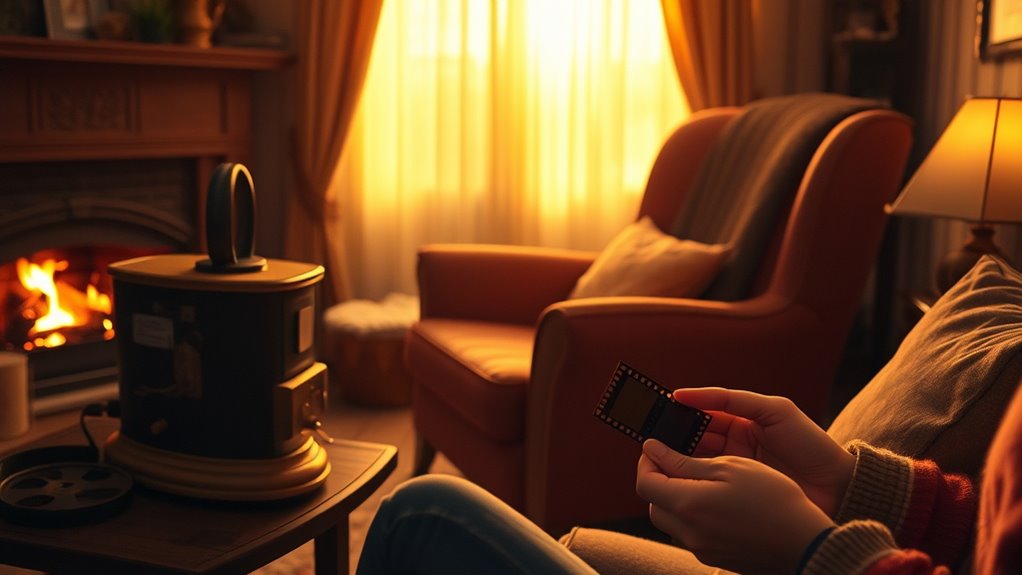

When you rewatch films, you’re reconnecting with familiar scenes, characters, and memories that create a sense of comfort and safety. These familiar elements act as emotional anchors, reinforcing your identity and offering a mental refuge from stress. The process deepens your understanding and enjoyment, making you feel more in control. This act of revisiting old favorites taps into your natural desire for consistency and reassurance—discover more about why this brings such comfort.
Key Takeaways
- Rewatching films activates nostalgic memories and emotional cues, creating a comforting connection to personal past experiences.
- Familiar characters and scenes serve as mental anchors, reinforcing identity and providing a sense of continuity and safety.
- Repetition deepens understanding and predictability, fostering control and emotional security during viewing.
- Nostalgic triggers act as psychological anchors, offering relief from stress and reinforcing a sense of belonging.
- Watching familiar films creates a comforting loop, strengthening the bond between memory, emotions, and personal well-being.

Rewatching films often feels like revisiting old friends, but it also taps into deeper layers of memory. When you press play on a favorite movie, you’re not just watching scenes unfold; you’re activating a complex web of nostalgic triggers and memory associations that connect you to moments from your past. These triggers might be a familiar song playing during a montage, a particular phrase that echoes a conversation you once had, or a setting that reminds you of a place you frequented. Every detail in a film serves as a cue, bringing forth emotions and memories that are tightly intertwined with your personal history. This process creates a comforting loop, where the act of watching becomes a form of self-recovery, grounding you in familiar territory even amid life’s chaos.
The power of nostalgia isn’t just emotional; it’s deeply psychological. When you rewatch a film, your brain draws upon long-standing memory associations, reinforcing your sense of identity and continuity. The familiar plot points, characters, and soundtrack serve as anchors in your mental landscape. They evoke feelings of safety, belonging, or joy—emotions that might have been fleeting or buried over time. This emotional resonance is why rewatching a movie can feel like a warm hug, offering relief from stress or anxiety. It reminds you of who you are and the experiences that shaped you, creating a psychological sanctuary where you can retreat whenever life feels overwhelming.
Furthermore, these repeated viewings help you build a sense of mastery and comfort. Over time, as you recognize every line and scene, you develop a deeper understanding of the film, which enhances your connection to it. This familiarity breeds a sense of predictability and control, making the viewing experience more relaxing. You don’t have to focus solely on following the plot; instead, you can immerse yourself in the sensations and memories the film stirs up. It’s like having a conversation with an old friend—knowing their story so well that you can anticipate their words, but still feeling the warmth of shared history.
In essence, rewatching films taps into your brain’s natural tendency to seek comfort through familiar patterns. It’s a way to reconnect with your past, reinforce your identity, and find solace in the continuity of your memories. Those nostalgic triggers and memory associations turn a simple movie night into a powerful act of emotional self-care, anchoring you amid life’s uncertainties. So next time you hit play on that old favorite, remember—you’re not just watching a movie; you’re revisiting a piece of yourself. Memory associations are central to how these comforting experiences are formed and reinforced over time.
Frequently Asked Questions
How Does Rewatching Films Influence Emotional Resilience?
Rewatching films strengthens your emotional resilience by providing familiar comfort and stability during tough times. It enhances your emotional stability, helping you manage stress and anxiety more effectively. By turning to favorite movies, you develop coping mechanisms that offer reassurance and a sense of control. This repeated exposure builds a safe space for processing emotions, making you more resilient and better equipped to handle life’s challenges with confidence and calm.
Can Rewatching Movies Help Process Personal Trauma?
Yes, rewatching movies can help you process personal trauma by serving as a coping mechanism. It provides a sense of familiarity and control, allowing emotional healing to unfold gradually. When you revisit familiar films, you create a safe space where emotions surface naturally, making it easier to confront difficult feelings. This repetitive comfort can support your resilience, helping you navigate and eventually heal from personal challenges.
Does Frequent Rewatching Impact Our Perception of Reality?
Frequent rewatching can impact your perception of reality by causing perception distortion and blurring the line between fiction and real life. When you repeatedly watch familiar movies, your brain may start to see them as more real or trustworthy, influencing how you interpret actual events. This can create a skewed sense of reality, making it harder to differentiate between what’s real and what’s just a comforting illusion you’ve built through repeated viewings.
Are Certain Genres More Effective for Comfort Rewatching?
Certain genres, like comedy, romance, and feel-good dramas, are more effective for comfort rewatching because they provide emotional comfort and familiarity. Your genre preferences play a big role in how these films soothe you, offering reassurance during stressful times. When you revisit these genres, you can relax and find joy in their predictable, comforting narratives, making rewatching a reliable way to boost your mood and create a sense of stability.
How Does Rewatching Films Affect Long-Term Memory Retention?
Rewatching films can strengthen your long-term memory by reinforcing their narratives, with studies showing that repeated exposure improves retention. When you rewatch, you actively engage your visual memory, making scenes and details more vivid. This process helps solidify the story in your mind, creating stronger neural connections. So, every time you revisit a favorite film, you’re not just finding comfort—you’re also enhancing your ability to remember its details for years to come.
Conclusion
Rewatching films isn’t just about nostalgia; it taps into deep memories that boost your mood and sense of comfort. Did you know that over 60% of people rewatch movies to feel more secure during stressful times? When you press play again, you’re reconnecting with familiar stories and emotions, creating a reliable mental refuge. So next time life feels overwhelming, don’t hesitate—revisit a favorite film and let it remind you of better, simpler moments.