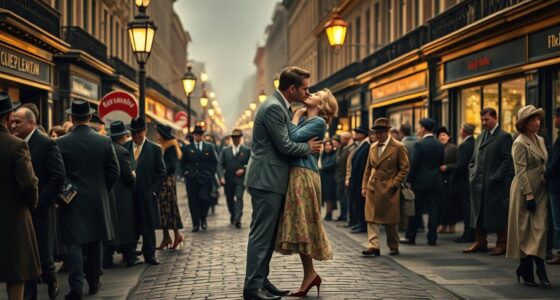
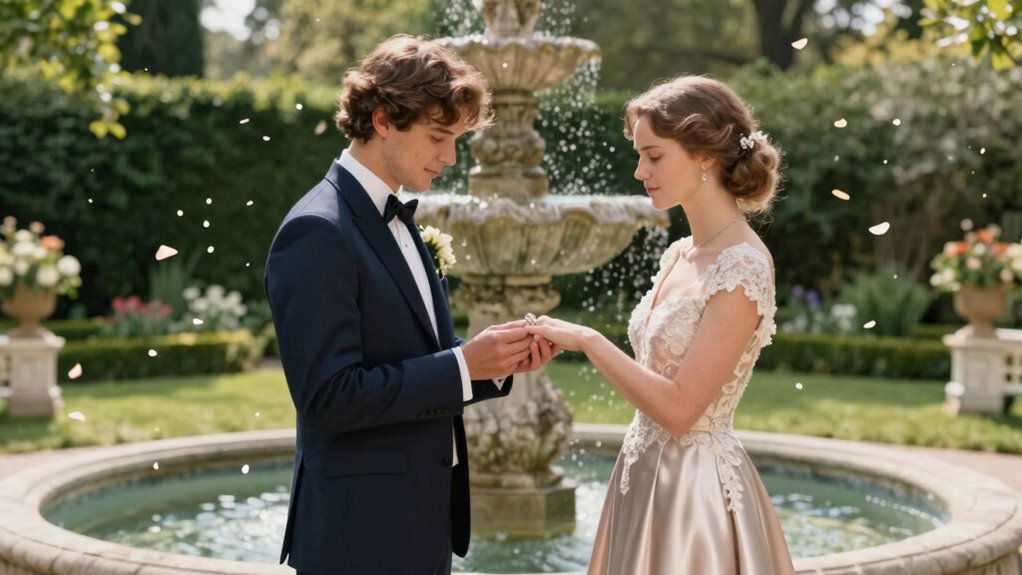

The history of engagements shows how social status and love were once deeply intertwined, with elaborate ceremonies and jewelry signifying wealth and class. Nobility used these customs to display power, making engagements symbols of social rank rather than personal affection. Over time, traditions simplified, shifting focus from status to love and personal meaning. If you want to explore how these traditions shaped what we value today, there’s much more to uncover below.

Get gifts for the two of you delivered free — and shop member deals
- Fast, free delivery on millions of items
- Access to Prime Big Deal Days deals on October 6–7
- Prime Video, Amazon Music and more included
Key Takeaways
- Historically, elaborate ceremonies and precious jewels signaled social hierarchy and economic stability, emphasizing status over love.
- Engagement customs evolved from status symbols for the upper classes to personalized expressions of love across all social levels.
- Cultural traditions continue to influence engagement practices, blending old symbols of wealth with modern expressions of commitment.
- Material and ceremonial aspects of engagements historically reflected societal values, wealth, and social standing.
- Modern engagements focus more on love and personal connection, shifting away from status symbols and material displays.
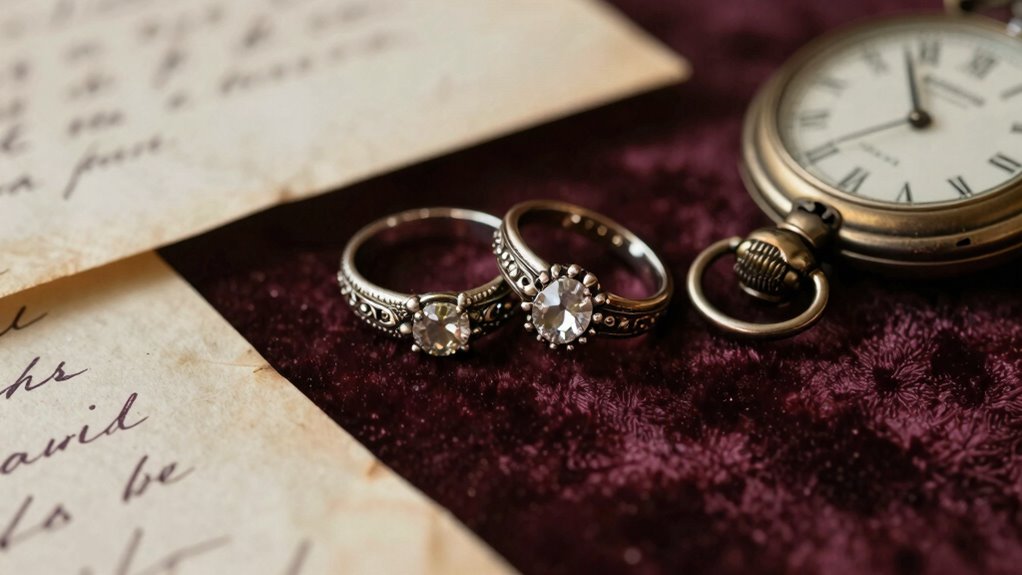
Engagements have long been a meaningful milestone in the journey of love, symbolizing a couple’s commitment to a shared future. Over centuries, this tradition has evolved, revealing much about societal values, cultural traditions, and even perceptions of status. Historically, engagements weren’t just about love; they served as social contracts that reinforced class distinctions and economic alliances. Nobility and aristocrats often used elaborate engagement ceremonies to showcase wealth and power, with diamonds and precious jewels serving as status symbols. These displays weren’t just about romance—they communicated social rank and financial stability to the community. As time progressed, engagement customs became more accessible, but they still reflected underlying social structures. In many cultures, engagement rings and ceremonies were reserved for the upper classes, symbolizing privilege and wealth, while lower classes might have had simpler or less formalized traditions.
Today, modern trends have transformed how you approach engagements. While the core idea of commitment remains, how you choose to celebrate it can vary widely based on personal preferences, cultural influences, and shifting societal norms. You might opt for a lavish proposal with a custom ring or choose a simple, intimate moment that focuses on the emotional connection rather than material display. Many people now see engagement as an expression of love rather than a marker of social status. This shift is evident in the rise of personalized proposals, unconventional rings, and even virtual engagements prompted by global circumstances. Despite these changes, some cultural traditions still persist, such as the exchange of rings or family blessings, blending old customs with modern trends seamlessly. Cultural traditions continue to influence how couples celebrate their commitment, even as new customs emerge. Additionally, the history of societal expectations surrounding engagements highlights the evolving nature of love and status throughout history. Furthermore, the social symbolism of engagement symbols like rings and ceremonies has persisted, reflecting their deeper cultural significance. Interestingly, the material aspects of engagements, such as jewelry and ceremonies, often reveal societal values and economic conditions of the time. What this history reveals is that the significance of engagements has always been intertwined with societal expectations and personal values. While previously they served as symbols of wealth and social standing, today they often emphasize individual love and commitment. Yet, elements of tradition remain, highlighting that cultural heritage continues to influence how couples celebrate their commitment. Whether you’re following age-old customs or embracing new trends, understanding this history helps you appreciate the deeper meaning behind the moment—one rooted in both cultural tradition and personal love. Engagements, in all their forms, serve as a reflection of who you are as a couple and what you value most in your shared future.
As an affiliate, we earn on qualifying purchases.
Frequently Asked Questions
How Have Engagement Customs Varied Across Different Cultures?
You’ll notice that engagement customs differ widely across cultures. Some societies emphasize elaborate cultural rituals, like wearing specific attire or performing traditional ceremonies, to symbolize commitment. Others focus on marriage symbolism, such as exchanging rings or gifts to represent union and loyalty. These customs reflect deep-rooted traditions and values, highlighting how different cultures view love and status through unique practices that celebrate commitment and societal acceptance.
What Role Did Economic Status Play in Historical Engagements?
Economic influence played a pivotal role in historical engagements, often determining who married whom. You’d find that wealthier families used engagements to reinforce social mobility, aligning alliances with economic power. In many cultures, a man’s or woman’s financial standing impacted their marriage prospects, making economy a key factor in love and status. This focus on economic status shaped engagement customs, emphasizing stability, inheritance, and social hierarchy over romantic love in many societies.
Are Engagement Rings a Recent Tradition or Historically Rooted?
Engagement rings are rooted in historical ceremonial practices, not just a recent tradition. They serve as symbolic tokens of commitment, dating back centuries. In the past, rings signified a formal promise and social status, embedded in customs that evolved over time. Today, they continue to represent love and intent, maintaining their symbolic importance in modern proposals while still reflecting long-standing cultural practices.
How Have Societal Views on Love Versus Status Evolved Over Time?
Societal views on love versus status have dramatically shifted, revealing a fascinating evolution. You now see more emphasis on genuine romantic ideals, valuing connection over social class. Yet, subtle traces of old priorities linger, influencing perceptions of relationships. As society progresses, you’re likely to notice a growing focus on authentic love, challenging centuries-old notions that placed status above heartfelt connection—an ongoing dance between tradition and modern ideals.
Do Modern Engagement Trends Reflect Historical Social Hierarchies?
Modern engagement trends still reflect some historical social hierarchies. You might notice class distinctions influence choices, like selecting partners from similar backgrounds or pursuing certain wedding styles. Courtship rituals have shifted, but elements like family approval and social expectations remain, subtly echoing past practices. While love has become more central, societal structures continue to shape engagement decisions, revealing that history’s influence persists, even in contemporary trends.
As an affiliate, we earn on qualifying purchases.
Conclusion
You might think engagements are purely about love, but history shows they also serve as a status symbol, reinforcing social hierarchies. While modern couples often prioritize personal connection, the legacy of engagement traditions reveals a deeper desire for societal approval. Curiously, some theories suggest that this blend of love and status creates a complex dynamic, where societal expectations influence personal choices. Recognizing this interplay helps you understand that engagements are more than just promises—they reflect intricate social realities.
As an affiliate, we earn on qualifying purchases.
As an affiliate, we earn on qualifying purchases.
Halloween Picks
halloween
As an affiliate, we earn on qualifying purchases.