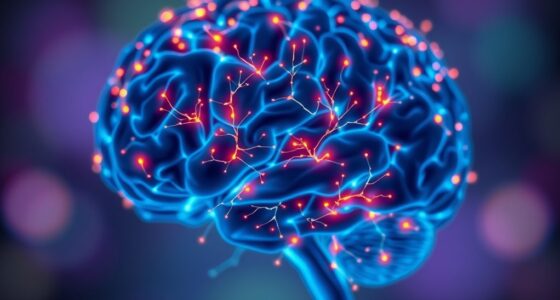

During romantic obsession, your brain floods with dopamine, creating feelings of pleasure and reinforcing your desire for the loved one. Neural pathways between emotional and decision-making centers become hyperactive, making it hard to focus on anything else. The limbic system and prefrontal cortex work together to strengthen obsessive thoughts, while hormones like oxytocin boost attachment. Over time, these brain changes become ingrained, making it difficult to let go—yet, there’s more to uncover about how your brain adapts during this intense experience.

Get gifts for the two of you delivered free with Prime
- Fast, free delivery on millions of items
- Prime Video, Amazon Music and more included
- Member-only deals all year
Key Takeaways
- Dopamine surges activate brain’s reward system, creating feelings of pleasure and reinforcing thoughts about the loved one.
- Neural pathways connecting the limbic system and prefrontal cortex become strengthened, intensifying obsessive focus.
- Brain regions like the amygdala and insula heighten emotional intensity, longing, and craving.
- Oxytocin release enhances attachment, increasing desire for closeness and emotional bonding.
- Neural rewiring sustains fixation, making it difficult to break free from obsessive thoughts.
When you’re deeply obsessed with someone romantically, your brain undergoes a fascinating series of changes that mirror addiction. This isn’t just a feeling; it’s a complex neurological process involving neurotransmitter effects and neural pathway activation that keeps you glued to thoughts of that person. As your obsession grows, your brain’s chemistry shifts, fueling intense desire and focus. Neurotransmitters like dopamine flood your system, creating feelings of pleasure and reward whenever you think about or see your crush. This surge of dopamine is similar to what happens with addictive substances, reinforcing the urge to seek out that person again and again.
Deep romantic obsession triggers brain changes similar to addiction, with dopamine fueling intense focus and desire.
At the same time, your brain activates specific neural pathways that reinforce these obsessive thoughts. The pathways connecting the limbic system—the brain’s emotional hub—and the prefrontal cortex, responsible for decision-making and rational thought, become highly engaged. This heightened neural pathway activation makes it difficult to break free from thoughts of your loved one. Instead of rationally evaluating the situation, your brain becomes consumed with images, memories, and fantasies about them. This persistent neural activity creates a feedback loop, where the more you think about your obsession, the stronger these pathways become. Additionally, the brain’s reward system adapts to prioritize thoughts of your love interest, making it even harder to shift focus away from them. This neural rewiring is part of how neural pathways strengthen during obsession, leading to a cycle that’s tough to break. Interestingly, these neural processes can be so powerful that they mimic patterns seen in addictive behaviors, making the obsession particularly challenging to overcome.
Your brain also releases oxytocin, the so-called “love hormone,” which enhances feelings of attachment and bonding. This chemical boost makes you crave closeness and intimacy, further reinforcing your obsession. The amygdala, which processes emotions like fear and arousal, becomes hyperactive, amplifying feelings of longing or even obsession’s sometimes painful intensity. Meanwhile, the dorsal anterior cingulate cortex and insula, involved in emotional awareness and craving, light up during this state, adding to the persistent focus on that person.
What’s fascinating is that these neural changes are not random; they’re highly specific to romantic obsession. The activation of certain neural circuits makes you prioritize thoughts of your love interest over other concerns, often at the expense of your well-being. Your brain’s reward system becomes hyper-focused on that person, making it difficult to let go. This isn’t just emotional; it’s a real, physical rewiring that keeps you mentally tethered to your obsession, driven by neurotransmitter effects and neural pathway activation that mimic addiction. Recognizing this neurochemical influence can help you understand why breaking free feels so challenging—your brain is wired to keep you fixated until the neural pathways weaken or are consciously reshaped. Understanding these neural rewiring processes may also provide strategies to gradually shift your focus away from obsessive thoughts.
dopamine supplement for mood support
As an affiliate, we earn on qualifying purchases.
As an affiliate, we earn on qualifying purchases.
Frequently Asked Questions
How Long Does Romantic Obsession Typically Last?
Romantic obsession can last from a few months up to several years, depending on individual circumstances. During this time, neurochemical effects like increased dopamine and decreased serotonin fuel obsessive behaviors, making it hard to let go. You might find yourself constantly thinking about this person, unable to focus elsewhere. The intensity gradually diminishes as your brain recalibrates, but it can take significant time and effort to fully move on.
Can Romantic Obsession Negatively Impact Mental Health?
Like Icarus flying too close to the sun, romantic obsession can harm your mental health. It often fuels attachment anxiety and emotional dependency, making you feel anxious or overwhelmed when not with the person. This obsession can lead to depression, low self-esteem, and difficulty focusing on other life areas. Recognizing these signs helps you regain control, preventing obsession from spiraling into long-term emotional distress.
Is Romantic Obsession the Same as Love Addiction?
Romantic obsession isn’t exactly the same as love addiction, but they share similarities like emotional dependency and altered neurological pathways. In both cases, you might feel intense cravings for a person, often neglecting your well-being. Love addiction can involve compulsive behaviors and difficulty moving on, whereas obsession tends to focus on fixation. Recognizing these differences helps you understand your emotional patterns and seek healthier relationships.
How Does the Brain Differentiate Between Love and Obsession?
Your brain dances to different tunes when it distinguishes love from obsession. During love, neurochemical processes release oxytocin and dopamine, fostering closeness and joy. Obsession, however, traps you in a whirlwind of adrenaline and cortisol, skewing emotional regulation. It’s like a gentle stream versus a raging storm—one calms, the other consumes. Your brain filters these signals, guiding you toward genuine connection or spiraling into fixation.
Can Romantic Obsession Be Cured or Managed?
Yes, romantic obsession can be managed by addressing emotional dependency and obsessive behaviors. You can seek therapy to develop healthier attachment patterns and learn coping strategies. Practice mindfulness and self-awareness to reduce compulsive thoughts. Building a supportive social network and focusing on personal growth helps shift your focus away from the obsession. Remember, overcoming obsession takes time, but with effort, you can regain emotional balance and healthier relationship dynamics.
neurofeedback brain training device
As an affiliate, we earn on qualifying purchases.
As an affiliate, we earn on qualifying purchases.
Conclusion
As you chase the thrill of romantic obsession, your brain’s heightened activity mirrors both euphoria and chaos. The same neural pathways fueling desire also sow confusion, blending joy with longing. In this dance of passion, your mind becomes a battleground—where attraction and obsession collide—reminding you that love’s intensity often comes with a price. Ultimately, what feels like freedom is often a tangled web, pulling you deeper into the complex maze of your own desires.
romantic obsession therapy journal
As an affiliate, we earn on qualifying purchases.
As an affiliate, we earn on qualifying purchases.
As an affiliate, we earn on qualifying purchases.
Fall Picks
fall essentials
As an affiliate, we earn on qualifying purchases.