
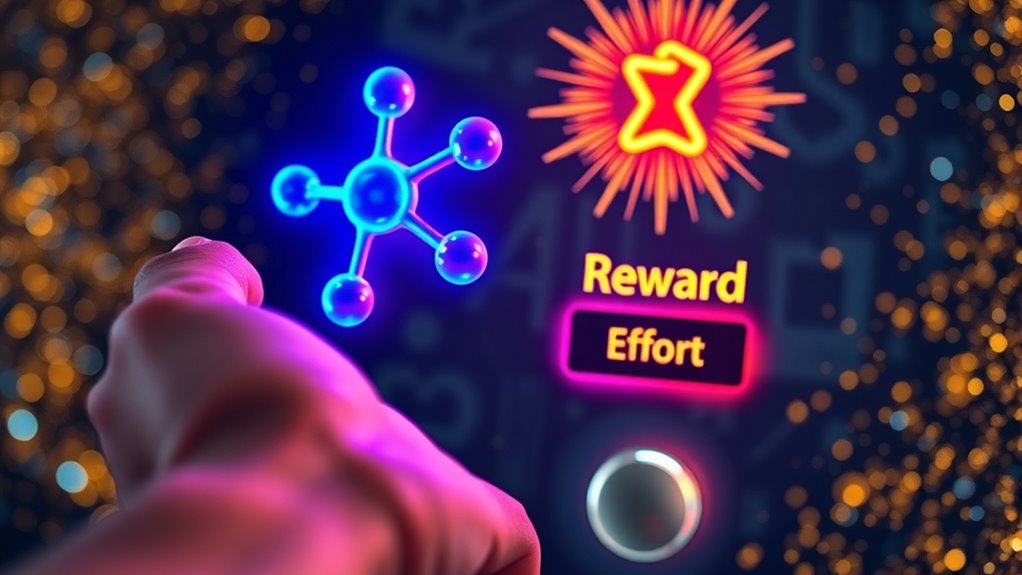

Dopamine plays a key role in motivation by rewarding your brain when you complete goals or routines, reinforcing those behaviors. When effort is rewarded, your neural pathways strengthen, making habits easier and more automatic over time. Consistently pairing effort with positive outcomes creates a cycle that fuels continued motivation. By understanding this biological process, you can harness the power of dopamine, effort, and reward to build lasting habits—discover how to optimize this interaction for lifelong change.
Key Takeaways
- Dopamine signals reward and reinforces neural pathways, motivating repeated behaviors and strengthening habit formation.
- Completing rewarding activities releases dopamine, which enhances motivation and encourages the pursuit of similar goals.
- Neural effort decreases over time as pathways strengthen, making behaviors more automatic and requiring less conscious motivation.
- Consistent routines build brain infrastructure, rewiring neural circuits to favor effortful tasks becoming effortless.
- Rewards and dopamine reinforce new behaviors, accelerating long-term motivation through biological mechanisms.
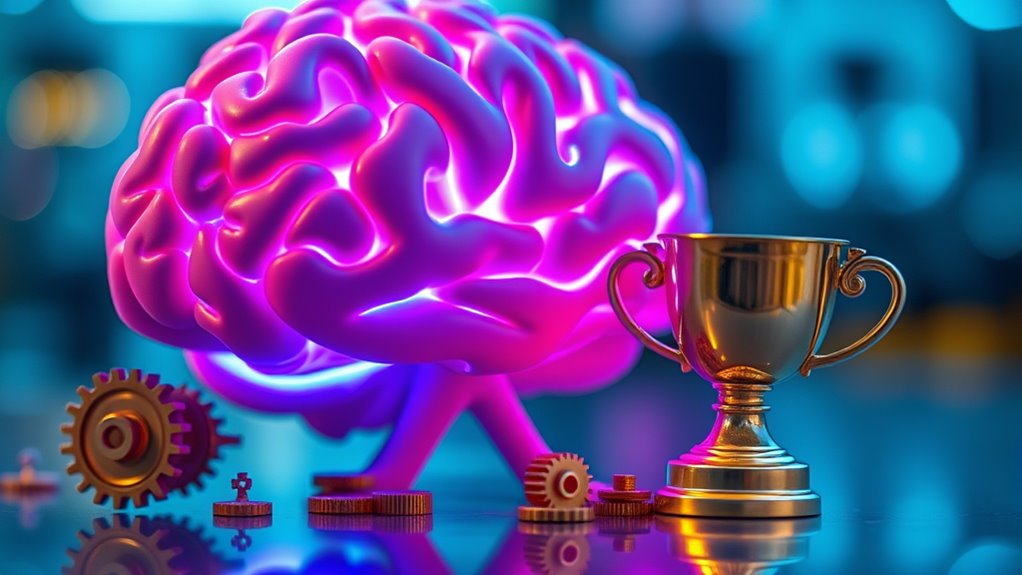
Motivation drives your actions, shaping how you set goals and overcome challenges. When you decide to make a change or pursue a new goal, your brain activates specific neural pathways that support these behaviors. These pathways are like mental highways, built through repeated actions and thoughts, which makes certain behaviors more automatic over time. This process, known as habit formation, is essential for turning fleeting motivation into sustainable change. The more you practice a behavior, the stronger these neural pathways become, making it easier to continue the activity without relying solely on willpower. Understanding how these pathways develop helps you realize that motivation is not just about fleeting feelings but also about creating the brain’s infrastructure for success.
Motivation shapes actions by activating neural pathways that become stronger through habit formation, making behaviors more automatic over time.
Habit formation begins when your brain associates certain cues with specific actions, creating a loop that reinforces the behavior. For example, if you want to start exercising regularly, you might establish a routine that involves putting on your workout clothes right after waking up. Over time, this cue triggers a neural pathway that prompts you to exercise, reducing the mental effort needed to get started. This process is driven by the brain’s plasticity, which allows it to adapt and strengthen these pathways as you repeat behaviors. The more consistent you are, the more ingrained the habit becomes, and the less your motivation needs to be high each day. Instead, your brain has wired itself to automatically respond to certain triggers, making the behavior feel more natural and less like a chore.
This neural rewiring is closely linked to how dopamine influences motivation. When you complete a habit or reach a milestone, dopamine floods your brain, reinforcing the behavior and encouraging you to repeat it. This reward signal makes the neural pathways associated with the behavior more robust, accelerating habit formation. Conversely, when you skip a day or break a routine, those pathways weaken slightly, reminding you that consistency matters. By intentionally creating routines that reward progress, you harness this biological mechanism to strengthen your habits and sustain motivation over time. Additionally, understanding the role of neural pathways and their reinforcement can help you design more effective strategies for long-term behavior change.
In essence, your brain’s ability to form and reinforce neural pathways through habit formation is a powerful tool in maintaining motivation. It shifts your effort from relying solely on momentary feelings of drive to building a structured environment where positive behaviors become ingrained. Recognizing this, you can design your daily routines to leverage these neural mechanisms, turning initial motivation into lifelong habits. This understanding helps you stay committed, knowing that each small, consistent action is rewiring your brain for success. Over time, these habits become part of your identity, making it easier to pursue your goals with less mental resistance and more automatic drive.
Frequently Asked Questions
How Does Genetics Influence Individual Motivation Levels?
Your genetics shape your motivational traits through genetic predispositions that influence how you respond to rewards and effort. If you have certain genetic markers, you might naturally feel more driven or less motivated, affecting your persistence and goal-setting. While genetics play a role, your environment and experiences also shape your motivation. Recognizing your genetic predispositions can help you develop strategies to boost motivation when needed.
Can Motivation Be Improved Through Specific Lifestyle Changes?
Yes, you can boost motivation through lifestyle changes by focusing on habit formation and goal setting. Establish small, consistent habits that build momentum and reinforce positive behaviors, which releases dopamine and encourages effort. Set clear, achievable goals to keep yourself focused and motivated. These strategies help you create a cycle of reward, making it easier to stay committed and improve your overall motivation over time.
What Role Does Serotonin Play in Motivation and Reward?
Serotonin acts like a calming river, smoothing out your mood and boosting your sense of well-being. It plays a key role in motivation by enhancing mood, which makes you feel more driven to pursue goals. Serotonin also fosters social bonding, reinforcing connections that fuel your motivation. When serotonin levels are balanced, you’re more likely to experience reward and satisfaction, encouraging you to stay committed and engaged.
How Do Cultural Differences Affect Motivational Mechanisms?
You’re influenced by cross-cultural values that shape what motivates you, like individualism or collectivism. These cultural differences affect how you perceive effort and reward, often reinforcing motivational stereotypes—such as believing success depends solely on personal effort in some cultures. Recognizing these influences helps you understand that motivation isn’t universal; it varies based on cultural context, guiding you to tailor your goals and approaches accordingly.
Are There Age-Related Changes in Dopamine Activity Impacting Motivation?
Imagine your brain as a bustling city, with dopamine as the lively messenger fueling your motivation. As you age, dopamine decline can slow this city’s heartbeat, making age-related motivation harder to spark. You might notice decreased enthusiasm for new challenges or rewards. This natural change affects your drive, but understanding it helps you find new ways to stay motivated and keep your mental city thriving.
Conclusion
As you navigate your daily pursuits, remember that a gentle nudge from your brain’s own reward system keeps you moving forward. By understanding how dopamine subtly guides your efforts, you can embrace challenges with a renewed sense of purpose. Sometimes, the tiniest encouragement can lead to remarkable progress. So, trust in these natural signals—they’re quietly steering you toward success, even when the path seems uncertain. Embrace the journey, and let your motivation flourish.