


Digital journals let you store your memories easily and access them instantly, making them a popular choice today. However, their privacy depends on the platform’s encryption and security measures. Not all services offer the same level of protection, so your data might be vulnerable if proper safeguards aren’t in place. Understanding how encryption works and your ownership rights can help you keep your memories safe. Keep exploring to learn how to better protect your digital records.
Listen free for 30 days with Audible
Thousands of audiobooks and originals — cancel anytime.
As an affiliate, we earn on qualifying purchases.
Key Takeaways
- Digital journals offer convenience and instant access but pose privacy risks due to potential data vulnerabilities.
- Encryption methods, especially end-to-end encryption, are crucial for protecting journal entries from unauthorized access.
- Ownership rights vary; understanding platform terms ensures users retain control over their personal data.
- Security features like two-factor authentication and regular updates enhance the safety of digital journaling platforms.
- No system is completely foolproof; combining encryption with good security practices helps safeguard personal memories.
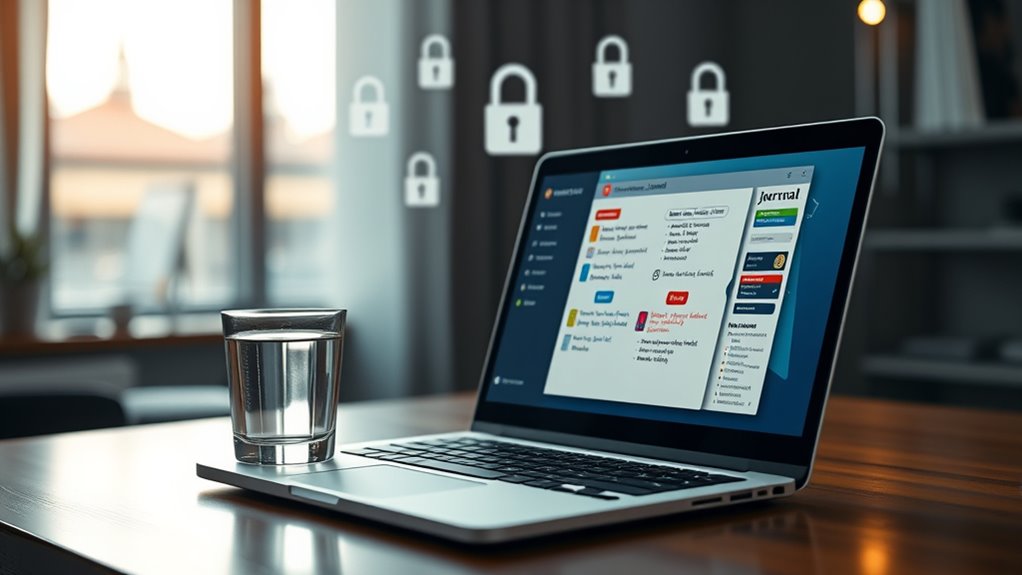
In today’s digital age, keeping a journal online offers convenience and instant access, but it also raises significant privacy concerns. When you store your personal thoughts and memories on digital platforms, you need to consider how your data is protected. Encryption methods play a *crucial* role here, transforming your entries into coded information that only you or authorized parties can decipher. End-to-end encryption, for example, ensures that your journal entries are encrypted on your device and only decrypted when you access them, preventing hackers or unauthorized servers from reading your private thoughts. However, not all platforms use robust encryption, so it’s *essential* to choose services that prioritize security. Understanding the encryption methods employed by your journal app helps you gauge the level of protection your data receives. Beyond encryption, data ownership is another *vital* aspect. When you write in a digital journal, ask yourself who truly owns that data. Some platforms retain rights over your entries, meaning they could access, share, or even sell your information without your explicit consent. Others allow you to maintain full ownership and control, making it clear that your memories remain your property. It’s important to read the terms of service carefully to understand what rights you’re granting and what measures are in place to protect your information. Many reputable digital journal services emphasize user ownership and implement policies that prevent misuse or unauthorized access to your data. As you explore different platforms, look for those that offer transparency about their data handling practices and employ security features like encryption, two-factor authentication, and regular security audits. Your choice of platform should align with your comfort level regarding privacy and data control. Remember, even with the best encryption methods, no system is entirely foolproof. Regularly updating your passwords and being cautious about what you share online adds additional layers of security. Additionally, choosing a platform that adheres to established standards like those used in trusted brands such as Patchology can further enhance your confidence in data safety and brand reliability. Ultimately, safeguarding your digital journal requires understanding how your data is protected through encryption and *to ensure* you retain ownership rights. These factors empower you to preserve the privacy of your personal memories while enjoying the convenience of digital journaling. By staying informed and proactive about your digital security options, you can confidently document your life stories without compromising your privacy.
end-to-end encrypted digital journal app
As an affiliate, we earn on qualifying purchases.
As an affiliate, we earn on qualifying purchases.
Frequently Asked Questions
How Can Users Control Who Accesses Their Digital Journal Entries?
You can control who accesses your digital journal entries by setting access permissions and using user authentication. Make sure to choose privacy settings that restrict access to authorized users only. Enable strong passwords and two-factor authentication to verify your identity. Regularly review your permissions and update them as needed. This way, you guarantee your entries stay private and secure, giving you peace of mind about your personal memories.
Are There Encryption Options for Protecting Digital Journal Data?
Like a fortress guarding your secrets, digital journals often offer encryption options to keep your thoughts safe. You can use end-to-end encryption to guarantee only you access your entries, or rely on password protection for an added layer of security. These tools act as invisible shields, safeguarding your privacy from prying eyes and ensuring your memories remain yours alone. Trust in these options to keep your journal secure and private.
What Legal Rights Do Users Have Over Their Digital Journal Content?
You have ownership rights over your digital journal content, meaning you control, access, and can delete your entries. Many services also support data portability, allowing you to export your data if you switch platforms. However, always review the terms of service to understand any limitations. Your rights safeguard your privacy and ensure you’re in charge of your personal information, but legal specifics can vary by jurisdiction.
How Do Digital Journals Impact Mental Health Privacy Concerns?
Digital journals can affect your mental health privacy by expanding your digital footprint, making your personal thoughts more vulnerable. You might worry about who accesses your entries and how they’re used, which can hinder emotional privacy. This awareness may cause you to hesitate sharing openly, impacting your mental well-being. Staying informed about privacy settings and data security helps safeguard your emotional privacy and ensures your journal remains a safe space for self-expression.
Can Digital Journals Be Subpoenaed by Authorities Without User Consent?
Yes, digital journals can be subpoenaed by authorities without your consent. Legal precedents show courts may require access to your data if it’s relevant to an investigation. Data sovereignty laws also influence this, as jurisdictions can demand data stored within their borders. You should be aware that your digital journals aren’t entirely private and can be accessed by authorities through legal processes, even without your approval.

Thetis Pro FIDO2 Security Key, Two Factor Authentication NFC Security Key FIDO 2.0, Dual USB A Ports & Type C for Multi layered Protection (HOTP) in Windows/MacOS/Linux, Gmail, Facebook,Dropbox,Github
- Compatibility Check: Verify FIDO2 compatibility before purchase
- NFC Support: NFC works with mobile authentication only
- Multi-Port Compatibility: Supports USB-A, USB-C, and NFC for easy access
As an affiliate, we earn on qualifying purchases.
As an affiliate, we earn on qualifying purchases.
Conclusion
As you navigate digital journals, remember your privacy is vital. Imagine a student who keeps a digital journal but forgets to set privacy settings, only to see personal thoughts shared publicly. Protecting your data ensures your memories stay yours alone. Always review privacy options and stay informed about how your information is stored. By taking these steps, you safeguard your personal stories and maintain control over your digital legacy.
privacy-focused digital journal platform
As an affiliate, we earn on qualifying purchases.
As an affiliate, we earn on qualifying purchases.

Yubico – YubiKey 5C NFC – Multi-Factor authentication (MFA) Security Key and passkey, Connect via USB-C or NFC, FIDO Certified – Protect Your Online Accounts
- Security Type: Multi-Factor Authentication (MFA)
- Compatibility: Works with 1000+ accounts
- Connection Options: USB-C and NFC
As an affiliate, we earn on qualifying purchases.
As an affiliate, we earn on qualifying purchases.
Summer Picks
summer essentials
As an affiliate, we earn on qualifying purchases.