


Ancient love myths from around the world are full of rich symbolism that highlight ideals of love, loyalty, and divine connection. These stories often blend romantic themes with spiritual or moral lessons, reflecting cultural values and societal morals. Myths like Orpheus and Eurydice or Radha and Krishna reveal how different cultures view love’s power and spiritual significance. Exploring these stories further uncovers their deeper meanings and the cultural perspectives they embody.
Listen free for 30 days with Audible
Thousands of audiobooks and originals — cancel anytime.
As an affiliate, we earn on qualifying purchases.
Key Takeaways
- Many ancient love myths, like Orpheus and Eurydice, symbolize loyalty and artistic devotion, reflecting cultural ideals beyond literal stories.
- Religious-origin love stories, such as Radha and Krishna, embody divine love and spiritual longing, shaping cultural notions of devotion.
- Myths like Osiris and Isis illustrate love as a divine force linked to themes of rebirth and eternal life.
- Love myths from diverse cultures often incorporate divine symbolism to reinforce societal values and moral principles.
- These stories serve as cultural narratives emphasizing moral, spiritual, and societal ideals about love rather than literal historical accounts.
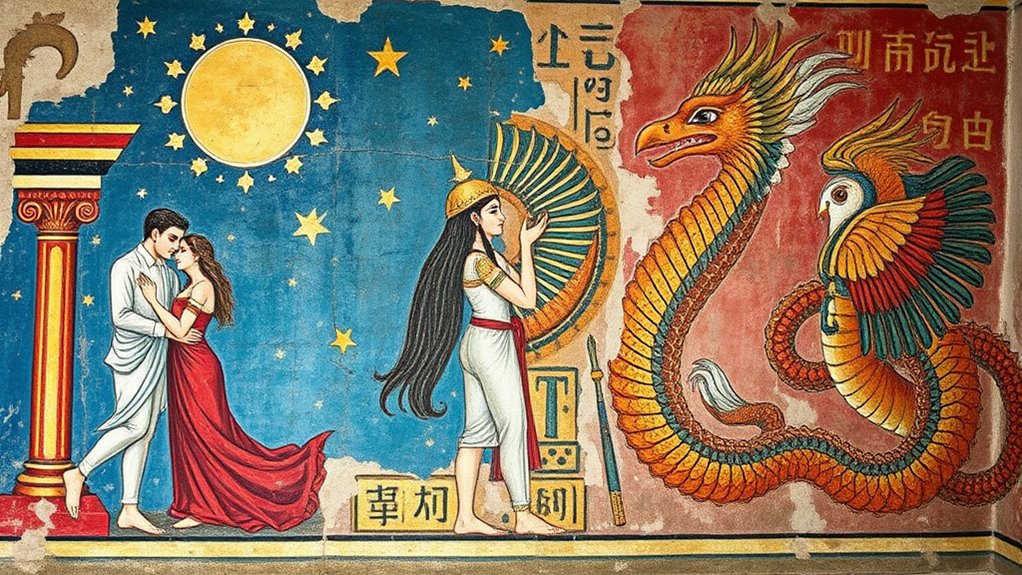
Many myths about ancient love continue to shape how we view relationships today, but these stories often oversimplify or distort historical realities. These tales, filled with romantic symbolism, have shaped our understanding of love’s origins and the ways ancient cultures expressed affection. When you look back at these stories, you’re often led to believe that they reveal universal truths about love, yet they frequently serve more as ideals or moral lessons rather than accurate historical accounts. Their enduring power lies in their ability to evoke emotion and moral reflection, but it’s vital to remember that they’re woven from cultural narratives rather than factual histories. Additionally, the symbolism embedded in these myths often served to reinforce societal values and moral codes of the time, further emphasizing their role as cultural stories rather than literal histories.
Myths about ancient love shape beliefs but often distort historical truths and cultural symbolism.
Take, for example, the myth of Orpheus and Eurydice from Greek mythology. This story, brimming with romantic symbolism, illustrates the lengths to which love can motivate sacrifice and devotion. It’s often seen as the quintessential love story origin—an archetype that underscores love’s power over death and the human desire to reunite with loved ones. But the story’s true purpose wasn’t merely to entertain; it reflected cultural ideals about loyalty, the importance of music and art, and the belief that love could transcend mortality. When you interpret it as a simple love story, you overlook the deeper moral and spiritual themes embedded in the myth.
Similarly, in ancient Egypt, love stories were often intertwined with divine symbolism. The love between Osiris and Isis wasn’t just a romantic tale but also a symbol of eternal life and rebirth, demonstrating how love could embody divine principles. These stories served as allegories, emphasizing that love was more than mere emotion; it was a sacred force that could restore life and order. As you explore these myths, you should recognize that their origins are rooted in cultural values, serving to reinforce societal ideals about love, loyalty, and divine intervention.
Across various cultures, the stories of romantic couples often originated from or inspired religious or spiritual concepts. In Hindu mythology, for instance, the love of Radha and Krishna embodies divine love and devotion, with their story representing the soul’s longing for union with the divine. These narratives were not just about human relationships but about spiritual truths, blending love story origins with religious symbolism. When you analyze these stories, it’s helpful to see them as reflections of societal ideals rather than literal historical accounts.
In essence, ancient love myths are rich with symbolism and cultural significance, but they shouldn’t be mistaken for straightforward accounts of historical love stories. They reveal how societies understood love, devotion, and divine connection, shaping romantic ideals that persist to this day. By recognizing the cultural and symbolic layers within these myths, you gain a deeper appreciation for their meaning beyond mere romantic storytelling.

As an affiliate, we earn on qualifying purchases.
Frequently Asked Questions
How Do Ancient Love Myths Influence Modern Relationships?
Ancient love myths influence your modern relationships by shaping how you perceive love through love rituals and heart symbolism. These stories inspire you to celebrate love with meaningful gestures, like giving flowers or exchanging vows. They also remind you that love is powerful and enduring, often symbolized by hearts. By connecting to these timeless symbols and rituals, you deepen your understanding of love’s significance and its role in your personal relationships.
Are There Common Themes Across Different Cultural Love Stories?
You might think love stories differ too much to have common themes, but many share love symbolism like eternal bonds and sacrifice. Myth variations often highlight themes of forbidden love, heroism, and transformation, revealing universal truths about human desire. These recurring motifs connect cultures, showing that despite different backgrounds, people have long sought meaning and hope through love stories. Embracing these themes helps you see how love’s essence unites us all, across time and space.
What Symbols Are Most Frequently Associated With Love in Myths?
You’ll notice that love symbols like hearts, roses, and doves are most frequently associated with myths. Mythological icons such as Cupid’s bow and arrow or Aphrodite’s mirror often represent love’s power and beauty. These symbols help you understand cultural views of love, emphasizing passion, desire, and divine connection. By recognizing these love symbols and mythological icons, you gain deeper insight into how different cultures express romantic ideals.
How Have These Myths Evolved Over Centuries?
Imagine love as a river, flowing through different landscapes. Over centuries, these myths have adapted culturally, like changing currents, shaping new stories. You see mythological reinterpretations as reflections in the water, evolving with society’s values and beliefs. These stories transform, blending old symbols with new meanings, creating a rich tapestry of love’s enduring power. You witness this evolution as love’s mythic symbols adapt to each era’s unique cultural landscape.
Do Any Myths Depict Love Overcoming Death or Divine Intervention?
Yes, many myths depict love overcoming death or divine intervention, highlighting eternal bonds and divine reunions. For example, Orpheus’s journey to bring Eurydice back from the underworld shows love’s power to transcend death. Similarly, the Greek myth of Eros and Psyche emphasizes divine intervention to unite lovers. These stories demonstrate that love’s strength can defy mortality, ultimately emphasizing the belief in eternal bonds and divine reunions beyond death.

Mythology (75th Anniversary Illustrated Edition): Timeless Tales of Gods and Heroes
- Ideal for book lovers: Perfect for mythology enthusiasts
- Great for reading: Enjoy immersive storytelling
- Excellent condition: Like-new quality
As an affiliate, we earn on qualifying purchases.
As an affiliate, we earn on qualifying purchases.
Conclusion
As you explore these ancient love myths, you realize love’s power spans time, cultures, and stories. You see love as mysterious, passionate, and divine. You understand love as a force that unites, transforms, and endures. You feel connected to these timeless tales, recognizing love’s universal truth. Love isn’t just a myth; it’s a core part of human existence. Love’s story continues, inspiring, shaping, and reminding us of what it means to truly love.

Women Who Run with the Wolves: Myths and Stories of the Wild Woman Archetype
As an affiliate, we earn on qualifying purchases.
As an affiliate, we earn on qualifying purchases.

The Hobbit: A Graphic Novel: A Graphic Novel Adaptation of the Classic Fantasy Novel (Hobbit Fantasy Classic)
As an affiliate, we earn on qualifying purchases.
As an affiliate, we earn on qualifying purchases.
Pool season Picks
robotic pool cleaners
As an affiliate, we earn on qualifying purchases.