
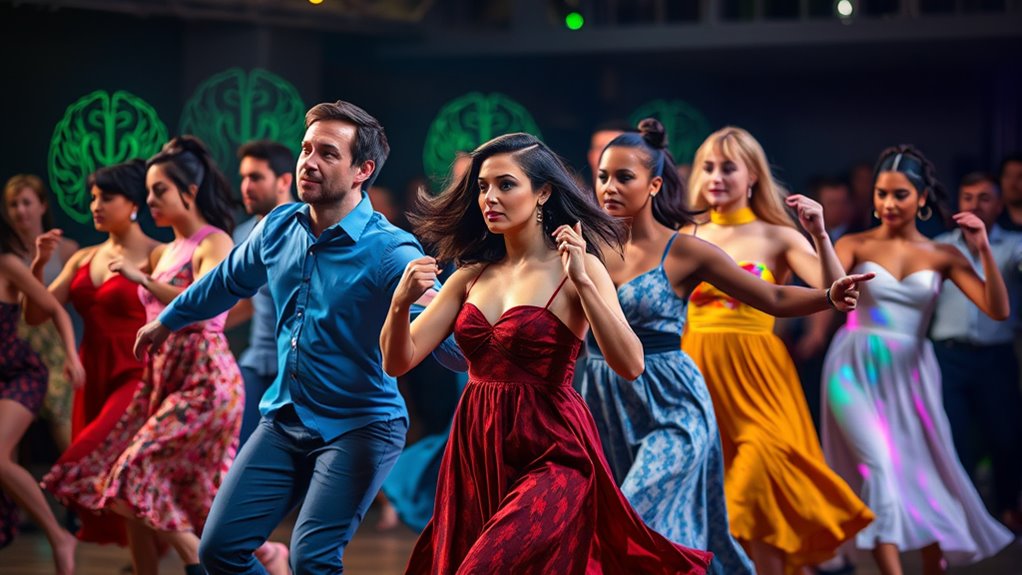

The science of music sync shows how rhythmic sounds can directly influence your brain and body, creating powerful dancing, bonding, and emotional experiences. When music matches your movements or the scene’s rhythm, your brain’s neural oscillations entrain, and your body instinctively moves in sync. This connection deepens emotional bonds and makes moments more memorable. Keep exploring to discover how these rhythms shape your feelings and connections even more deeply.
Key Takeaways
- Neural entrainment links the brain’s oscillations to rhythmic stimuli, enhancing focus, emotional connection, and social bonding during music-driven activities.
- Dancing synchronized with music activates neural pathways associated with movement and social bonding, strengthening emotional and physical connections.
- Rhythmic coordination triggers bodily responses like movement and laughter, fostering feelings of unity and shared experience among participants.
- The brain’s automatic synchronization with music increases dopamine release, boosting mood and reinforcing social bonds.
- Music synchronization engages neural and bodily systems, deepening emotional ties and promoting social cohesion through shared rhythmic experiences.
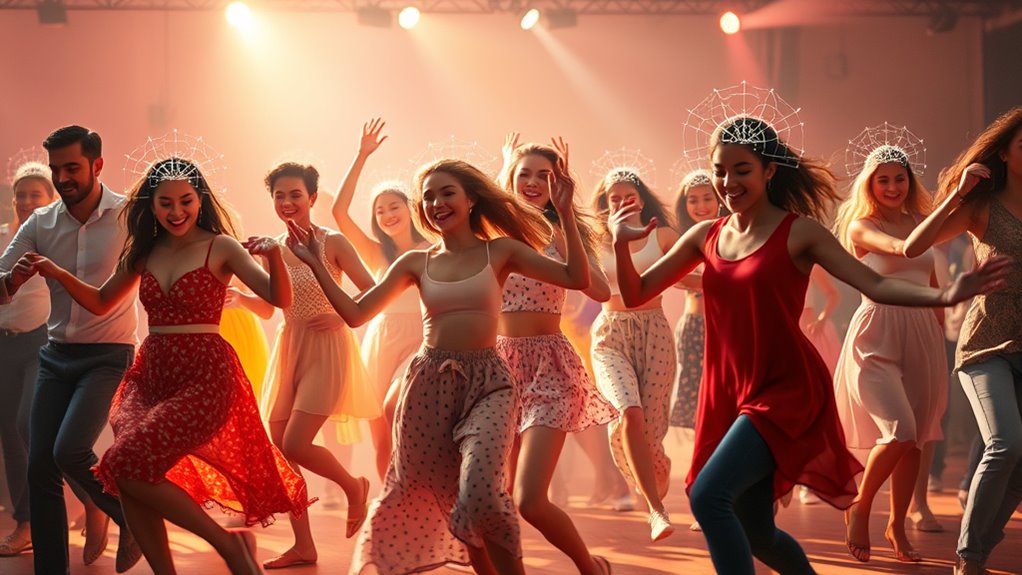
Music synchronization, or music sync, is the art and science of aligning music with visual media such as TV shows, movies, and commercials. When done well, it creates a seamless experience that heightens emotions, emphasizes storytelling, and influences audience reactions. At the core of this process lies the fascinating interplay between neural entrainment and rhythmic coordination. Neural entrainment refers to your brain’s ability to synchronize its neural oscillations with external rhythmic stimuli, like the beat of a song. As a result, your brain’s activity aligns with the rhythm, making moments feel more immersive and emotionally impactful. Rhythmic coordination, on the other hand, involves your body’s natural tendency to move in sync with a beat. When music is perfectly synchronized with visual cues, your body instinctively responds by tapping, swaying, or dancing, creating a harmonious connection between what you see and what you feel.
Music sync aligns sound and visuals, engaging your brain and body to create emotional, immersive experiences.
Understanding how neural entrainment works is *vital* for mastering music sync. When a piece of music matches the tempo or rhythm of a scene, your brain’s neural oscillations lock onto that beat. This synchronization enhances your focus and emotional engagement, making scenes seem more intense or tender depending on the context. For instance, a suspenseful chase scene paired with a pulsating rhythm can heighten your alertness, while a calm, melodic score during a heartfelt moment can deepen your empathy. This process is subconscious; you don’t have to think about it consciously. Instead, your brain automatically aligns with the rhythm, amplifying the scene’s emotional resonance. Additionally, understanding music sync techniques can help creators craft more compelling media experiences.
Rhythmic coordination extends beyond your brain to your entire body. When music syncs with a visual element—like a dancer’s movements or a character’s actions—you instinctively mirror the rhythm, creating a sense of unity and flow. This synchronization is *essential* in dance scenes, commercials, and even sports broadcasts, where the rhythm guides viewers’ perceptions. As you watch, your body’s natural inclination to move with the beat makes the experience more visceral and memorable. The seamless blending of music and visuals through rhythmic coordination can evoke powerful feelings of joy, excitement, or nostalgia, depending on the tempo and style of the music.
In essence, music sync leverages neural entrainment and rhythmic coordination to craft compelling narratives and emotional experiences. Whether you’re tapping your foot or feeling a surge of adrenaline, these processes operate behind the scenes, shaping how you perceive and connect with media. When artists and editors expertly align music with visuals, they tap into these innate neurological and bodily responses, transforming simple scenes into unforgettable moments that resonate deeply within your brain and body.
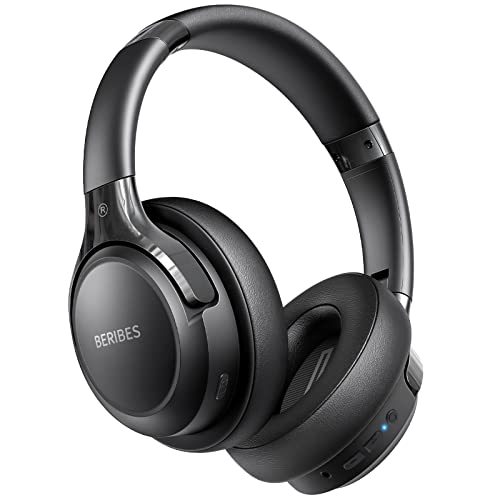
BERIBES Bluetooth Headphones Over Ear, 65H Playtime and 6 EQ Music Modes Wireless Headphones with Microphone, HiFi Stereo Foldable Lightweight Headset, Deep Bass for Home Office Cellphone PC Ect.
65 Hours Playtime: Low power consumption technology applied, BERIBES bluetooth headphones with built-in 500mAh battery can continually play…
As an affiliate, we earn on qualifying purchases.
As an affiliate, we earn on qualifying purchases.
Frequently Asked Questions
How Does Music Synchronization Differ Across Cultures?
You’ll notice that music synchronization varies across cultures because of different cultural rhythms and traditional dances. In some cultures, people naturally move in sync with complex, layered rhythms, while others focus on simple, steady beats. These differences shape how communities bond through dance, emphasizing unique timing and movements. By understanding these variations, you see how cultural context influences the way people connect and express themselves through synchronized music and dance.
Can Music Sync Influence Long-Term Brain Development?
Music sync can positively influence long-term brain development by enhancing neural plasticity and supporting developmental impacts. When you engage in synchronized musical activities, your brain forms new connections, strengthens existing ones, and improves coordination. Over time, this can boost cognitive skills, emotional regulation, and social bonding. Consistent musical synchronization helps your brain adapt and grow, fostering lifelong benefits that shape your mental and emotional well-being.
What Role Does Music Sync Play in Therapy and Healing?
They say, “Music is the medicine of the mind.” Music sync plays a crucial role in therapy and healing by enhancing emotional regulation and fostering social bonding. When you participate in synchronized musical activities, you actively engage your brain, helping to reduce stress and anxiety. This shared experience strengthens connections, promotes empathy, and encourages emotional expression, making music a powerful tool for recovery and mental well-being.
Are There Genetic Factors That Affect Musical Synchronization Abilities?
You might have genetic predispositions that influence your ability to synchronize with music, affecting neural pathways involved in timing and coordination. These genetic factors can shape how your brain processes rhythms and responds to musical cues. While practice helps improve synchronization skills, your natural neural wiring, shaped by genetics, plays a significant role in how easily you can dance in sync with others or music.
How Do Digital Technologies Enhance Music Synchronization Experiences?
Digital technologies act like a conductor, orchestrating immersive experiences that elevate your music synchronization. They enable real-time feedback, precise timing, and seamless coordination, making you feel more connected and in sync with the beat. Digital enhancement transforms ordinary dancing into an immersive journey, engaging your senses and heightening your emotional response. As a result, you experience a richer, more synchronized connection to music and others, deepening your overall enjoyment.

MKORMK Dance Floor Stage Lights Tempered Glass Infinity Mirror Panel 3D Effect Led Dance Floor for Wedding Party Customizable (3D+RGB-Magnetic, 25PCS(8.2FTX8.2FT))
➤【Stunning 3D Visual Effects】Combining high-quality tempered glass with infinity mirror panels and LED lighting, this dance floor creates…
As an affiliate, we earn on qualifying purchases.
As an affiliate, we earn on qualifying purchases.
Conclusion
As you can see, syncing with music isn’t just fun—it’s scientifically proven to boost your bonding and brain activity. Did you know that people who dance together are 20% more likely to feel connected afterward? So, next time you hit the dance floor or just tap along to your favorite song, remember you’re not only enjoying yourself but also strengthening your social bonds and stimulating your brain. Embrace the power of music sync—it’s good for you!

Tools For Wellness Novafon Acoustic Wave Therapy Device – Rechargeable, White
Excellent for pain relief, muscle and tissue repair.
As an affiliate, we earn on qualifying purchases.
As an affiliate, we earn on qualifying purchases.

40Hz Light and Sound Therapy Wellness Glasses Device | Wearable Gamma Light and Sound Synchronized Machine for Mental Clarity
40Hz Gamma Light and Sound Synchronization – Precisely synchronized 40 Hz flickering light and gentle click sound (25…
As an affiliate, we earn on qualifying purchases.
As an affiliate, we earn on qualifying purchases.